
Dental Fillings Near Me: A Complete Guide to Costs, Types, Procedure, and Choosing a Dentist
August 28, 2026
Are Dentists Doctors? Understanding Dental Degrees, Medical Training, and What Dentists Do
August 29, 2026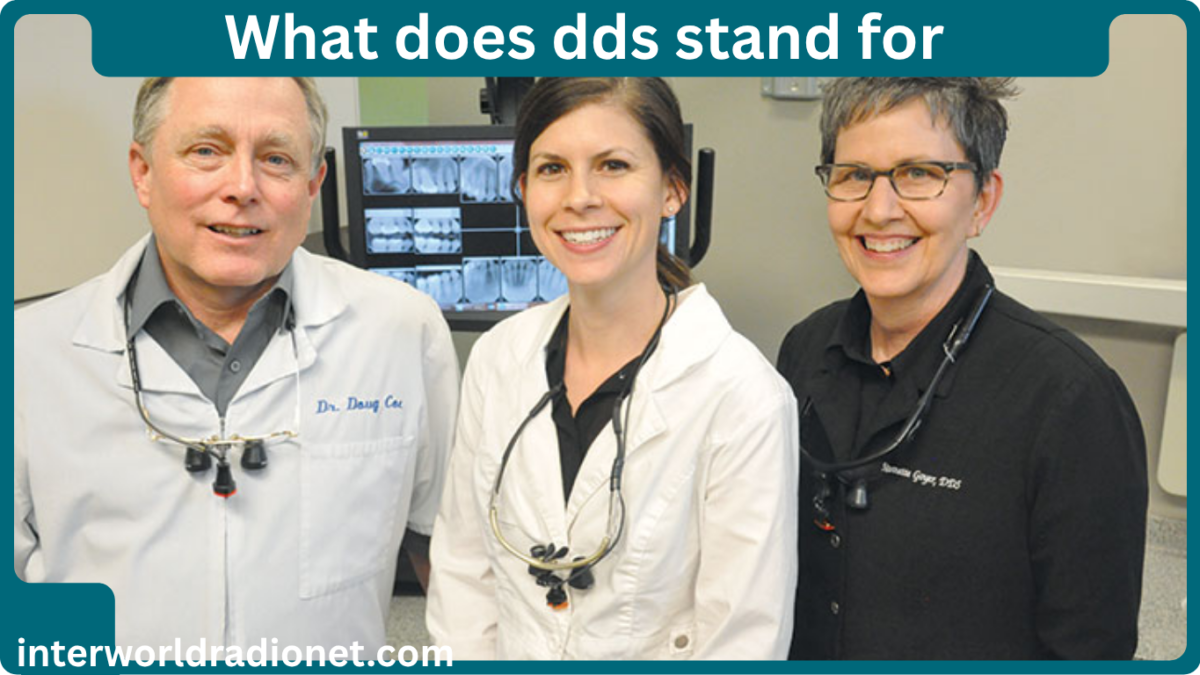
If you have seen the letters DDS after a person’s name, on a dental office website, in a medical record, or somewhere online, you may have wondered, “What does DDS stand for?”
The most common meaning of DDS in the United States is Doctor of Dental Surgery. It is a professional dental degree held by dentists who have completed dental school and met the requirements to practice dentistry. A dentist may write “DDS” after their name to show that they earned this degree.
However, DDS does not always mean Doctor of Dental Surgery. The abbreviation can have different meanings depending on where you see it. In technology, healthcare, government services, education, and other fields, DDS may stand for something completely different.
Understanding the context is therefore important.
For example, if you see “Jane Smith, DDS” on a dental office sign, DDS almost certainly means Doctor of Dental Surgery. If you see DDS in a computer science document, it could refer to Data Distribution Service. In another government or healthcare setting, DDS may have yet another meaning.
This guide explains what DDS stands for, what a DDS dentist does, how a DDS degree compares with DMD, and what the abbreviation can mean in other situations.
What Does DDS Stand For?
DDS stands for Doctor of Dental Surgery. In the United States, it is a professional dental degree earned by students who complete dental school and meet the required education and training standards. After completing their education, graduates must also satisfy the licensing requirements of the state where they want to practice.
A dentist with a DDS degree can provide a wide range of oral healthcare services. Depending on their training and professional scope, a DDS dentist may perform dental examinations, diagnose cavities and other oral health problems, provide preventive care, treat damaged teeth, place fillings and crowns, and perform certain tooth extractions. Some dentists may also receive additional education to work in a dental specialty.
It is important to understand that DDS is the name of a dental degree, not a separate category of dentist. When you see a name such as “Dr. Emily Johnson, DDS,” the letters DDS simply indicate that Dr. Johnson earned a Doctor of Dental Surgery degree.

You may also see DMD after a dentist’s name. DMD stands for Doctor of Dental Medicine. Although the names are different, DDS and DMD are generally considered equivalent professional dental degrees in the United States. The title used depends on the dental school that awarded the degree. In other words, DDS does not mean a dentist is more qualified than a DMD dentist simply because the degree name includes the word “surgery.”
What Is a DDS Dentist?
A DDS dentist is a dentist who has earned a Doctor of Dental Surgery degree.
The term “DDS dentist” is common in everyday searches, although technically the word dentist already describes the professional. A person with a DDS has completed the education and training required for their dental degree and must also meet state licensing requirements before practicing dentistry.
A DDS dentist may work in a private dental office, group practice, community health center, hospital, dental school, public health organization, or another healthcare setting.
Many DDS dentists work as general dentists. Others may continue their education after dental school and become specialists.
Dental specialties can include areas such as:
- Orthodontics
- Pediatric dentistry
- Periodontics
- Endodontics
- Oral and maxillofacial surgery
- Prosthodontics
- Oral and maxillofacial pathology
- Oral and maxillofacial radiology
- Dental public health
A DDS degree provides the foundation for dental practice, while additional education and training may be required for specialty practice.
What Is the Difference Between DDS and DMD?
One of the most common questions related to DDS is whether it is different from DMD.
DDS stands for Doctor of Dental Surgery.
DMD stands for Doctor of Dental Medicine.
In the United States, both are professional dental degrees that prepare graduates to become licensed dentists.
The difference is primarily the name of the degree rather than the basic professional status of the dentist.
Some dental schools award the DDS degree, while others award the DMD degree. The curriculum, clinical education, licensing process, and professional standards are designed to prepare graduates for dental practice.
In simple terms:
DDS = Doctor of Dental Surgery
DMD = Doctor of Dental Medicine
Both can indicate a fully qualified dentist when the person has also met the applicable licensing requirements.
The letters after a dentist’s name should therefore not be used by themselves to decide whether one dentist is more qualified than another.
A better approach is to consider the dentist’s license, education, experience, area of practice, professional training, and whether their services fit your needs.
Why Do Some Dentists Have DDS and Others Have DMD?
The reason some dentists have DDS and others have DMD is largely historical.
The first dental schools used different names for their dental degrees. Over time, some institutions adopted the Doctor of Dental Medicine title, while others continued to use Doctor of Dental Surgery.
The two degree names can sound very different, but they do not mean that one dentist performs only “surgery” while the other does only general dental care.
A DDS dentist is not automatically a dental surgeon, and a DMD dentist is not automatically less or more qualified than a DDS dentist.
The degree title reflects the terminology used by the dental school.
This is why you may see:
Dr. Robert Lee, DDS
or:
Dr. Robert Lee, DMD
Both professionals may provide similar types of general dental care.
What Does a DDS Dentist Do?
A DDS dentist can perform a wide range of dental services.
The exact services offered depend on the dentist’s training, experience, state laws, practice setting, and professional focus.
Common services may include dental examinations, professional cleanings, cavity treatment, dental fillings, crowns, bridges, preventive care, and certain tooth extractions.
A general DDS dentist may also help patients manage gum disease, tooth sensitivity, broken teeth, dental pain, and other common oral health concerns.
During a regular dental appointment, a dentist may:
- Review your dental and medical history.
- Examine your teeth and gums.
- Look for signs of cavities or gum disease.
- Check existing dental work.
- Take dental X-rays when appropriate.
- Discuss oral hygiene.
- Recommend preventive or restorative treatment.
- Create a treatment plan when a problem is found.
Dentists also educate patients. Good dental care is not only about treating problems after they appear. Prevention is an important part of maintaining oral health.
How Do You Become a DDS Dentist?
Becoming a dentist in the United States requires extensive education and professional training.
The exact path can vary, but students generally complete undergraduate education or the required prerequisite coursework before applying to dental school.
After admission, dental students complete a professional dental program. Dental education includes both classroom learning and hands-on clinical training.
Students study subjects related to areas such as:
- Anatomy
- Physiology
- Oral biology
- Dental materials
- Pharmacology
- Pathology
- Radiology
- Periodontology
- Restorative dentistry
- Oral surgery
- Patient care
Clinical training allows students to develop practical skills while treating patients under appropriate supervision.
After graduating from dental school, a person must meet the licensing requirements of the state where they intend to practice. Requirements can include examinations and other professional requirements.
This distinction is important because earning a DDS degree and being licensed to practice are related but not identical concepts.
A degree shows that the person completed the required educational program. A state dental license gives the professional legal authority to practice dentistry within that jurisdiction.
Is a DDS a Doctor?
Yes.
A dentist who has earned a DDS degree is a doctor of dentistry and may use the title “Dr.” professionally.
However, a DDS is different from an MD.
MD stands for Doctor of Medicine and is a medical degree.
DDS stands for Doctor of Dental Surgery and is a dental degree.
Both dentists and physicians are healthcare professionals, but they have different areas of professional education and practice.
A dentist focuses primarily on oral health, including the teeth, gums, mouth, and related structures. A physician focuses on broader medical care.
This is why a dentist may be addressed as “Dr. Smith” while having DDS after their name.
Does DDS Mean Dental Doctor?
In everyday language, people may use phrases such as “dental doctor” to describe a dentist.
However, Doctor of Dental Surgery is the formal meaning of DDS.
A DDS dentist is a dental professional who has completed a professional dental degree and obtained the necessary authorization to practice.
The phrase “dental doctor” is understandable, but “dentist” is the standard term used in the United States.
Is a DDS Degree a Medical Degree?
DDS is a healthcare professional degree, but it is not the same as an MD medical degree.
A DDS program focuses specifically on dentistry and oral health.
Dental students receive extensive scientific and clinical education, but their professional training is centered on dental care.
An MD program, by contrast, prepares physicians to practice medicine across a broad range of medical fields.
Therefore:
DDS = dental professional degree
MD = medical professional degree
Both involve rigorous education, but they prepare graduates for different professional roles.
What Does DDS Mean After a Name?
When DDS appears after someone’s name, it usually identifies their professional dental degree.
For example:
Michael Brown, DDS
The letters tell you that Michael Brown earned a Doctor of Dental Surgery degree.
You may see DDS on:
- Dental office websites
- Business cards
- Appointment cards
- Dental records
- Insurance documents
- Professional profiles
- Clinic signs
- Healthcare directories
If the abbreviation appears next to a person’s name in a dental setting, Doctor of Dental Surgery is almost certainly the intended meaning.
What Does DDS Stand for in Dentistry?
In dentistry, DDS stands for Doctor of Dental Surgery.
It is one of the two primary names used for the professional dental degree in the United States.
The other common degree abbreviation is DMD, or Doctor of Dental Medicine.
Both degrees prepare graduates for professional dental practice, subject to state licensing requirements.
This means that if you are searching for “DDS meaning in dentistry,” the answer is Doctor of Dental Surgery.
DDS vs. Dentist: Are They the Same Thing?
DDS and dentist are related, but they are not exactly the same word.
Dentist describes the profession.
DDS describes a particular dental degree.
For example, you might say:
“I am going to the dentist.”
You might also see:
“Dr. Taylor, DDS.”
The first sentence describes the healthcare professional you are visiting. The second identifies the professional’s dental degree.
A person with a DDS is a dentist, but “DDS” itself is not the general word for the profession.
What Does DDS Stand for in Medical Terms?
In a healthcare or medical setting, DDS most commonly refers to Doctor of Dental Surgery when it appears after a person’s name.
However, medical and healthcare organizations can use abbreviations differently. The meaning depends on the document, department, and context.
This is especially important when reading medical records because abbreviations can sometimes have more than one meaning.
If you encounter DDS in a medical document and the meaning is unclear, the safest approach is to ask the healthcare organization or professional who created the document.
Never assume that every abbreviation has the same meaning in every healthcare environment.
What Does DDS Stand for in Technology?
DDS can have a completely different meaning in technology.
One important technology meaning is Data Distribution Service.
Data Distribution Service is a communication standard used for distributing data between software systems and devices.
It is associated with systems that need reliable and often real-time communication.
DDS technology can be used in areas such as:
- Robotics
- Industrial systems
- Autonomous systems
- Transportation
- Defense technology
- Aerospace
- Distributed applications
- Internet of Things systems
In this context, DDS has nothing to do with dentistry.
This is a good example of why context matters when searching for the meaning of an abbreviation.
What Is Data Distribution Service?
Data Distribution Service, often abbreviated DDS, is designed to allow different applications and systems to exchange information.
Imagine several machines working together.
One system produces information. Other systems need to receive that information quickly and reliably.
A data-distribution system can help manage that communication.
DDS is particularly useful in environments where systems may need real-time or near-real-time data exchange.
For example, robotic systems may need to share information about position, sensors, commands, or operating conditions.
When engineers talk about DDS, they may be discussing software communication rather than dentistry.
What Does DDS Stand for in Government?
In government settings, DDS can have several meanings.
One example is Disability Determination Services.
In the United States, Disability Determination Services agencies are involved in determining whether people meet medical eligibility requirements for certain disability programs.
The exact organization and terminology can vary by state.
Because government agencies often use abbreviations internally, DDS should always be interpreted based on the agency and document where it appears.
If you see DDS in a letter related to a disability claim, it may refer to Disability Determination Services rather than Doctor of Dental Surgery.
What Does DDS Stand for in Education?
DDS can also appear in education, particularly when discussing dental education.
In that context, DDS generally means Doctor of Dental Surgery.
A student who completes a qualifying dental school program may graduate with a DDS degree.
However, educational institutions can use abbreviations for departments, programs, services, or organizations. Therefore, the surrounding text should always be considered.
If DDS appears in a university document that has nothing to do with dentistry, it may have another meaning.
What Does DDS Mean in Computer Science?
In computer science, DDS commonly refers to Data Distribution Service.
It is particularly relevant to distributed systems and applications that need communication between different software components.
The concept is useful when multiple systems need to exchange information without being tightly connected to one another.
For example, a complex robotic platform could have separate software components for navigation, sensors, movement, and control. These components may need to share data.
DDS can provide a structured communication approach for those systems.
Therefore, someone working in software engineering may use “DDS” frequently while never discussing dentistry.
What Does DDS Stand for in Digital Graphics?
DDS can also refer to a DirectDraw Surface file format.
A file with the .dds extension is commonly associated with texture data used in computer graphics.
DDS image files can be useful for storing textures and graphical data, particularly in applications such as video games and 3D graphics.
In this situation, DDS is a technical file-format term rather than a professional degree.
If you see something like:
character_texture.dds
the abbreviation is not referring to a dentist.
It refers to a graphics file format.
Why Does DDS Have So Many Meanings?
DDS is an example of an acronym that is used by multiple industries.
Acronyms are popular because they make long terms easier to write and say. Once an abbreviation becomes common within a field, professionals may use it without spelling out the full phrase.
The problem is that the same three letters can be reused by different industries.
DDS can therefore mean:
- Doctor of Dental Surgery
- Data Distribution Service
- Disability Determination Services
- DirectDraw Surface
- Other organization- or field-specific terms
The correct meaning depends on context.
This is why simply searching for an abbreviation without looking at where it appears can sometimes produce confusing results.
How to Tell What DDS Means
The easiest way to understand DDS is to examine the words around it.
If DDS appears after a person’s name in a dental office, it probably means Doctor of Dental Surgery.
If DDS appears in software documentation, it may mean Data Distribution Service.
If DDS appears in a disability benefits document, it may mean Disability Determination Services.
If DDS appears as a file extension, it likely refers to DirectDraw Surface.
You can use the following simple guide:
| Where You See DDS | Likely Meaning |
| Dental office | Doctor of Dental Surgery |
| Dentist’s name | Doctor of Dental Surgery |
| Dental school | Doctor of Dental Surgery |
| Software engineering | Data Distribution Service |
| Robotics | Data Distribution Service |
| Disability claim | Disability Determination Services |
| Computer graphics | DirectDraw Surface |
| File ending in .dds | DirectDraw Surface |
Context is the key.
Is a DDS Dentist a Good Dentist?
The letters DDS alone cannot tell you whether a particular dentist is good.
A dental degree is an important professional qualification, but choosing a dentist involves more than looking at the letters after their name.
You may want to consider:
- Whether the dentist is properly licensed
- Their education and training
- Their experience
- The services they provide
- Their communication style
- Whether they explain treatment clearly
- Office safety and professionalism
- Appointment availability
- Insurance and payment options
- Patient reviews, considered carefully
- Whether they are comfortable treating your specific needs
DDS and DMD should not be treated as a quality ranking.
A DDS dentist and a DMD dentist can both be excellent professionals.
Does DDS Mean a Dentist Is a Surgeon?
Not necessarily.
The name Doctor of Dental Surgery can sometimes cause confusion because it contains the word “surgery.”
A DDS degree does not mean that every DDS dentist specializes in surgery.
General dentists may perform certain surgical or surgical-like procedures, such as some tooth extractions, when they are trained and legally permitted to do so.
More complex surgical procedures may be performed by specialists such as oral and maxillofacial surgeons.
Therefore, the letters DDS should not be interpreted as meaning “dental surgeon” in the same way that a medical specialty title identifies a surgeon.
The degree name is simply Doctor of Dental Surgery.
Can a DDS Become a Specialist?
Yes.
A dentist with a DDS can pursue additional education and training in a dental specialty.
Specialty training typically requires completing an additional postgraduate program.
For example, a dentist may pursue training in orthodontics to focus on tooth and jaw alignment, or periodontics to focus on gums and supporting structures.
Other dentists may specialize in endodontics, prosthodontics, pediatric dentistry, or oral and maxillofacial surgery.
The important distinction is that the DDS is the foundational professional degree, while specialty training comes afterward.
Is DDS Recognized in the United States?
DDS is a well-established dental degree in the United States.
Dental schools that award DDS degrees operate within the U.S. dental education system and must meet applicable educational and accreditation requirements.
However, a degree by itself does not automatically give someone permission to practice dentistry in every state.
Dental practice is regulated at the state level, and dentists must meet the licensing requirements of the state where they practice.
This is an important point for anyone researching dental credentials.
Can a DDS Practice in Every State?
Not automatically.
A dentist who has earned a DDS degree still needs to meet the licensing requirements of the state in which they want to practice.
Licensing rules can vary by state.
A dentist moving from one state to another may need to complete additional requirements before practicing there.
Therefore, when evaluating a dentist’s credentials, it is useful to distinguish between:
- Dental degree
- Dental license
- Specialty training
- Continuing education
- Current professional status
This gives you a more complete picture than looking at DDS alone.
Why Do People Search “What Does DDS Stand For?”
People search this phrase for many different reasons.
Some see DDS after a dentist’s name and want to know what the letters mean.
Others may encounter DDS in a healthcare document, government letter, technology article, computer program, or file name.
Searches may include phrases such as:
“What does DDS stand for?”
“What does DDS mean?”
“What is DDS?”
“What does DDS mean after a name?”
“What is a DDS dentist?”
“What is the difference between DDS and DMD?”
“What does DDS mean in dentistry?”
“What does DDS stand for in medical terms?”
“What does DDS mean in technology?”
These searches have different intentions even though they use the same three-letter abbreviation.
A useful answer therefore needs to explain more than one definition.
Common Misunderstandings About DDS
There are several misconceptions about DDS that are worth clearing up.
One common misunderstanding is that DDS and DMD represent different levels of dental training. In general, they are equivalent professional dental degree paths.
Another misconception is that every DDS dentist is a surgeon. The word “surgery” is part of the formal degree name, but a general DDS dentist does not necessarily specialize in surgery.
Some people also assume that DDS automatically means a dentist is licensed. A degree and a professional license are separate things.
Another misunderstanding is that DDS always means Doctor of Dental Surgery. In many technical, government, and computer-related contexts, DDS can mean something else.
The surrounding context is always important.
DDS vs DMD: Which One Should You Choose?
When comparing dentists, seeing DDS after one name and DMD after another does not mean that one dentist is better than the other. DDS stands for Doctor of Dental Surgery, while DMD stands for Doctor of Dental Medicine. In the United States, both are professional dental degrees that can lead to dental licensure. Instead of choosing a dentist based only on these letters, look at their experience, training, services, and approach to patient care. Your specific dental needs should also guide your decision. A general dentist may be a good choice for regular checkups and common dental problems, while certain treatments may require a dentist with advanced training in a specific area. The degree title is useful information, but it should be viewed as just one part of a dentist’s overall qualifications.
What Does DDS Stand for on a Dental Business Card?
When you see DDS after a dentist’s name on a business card, it generally means Doctor of Dental Surgery. It identifies the dental degree the professional earned. A dental business card may also include other credentials, certifications, professional memberships, or information about a specialty. If you see an abbreviation that you do not understand, you can ask the dental office what it means and what qualifications it represents.
What Does DDS Mean on a Dental Website?
On a dental practice website, DDS usually stands for Doctor of Dental Surgery when it appears after a dentist’s name. It identifies the dentist’s professional dental degree, while titles such as general dentist or orthodontist describe the person’s area of practice. A dental website may also list credentials such as DMD, MS, MPH, or other degrees and certifications. These abbreviations can represent different types of education or professional qualifications, so it is helpful to look at the complete credential information rather than judging a dentist based on one abbreviation alone.
How DDS Relates to Oral Health
Understanding dental credentials can help patients make more informed healthcare decisions.
However, knowing what DDS means is only one small part of understanding dental care.
Oral health is influenced by daily habits, professional dental care, nutrition, medications, medical conditions, tobacco exposure, genetics, and other factors.
Regular dental examinations can help identify problems before they become more serious.
Good daily habits can also support oral health.
These commonly include brushing with fluoride toothpaste, cleaning between teeth, limiting frequent exposure to sugary foods and drinks, and following personalized advice from a dental professional.
The best dental care is usually a combination of prevention, early detection, and appropriate treatment.
Does DDS Mean Doctor of Dental Surgery Everywhere?
DDS is widely used in the United States, but dental degree naming conventions can differ internationally.
Different countries have different dental education systems, degree titles, licensing rules, and professional terminology.
Therefore, someone researching an international dentist should not assume that a particular dental abbreviation has exactly the same legal meaning everywhere.
For U.S. readers, however, DDS generally refers to Doctor of Dental Surgery when used as a dental professional credential.
Other Possible Meanings of DDS
Although Doctor of Dental Surgery is the most common meaning of DDS in the United States, the abbreviation can have different meanings depending on the context. In technology, DDS may stand for Data Distribution Service, while in government and disability-related services, it can mean Disability Determination Services. In computer graphics, DDS may refer to DirectDraw Surface, and in other technical or business settings, it may represent terms such as Digital Data Services or Distributed Data Systems. Because DDS is used across different industries, the words and information around the abbreviation are usually the best way to determine its correct meaning.
A Simple Way to Remember the Main DDS Meaning
If you want an easy way to remember the most common definition, think:
DDS + dentist = Doctor of Dental Surgery.
If the letters appear after a dentist’s name, this is almost certainly the meaning.
If DDS appears in a technology document, think about Data Distribution Service.
If it appears in a disability-related government document, consider Disability Determination Services.
If it appears after a computer graphics filename, it may refer to DirectDraw Surface.
This simple context-based approach can prevent a lot of confusion.
Frequently Asked Questions About DDS
Is DDS the same as DMD?
DDS and DMD are different degree titles, but both generally represent equivalent professional dental degrees in the United States. DDS means Doctor of Dental Surgery, while DMD means Doctor of Dental Medicine.
Does DDS mean the person is a dentist?
When DDS appears after a person’s name in a U.S. dental context, it generally means the person earned a Doctor of Dental Surgery degree. A person must also meet applicable state licensing requirements to practice dentistry.
Can a DDS dentist perform surgery?
A DDS dentist may perform certain procedures for which they are appropriately trained and legally permitted. More complex oral and facial surgical procedures may require a specialist, such as an oral and maxillofacial surgeon.
What does DDS mean in a computer file?
When DDS appears as a file extension, such as “image.dds,” it commonly refers to DirectDraw Surface, a graphics-related file format used for textures and other visual data.
What should I look for when choosing a dentist?
Look beyond DDS or DMD. Consider the dentist’s current license, education, experience, services, communication, professional training, and whether they have experience with the type of dental care you need.
Final Thoughts
So, what does DDS stand for? In the most common U.S. dental context, DDS stands for Doctor of Dental Surgery. It is a professional dental degree earned by dentists who complete the required dental education and meet applicable licensing requirements. DDS and DMD are generally equivalent professional dental degree titles, so one should not automatically be considered better than the other. At the same time, DDS can have completely different meanings in technology, government, computer graphics, and other fields. The best way to determine the correct definition is to look at the context in which the abbreviation appears. If you see DDS after a dentist’s name, Doctor of Dental Surgery is almost certainly what it means; if you see DDS in a technical document or government record, another definition may apply.