

Are Dentists Doctors? Understanding Dental Degrees, Medical Training, and What Dentists Do
August 29, 2026
What Is a DDS? Meaning, Degree, Education, Duties, Salary, and DDS vs DMD
August 30, 2026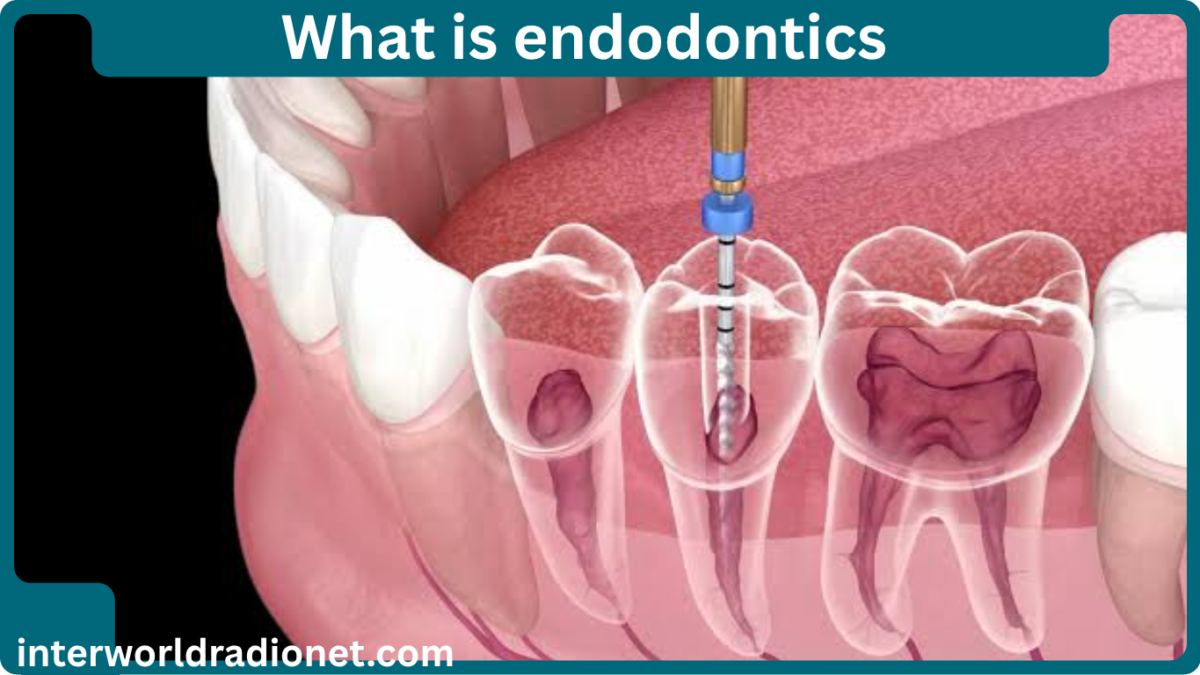
If you have ever wondered what is endodontics, the simple answer is that endodontics is a specialized area of dentistry focused on the inside of the tooth and the tissues around its roots.
Endodontics deals with the dental pulp, which contains nerves, blood vessels, and connective tissue inside a tooth. It also involves diagnosing and treating problems that affect the pulp and the tissues surrounding the tooth root. The American Association of Endodontists describes endodontics as the field concerned with the health, disease, diagnosis, prevention, and treatment of the dental pulp and tissues around the roots.
When people hear the word endodontics, they often think about a root canal. That connection makes sense because root canal treatment is one of the most common endodontic procedures. However, endodontics includes much more than root canals.
Endodontists also diagnose difficult tooth pain, treat dental injuries, perform endodontic surgery, manage failed root canals, and use specialized techniques to help save natural teeth.
For a patient, understanding what is endodontics can make dental treatment feel much less confusing. Instead of thinking of a root canal as simply “removing a nerve,” it is better to understand it as a treatment designed to remove diseased tissue, clean and seal the inside of a tooth, and preserve the natural tooth whenever possible.
What Is Endodontics?
So, what is endodontics in simple terms?
Endodontics is the branch of dentistry that focuses on the soft tissue inside the tooth, known as the dental pulp, and the tissues surrounding the root.
The pulp is located beneath the hard outer layers of the tooth. It contains nerves and blood vessels and plays an important role while the tooth is developing. Once a tooth is fully developed, however, it can continue to function even after the pulp has been removed because it receives support from the tissues around the tooth.
Endodontic treatment becomes important when the pulp becomes inflamed, infected, or damaged.
This can happen because of:
- Deep tooth decay
- A cracked tooth
- A chipped tooth
- A dental injury
- Repeated dental procedures
- Problems with a previous filling or crown
- Other damage to the tooth
The main goal is usually to save the natural tooth when it can be restored safely.
What Does an Endodontist Do?
An endodontist is a dentist who specializes in endodontics.
If you are asking what is endodontics, it is also helpful to understand what an endodontist actually does.
Endodontists are trained to diagnose tooth pain and treat conditions involving the inside of teeth. They commonly perform root canals, but their work can include several other procedures.
Endodontists receive additional training after dental school. The American Association of Endodontists states that endodontists complete two or more additional years of specialized training focused on diagnosing tooth pain and treating problems inside the tooth.
An endodontist may treat:
- Infected teeth
- Inflamed dental pulp
- Difficult root canals
- Failed root canals
- Cracked teeth
- Dental injuries
- Persistent tooth pain
- Root-end infections
- Certain problems involving the tissues around a tooth root
The overall goal is to preserve the natural tooth whenever possible.
What Is the Difference Between a Dentist and an Endodontist?
A general dentist provides a wide range of dental services.
These can include:
- Dental cleanings
- Fillings
- Crowns
- Preventive care
- Gum evaluations
- Basic tooth extractions
- Dental examinations
- Some root canal treatments
An endodontist focuses much more specifically on the inside of teeth and problems involving the dental pulp and root tissues.
A general dentist may perform a straightforward root canal, while an endodontist often handles more complex cases.
This difference is important when understanding what is endodontics.
Endodontics is a specialty, not simply another name for general dentistry.
The American Association of Endodontists explains that endodontists receive advanced training and focus their practice on endodontic treatment and the diagnosis of tooth pain.
What Is the Dental Pulp?
To understand what is endodontics, you need to understand the dental pulp.
The dental pulp is the soft tissue located inside a tooth.
It contains:
- Nerves
- Blood vessels
- Connective tissue
The pulp helps support the tooth during its development.
The hard outer part of the tooth protects the pulp. Enamel forms the outer surface, while dentin lies underneath it.
If decay or injury reaches the pulp, the tissue can become irritated, inflamed, or infected.
That is when endodontic treatment may become necessary.
What Happens When the Dental Pulp Becomes Infected?
When bacteria reach the pulp, the tissue may become inflamed or infected.
A deep cavity is one common cause.
A crack can also allow bacteria to enter the inner part of the tooth.
Sometimes an injury damages the pulp even when the outside of the tooth does not appear severely broken.
If the problem is not treated, infection can extend beyond the tooth and affect the tissues around the root.
The American Association of Endodontists explains that untreated pulp inflammation or infection can cause pain and may lead to an abscess.
This is one reason early evaluation is important when unusual tooth pain continues.
What Is a Root Canal?
A root canal is an endodontic treatment used to treat a damaged, inflamed, or infected pulp.
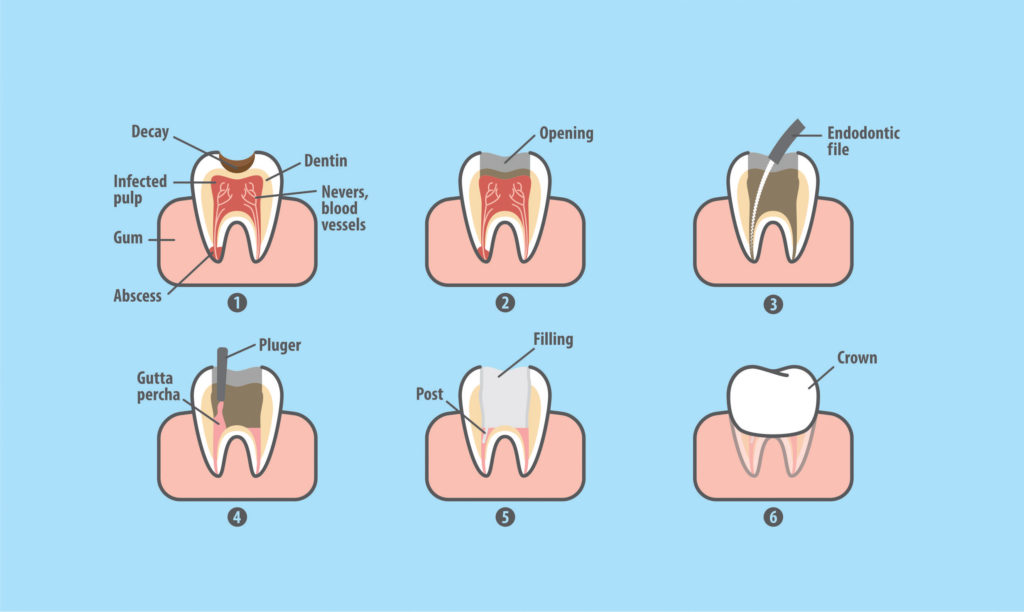
During treatment, the dentist or endodontist removes the affected pulp, cleans and disinfects the inside of the tooth, fills the cleaned root canals, and seals them.
The tooth is then usually restored with a filling or crown, depending on the condition of the tooth.
The purpose is not simply to remove the nerve.
The purpose is to remove diseased tissue, control infection, seal the inside of the tooth, and preserve the natural tooth.
Why Do People Need Endodontic Treatment?
There are several reasons someone may need endodontic treatment.
Deep decay is one of the most common causes.
When decay continues through the outer layers of the tooth and reaches the pulp, the tissue can become inflamed or infected.
Other causes include:
- Cracks
- Chips
- Dental trauma
- Repeated procedures on the same tooth
- Problems with crowns
- Problems with previous dental work
The American Association of Endodontists lists deep decay, repeated dental procedures, faulty crowns, cracks, chips, and traumatic injuries among reasons root canal treatment may be needed.
What Are the Symptoms of a Tooth Problem?
Symptoms can vary from person to person.
Some people experience strong pain.
Others may have mild symptoms or even no obvious pain.
Possible signs include:
- Severe toothache
- Pain when chewing
- Sensitivity to hot foods
- Sensitivity to cold foods
- Sensitivity that continues after the hot or cold source is removed
- Swollen gums
- Tender gums
- A small pimple on the gums
- Tooth discoloration
- Pain after an injury
- Persistent discomfort
The American Association of Endodontists lists pain with chewing, lingering hot or cold sensitivity, swollen or tender gums, cracked or chipped teeth, and other changes as possible signs that endodontic evaluation may be needed.
These symptoms do not automatically mean you need a root canal.
Other dental conditions can cause similar symptoms.
That is why diagnosis matters.
Can You Need Endodontics Without Severe Pain?
Yes.
A common misunderstanding is that a tooth must hurt badly before it can need endodontic treatment.
That is not always true.
A damaged or infected pulp may sometimes cause little pain or no obvious pain.
A dentist may discover a problem during an examination or through dental imaging.
This is why regular dental examinations are useful even when your teeth feel normal.
How Is an Endodontic Problem Diagnosed?
Diagnosis usually starts with your symptoms and dental history.
Your dentist or endodontist may ask:
- When did the pain begin?
- Does chewing cause pain?
- Is the tooth sensitive to cold?
- Is it sensitive to heat?
- Did you injure the tooth?
- Have you had previous dental work on it?
- Does the pain come and go?
- Does the pain continue after eating or drinking?
The dentist may then examine the tooth and surrounding tissues.
Dental X-rays or other imaging may also be used when appropriate.
The purpose is to identify the source of the problem and determine whether the tooth can be treated.
What Happens During a Root Canal?
If you want to know what is endodontics in practical terms, understanding a root canal is useful.
The exact procedure varies depending on the tooth and the patient’s condition, but the general process includes several steps.
Examination and Diagnosis
The dentist or endodontist examines the tooth and may take dental images.
The goal is to understand the condition of the tooth and determine whether endodontic treatment is appropriate.
Local Anesthesia
Local anesthesia is used to numb the area.
Modern anesthesia helps make the procedure much more comfortable.
Isolation of the Tooth
A protective dental dam can be placed around the tooth.
This helps keep the treatment area clean and dry.
It also helps prevent saliva from entering the area being treated.
Opening the Tooth
A small opening is made in the crown of the tooth.
This gives the dentist access to the pulp chamber and root canals.
Removing the Diseased Pulp
Special instruments are used to remove inflamed or infected pulp tissue.
Cleaning the Canals
The root canals are carefully cleaned and shaped.
The inside of the tooth is disinfected to reduce bacteria and prepare the space for sealing.
Filling the Canals
After cleaning and shaping, the canals are filled with a biocompatible material, commonly gutta-percha.
This helps seal the cleaned space.
Restoring the Tooth
The tooth usually needs a final restoration to protect it.
Depending on the situation, this may involve a filling or crown.
The American Association of Endodontists explains that after root canal treatment, the tooth is restored so it can continue functioning like a natural tooth.
Does a Root Canal Hurt?
This is one of the most common concerns people have when learning what is endodontics.
Modern root canal treatment is generally performed with local anesthesia.
The American Association of Endodontists states that root canal treatment is usually comparable in comfort to other routine dental procedures and that some soreness or mild discomfort can occur afterward.
The pain people associate with root canals is often caused by the infected or inflamed tooth rather than the treatment itself.
After treatment, the area may feel sore for a few days.
Your dentist can explain what level of discomfort is expected and what to do if symptoms become worse.
How Long Does a Root Canal Take?
The time needed depends on the tooth and the complexity of the case.
Some root canals can be completed in one appointment.
Others may require more than one visit.
Molars can be more complicated because they generally have more roots and canals than front teeth.
The American Association of Endodontists notes that root canal treatment can often be completed in one or two appointments, depending on the tooth and individual circumstances.
What Happens After a Root Canal?
Your tooth may feel sensitive or sore after treatment.
This usually improves as the surrounding tissues recover.
Your dentist may give you specific instructions about eating, brushing, and protecting the tooth.
It is important to complete the final restoration recommended by your dentist.
A tooth that has had root canal treatment may need a crown or another restoration to protect it from further damage.
Do not assume that finishing the root canal means the entire treatment plan is complete.
The final restoration is also an important part of protecting the tooth.
Why Is a Crown Sometimes Needed After a Root Canal?
A root canal treats the inside of the tooth.
A crown or other restoration protects the tooth from outside forces.
Some teeth become more vulnerable to breaking after extensive decay and dental treatment.
Whether a crown is needed depends on factors such as:
- Which tooth was treated
- How much tooth structure remains
- Whether the tooth has already been restored
- The amount of biting force the tooth receives
- Your dentist’s treatment plan
Your dentist or endodontist can explain what restoration is appropriate.
What Other Treatments Are Part of Endodontics?
Endodontics includes more than traditional root canal treatment.
Depending on the condition, an endodontist may provide:
- Nonsurgical root canal treatment
- Endodontic retreatment
- Endodontic surgery
- Treatment for dental injuries
- Certain regenerative procedures
- Treatment related to cracked or injured teeth
The American Association of Endodontists lists root canal treatment, retreatment, surgery, traumatic dental injury treatment, and other procedures among endodontic treatment options.
What Is Endodontic Retreatment?
Sometimes a tooth that previously received a root canal develops a new problem.
This can happen for different reasons.
For example, a tooth may have a complex canal system that was difficult to treat initially.
A new infection may also develop if the tooth becomes exposed to bacteria again.
Endodontic retreatment involves reopening the tooth, examining the previous treatment, removing existing filling material when necessary, cleaning the canals again, and sealing them.
The goal is to give the tooth another opportunity to heal.
What Is Endodontic Surgery?
Endodontic surgery may be recommended when conventional root canal treatment is not enough.
One common procedure is called an apicoectomy, or root-end resection.
During an apicoectomy, the end of the root and nearby infected or inflamed tissue are removed, and the root end is sealed.
The American Association of Endodontists explains that endodontic surgery may be used to locate hidden canals, address root-surface problems, remove certain calcium deposits, or treat persistent infection around a root.
Surgery is not needed for every root canal patient.
It is generally considered when a specific problem cannot be adequately addressed through conventional treatment.
What Is Endodontics for Cracked Teeth?
Cracked teeth can be difficult to diagnose because the crack may not always be visible.
A crack can allow bacteria to reach deeper parts of the tooth.
Depending on the location and severity of the crack, treatment may involve endodontic care or another type of dental treatment.
The important question is whether the tooth can be restored and kept functional.
An endodontist can help determine whether pain is coming from the pulp and whether endodontic treatment may help.
What Is Endodontics for Dental Injuries?
A dental injury can damage the pulp even when the tooth looks normal from the outside.
For example, a blow to the mouth can affect the blood supply and nerves inside a tooth.
Symptoms may appear immediately or develop later.
An endodontist can evaluate an injured tooth and monitor it when immediate root canal treatment is not necessary.
This is particularly important after sports injuries, falls, accidents, and other trauma to the mouth.
What Is Vital Pulp Therapy?
Not every damaged pulp needs to be completely removed.
In selected cases, dentists may use treatments designed to preserve healthy pulp tissue.
These procedures are often grouped under vital pulp therapy.
The exact treatment depends on the age of the patient, condition of the pulp, extent of damage, and other clinical factors.
Modern endodontics is not simply about removing pulp.
It is increasingly focused on preserving healthy tooth structure and using the least invasive effective treatment when appropriate.
Why Is Saving the Natural Tooth Important?
One of the main goals of endodontics is to preserve the natural tooth when possible.
A natural tooth can provide normal chewing and biting function.
Saving the tooth can also avoid the need for replacement with a bridge, denture, or implant.
The American Association of Endodontists emphasizes preserving natural teeth when possible and notes that properly treated teeth can often function for many years.
This does not mean a root canal is always better than extraction.
Some teeth cannot be predictably restored.
The best choice depends on the condition of the tooth and the patient’s individual situation.
Root Canal vs. Tooth Extraction
If a tooth has severe pulp damage or infection, two possible options may sometimes be considered: root canal treatment or extraction.
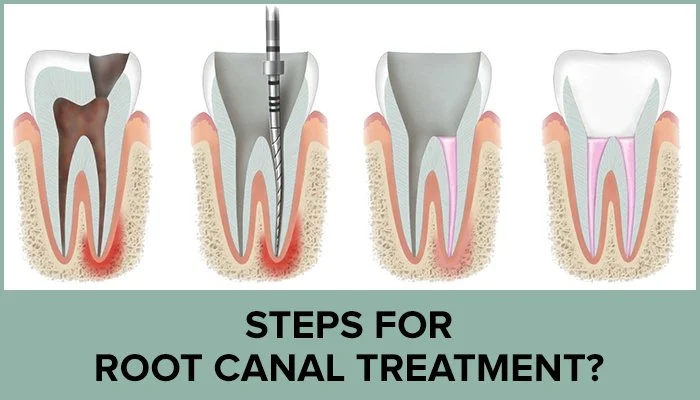
A root canal removes the diseased pulp while keeping the natural tooth in place.
An extraction removes the entire tooth.
Also read:What Does DDS Stand For? Meaning, Uses, and Common Definitions Explained
After extraction, the missing tooth may need to be replaced with an implant, bridge, or denture depending on the situation.
The American Association of Endodontists notes that extraction can create the need to replace the missing tooth and that preserving the natural tooth may avoid some of these additional procedures.
The right decision should be made with a dental professional after examining the tooth.
Is Endodontic Treatment Safe?
Modern endodontic treatment is widely used.
Root canal treatment is one of the common procedures used to treat infected or damaged pulp and preserve teeth.
The American Association of Endodontists describes modern root canal treatment as safe and effective when appropriately performed.
Like any medical or dental procedure, endodontic treatment has possible risks.
Your dentist or endodontist should explain the benefits, limitations, alternatives, and possible complications for your specific situation.
What Technology Does an Endodontist Use?
Modern endodontics uses specialized tools and imaging to improve diagnosis and treatment.
Depending on the practice and case, an endodontist may use:
- Digital X-rays
- Advanced dental imaging
- Dental microscopes
- Small specialized instruments
- Electronic measuring devices
- Specialized cleaning systems
The goal is to locate canals, identify problems, clean the tooth effectively, and protect healthy tissue.
The American Association of Endodontists notes that endodontists use specialized technology and techniques as part of their advanced training.
Why Are Microscopes Used in Endodontics?
Root canals are very small.
Some teeth have narrow or difficult-to-find canals.
A dental operating microscope can provide magnification and improved visibility.
This can help an endodontist identify small structures that may be difficult to see with the naked eye.
Microscopes are particularly useful in complex treatments and retreatment cases.
They are not simply a marketing feature.
Better visibility can help the clinician work more precisely in a very small space.
What Is the Role of Dental Imaging in Endodontics?
Imaging helps dentists understand what is happening inside and around a tooth.
Traditional dental X-rays can show the roots and surrounding bone.
More advanced three-dimensional imaging may be useful in selected cases.
The purpose is not to use the most advanced technology for every patient.
Instead, imaging should be selected based on the clinical question.
A skilled endodontist uses examination findings, symptoms, dental tests, and imaging together to reach a diagnosis.
How Is Endodontics Changing?
Endodontics continues to develop as dental technology and research improve.
Recent research is exploring ways to improve healing and preserve tooth structure.
For example, an NIDCR-supported study reported in 2025 investigated lab-made HDL, sometimes called “good cholesterol,” as an additional treatment approach during root canal therapy in animals. The researchers found reduced inflammation and bone loss in the animal model, but this was experimental research rather than an established routine treatment for patients.
This is a good example of why dental information should be separated into established clinical care and early research.
Not every promising laboratory finding becomes a standard treatment.
Is Endodontics Only for Adults?
No.
Children and teenagers can also need endodontic care.
A dental injury, deep cavity, or other problem can affect a developing or permanent tooth.
Treatment choices for younger patients can be different because the tooth may still be developing.
The dentist considers the child’s age, tooth development, pulp condition, and long-term dental needs.
What Is Endodontics for Children?
Endodontic care for children can involve protecting or treating the pulp of primary or permanent teeth.
The goal may be to preserve the tooth and support normal oral development.
In some cases, a pediatric dentist may provide the treatment.
In more complex situations, referral to an endodontist may be appropriate.
Parents should not ignore ongoing tooth pain, swelling, or dental injuries simply because a child will eventually lose baby teeth.
How Much Does Endodontic Treatment Cost?
The cost varies widely.
Factors include:
- The tooth being treated
- The complexity of the root canals
- Whether retreatment is needed
- Whether surgery is required
- The location of the dental practice
- Insurance coverage
- The final restoration needed
Molars may cost more because they can be more complicated to treat.
The American Association of Endodontists notes that root canal costs vary according to the tooth and complexity and that many dental insurance plans provide some coverage for endodontic treatment.
For an accurate price, ask your dental office for a treatment estimate based on your specific tooth.
Does Dental Insurance Cover Endodontics?
Many dental insurance plans provide some coverage for root canal treatment, but coverage varies.
Your plan may have:
- A deductible
- A percentage of coverage
- An annual maximum
- Waiting periods
- Network restrictions
- Different coverage for specialists
Before treatment, ask your dental office to check your benefits.
Insurance coverage should not determine whether a dental emergency is ignored.
If you have severe pain or swelling, contact a dental professional promptly.
When Should You See an Endodontist?
You may benefit from an endodontic evaluation if you have:
- Persistent tooth pain
- Pain when biting
- Long-lasting hot or cold sensitivity
- A cracked tooth
- A tooth injury
- Swelling near a tooth
- A recurring dental infection
- A previous root canal that is causing problems
- A dentist’s recommendation for a difficult root canal
The American Association of Endodontists specifically recommends considering an endodontist for tooth pain, tooth injury, temperature sensitivity, or when root canal treatment is recommended.
When Is Tooth Pain an Emergency?
Severe dental pain should not be ignored.
Swelling around the face or mouth, fever, difficulty swallowing, difficulty breathing, or rapidly worsening symptoms can require urgent medical or dental attention.
A dental infection can become serious if it spreads.
Do not rely only on pain medication to manage a suspected dental infection.
Pain relief may reduce symptoms but does not remove the underlying source of an infection.
How Can You Protect Your Teeth From Endodontic Problems?
Prevention is easier than treatment.
Good dental habits can reduce the chance of deep decay and tooth damage.
Helpful habits include:
- Brush your teeth regularly with fluoride toothpaste.
- Clean between your teeth.
- Have routine dental examinations.
- Treat cavities early.
- Wear a mouthguard during appropriate sports.
- Avoid using your teeth to open packages.
- Address cracked teeth quickly.
- Follow your dentist’s recommendations.
Not every endodontic problem can be prevented.
Dental injuries can happen unexpectedly.
However, good oral care can reduce some of the most common causes of pulp damage.
Also read:Dental Fillings Near Me: A Complete Guide to Costs, Types, Procedure, and Choosing a Dentist
Common Myths About Endodontics
There are many myths about endodontics, especially root canal treatment.
Myth: Root Canals Always Hurt
Modern root canal treatment is performed with local anesthesia and is generally designed to control pain during the procedure. Some soreness afterward is possible.
Myth: Endodontics Means Only Root Canals
Root canals are an important part of endodontics, but the specialty also includes diagnosis of tooth pain, retreatment, surgery, dental trauma care, and other procedures.
Myth: A Tooth Without a Pulp Cannot Work
A fully developed tooth can continue functioning after its pulp has been removed because the tooth receives nourishment from surrounding tissues.
Myth: Extraction Is Always Easier
Removing a tooth eliminates the tooth itself, but replacing that tooth may require additional treatment.
Myth: You Should Wait Until Pain Becomes Severe
Some dental problems can progress without dramatic symptoms. A dental examination is more reliable than waiting for severe pain.
What Makes Endodontics Different From Oral Surgery?
Endodontics focuses on the inside of teeth, the dental pulp, and the tissues around the roots. Oral surgery covers a much wider range of procedures involving the mouth, jaw, face, and related areas. Some treatments can overlap, but your dentist can recommend the right specialist based on your needs.
Why Is Diagnosis So Important in Endodontics?
Finding the real cause of tooth pain is important because the painful tooth is not always the source of the problem. Different dental conditions can cause similar symptoms. Careful diagnosis helps avoid unnecessary treatment and allows the dentist to choose the right approach.
What Should You Ask Before Endodontic Treatment?
If your dentist recommends endodontic treatment, you can ask:
- What is causing the problem?
- Is the pulp infected or inflamed?
- Can the tooth be saved?
- Is a root canal the best option?
- Is extraction another option?
- Will I need a crown?
- How many appointments may be needed?
- What will the treatment cost?
- Is a specialist recommended?
- What happens if I delay treatment?
These questions can help you understand your choices and make an informed decision.
The Main Goal of Endodontics
The main goal of endodontics is to treat problems inside and around teeth while saving the natural tooth whenever possible. A root canal does not mean losing a tooth. It removes damaged or infected pulp, cleans and seals the inside of the tooth, and allows the tooth to be restored and used again. This is why endodontists focus on helping patients keep their natural teeth.
Frequently Asked Questions About What Is Endodontics
Is endodontics the same as a root canal?
No. A root canal is one of the most common procedures performed in endodontics, but endodontics is the broader dental specialty. It also includes diagnosis of tooth pain, retreatment, endodontic surgery, treatment of dental injuries, and other procedures.
How long can a tooth last after endodontic treatment?
A properly treated and properly restored tooth can function for many years, and some can last a lifetime. Long-term success depends on factors such as the quality of treatment, the remaining tooth structure, the final restoration, oral hygiene, and regular dental care.
Can an endodontist tell if a tooth needs a root canal?
An endodontist can evaluate symptoms, perform dental tests, examine the tooth, and use appropriate imaging to determine whether endodontic treatment is appropriate. A root canal should be based on a proper diagnosis rather than pain alone.
Can endodontic treatment fail?
Yes, although treatment can be successful, problems can sometimes occur. A tooth may develop a new infection, contain complex anatomy, have a missed canal, develop a crack, or experience other complications. Retreatment or endodontic surgery may sometimes provide another way to save the tooth.
Can a root canal prevent tooth extraction?
In many cases, yes. Root canal treatment is specifically designed to remove diseased pulp while preserving the natural tooth. However, some teeth are too damaged to restore, so extraction may sometimes be necessary.
Final Thoughts
So, what is endodontics? Endodontics is a specialized field of dentistry that focuses on the dental pulp, the inside of the tooth, and the tissues surrounding the tooth roots. It is best known for root canal treatment, but the specialty includes much more, including diagnosis of difficult tooth pain, retreatment, endodontic surgery, and care for dental injuries.
The main purpose of endodontics is to treat disease or injury while preserving the natural tooth whenever possible. Modern root canal treatment uses local anesthesia, specialized instruments, careful cleaning, disinfection, and sealing to treat the inside of an affected tooth.
If you have persistent tooth pain, sensitivity, swelling, a cracked tooth, or a dental injury, do not try to diagnose the problem yourself. A dentist or endodontist can examine the tooth and explain whether endodontic treatment is appropriate. Early evaluation can sometimes make treatment simpler and may improve the chance of saving the natural tooth.