
What Is a DDS? Meaning, Degree, Education, Duties, Salary, and DDS vs DMD
August 30, 2026
What Is a DMD? Meaning, Degree, Education, Licensing, and Dental Career Guide
September 1, 2026
If you are planning to become a dentist, you may have noticed that some dentists have a DDS degree while others have a DMD degree. This often leads to a simple question: what is the difference between DDS and DMD degree?
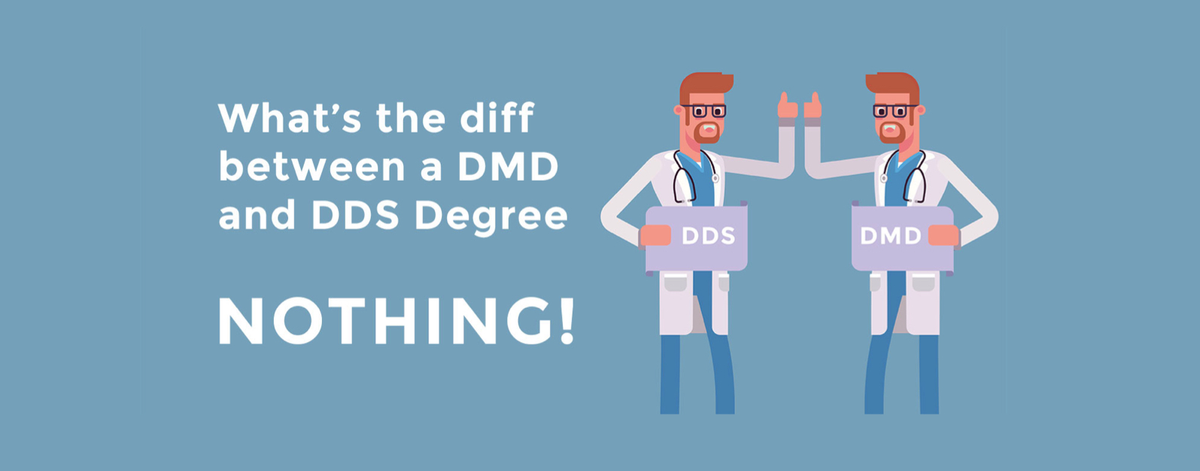
The short answer is that there is no meaningful difference in the professional level of the two degrees in the United States. DDS means Doctor of Dental Surgery, while DMD means Doctor of Dental Medicine or Doctor of Medicine in Dentistry, depending on the institution.
Both degrees are professional doctoral degrees for dentists. Graduates of CODA-accredited dental programs receive the education and clinical training needed to enter the dental profession, subject to state licensure requirements.
The American Dental Association states that dental schools may award either a Doctor of Dental Surgery or Doctor of Dental Medicine degree, and that both degrees fulfill the same educational requirements established through dental accreditation standards.
This means that the more useful question is often not which degree is better, but which dental school offers the strongest education, clinical experience, location, cost, support, and opportunities for your goals.
This guide explains what DDS and DMD mean, where the names came from, how the programs compare, whether one is harder, how licensing works, and what students should consider when choosing a dental school.
What Is the Difference Between DDS and DMD Degree?
The difference between DDS and DMD degree is mainly the name used by the dental school.
DDS stands for Doctor of Dental Surgery.
DMD stands for Doctor of Dental Medicine, although the wording behind the abbreviation can vary by institution.
Despite the different names, both are dental degrees that prepare graduates to practice dentistry after completing the required licensing process.
The American Dental Education Association gives the simple answer: DDS and DMD are the same degrees, and the individual university decides which degree name it awards.
So, if you are comparing a DDS dentist with a DMD dentist, the letters after the dentist’s name do not by themselves tell you that one dentist received better or more advanced training.
Why Are There Two Dental Degree Names?
The existence of two names can be traced to the history of dental education in the United States.
The first dental schools used different approaches to describing the profession and the degree awarded.
The DDS title became widely associated with Doctor of Dental Surgery.
Later, some universities chose the DMD title to emphasize dentistry as a medical profession rather than focusing only on surgery.
The result is two different titles for essentially the same professional qualification.
Also read:What Is a DDS? Meaning, Degree, Education, Duties, Salary, and DDS vs DMD
Today, the important issue is whether the dental program is properly accredited and whether the graduate meets the licensing requirements of the state where they want to practice.
What Does DDS Stand For?
DDS stands for Doctor of Dental Surgery.
The name can sound as if a DDS dentist focuses mainly on surgery, but that is not what the degree means in modern dental practice.
A DDS graduate can provide general dental care, including examinations, preventive care, fillings, crowns, root canal treatment, extractions, and other procedures within the dentist’s training and legal scope of practice.
Additional education is required for recognized dental specialties.
The word “surgery” in DDS should therefore not be interpreted as meaning that DDS dentists are automatically more surgical than DMD dentists.
What Does DMD Stand For?
DMD generally stands for Doctor of Dental Medicine.
Some institutions historically describe it as Doctor of Medicine in Dentistry.
The title is different from DDS, but the professional purpose is the same.
A DMD graduate completes dental education at an accredited dental school and can pursue state licensure to practice dentistry.
The DMD title does not mean that the dentist is a medical doctor with an MD degree.
A DMD is a dental doctoral degree.
Are DDS and DMD the Same Degree?
Yes, in the United States, DDS and DMD are considered equivalent dental degrees when earned from appropriately accredited dental programs.
The American Dental Association specifically states that dentists with DDS and DMD degrees have fulfilled the same educational requirements and that state licensing boards accept the degrees as equivalent for general dentistry.
This is one of the most important points for anyone researching the difference between DDS and DMD degree.
The abbreviation is different.
The professional level is not.
Is a DDS Better Than a DMD?
No. A DDS is not automatically better than a DMD.
The degree title does not determine the quality of a dentist.
A dentist’s education, clinical experience, continuing education, specialty training, communication skills, professional judgment, and commitment to patient care are much more meaningful factors.
Two dentists could have different degree titles and receive comparable professional education.
For patients, choosing between a DDS and DMD dentist should therefore not be based only on the letters after the dentist’s name.
Is a DMD Better Than a DDS?
No. A DMD is not automatically better than a DDS.
The same principle applies in the other direction.
A DMD dentist has completed a dental doctoral program, just as a DDS dentist has.
The degree title mainly reflects the naming preference of the university.
When comparing dentists, it is more useful to consider whether they are licensed, their experience with your specific dental needs, their training, and the services they provide.
What Is the Main Difference Between DDS and DMD Degree in Education?
The educational difference is generally not the degree title but the individual dental school’s curriculum and educational approach.
Accredited dental programs must meet applicable accreditation standards.
The Commission on Dental Accreditation, or CODA, is the national programmatic accrediting agency for U.S. dental and dental-related education programs. CODA evaluates programs through a structured accreditation process.
Individual schools can organize courses and clinical experiences differently while still meeting accreditation requirements.
This means students should compare the actual curriculum and clinical opportunities rather than assuming that DDS or DMD represents a different level of training.
How Long Does a DDS or DMD Degree Take?
A traditional U.S. DDS or DMD dental program generally takes four years of dental school.
The American Dental Association notes that dental school generally requires four academic years, while the total educational path typically includes undergraduate preparation before dental school.
Some students may enter through combined or accelerated pathways, but program structures vary.
Students should always check the requirements of individual dental schools.
Do DDS and DMD Students Take the Same Types of Courses?
DDS and DMD students generally study the major scientific and clinical areas needed to become dentists.
Courses may include anatomy, physiology, biochemistry, microbiology, pathology, pharmacology, dental anatomy, radiology, restorative dentistry, periodontics, endodontics, oral surgery, prosthodontics, pediatric dentistry, and other areas.
The exact course names and organization can differ between universities.
What matters is that the accredited program provides the education and clinical competencies required for dental practice.
Do DDS and DMD Students Get the Same Clinical Training?
DDS and DMD students receive clinical training as part of their professional dental education.
Students learn to examine patients, develop treatment plans, perform dental procedures, communicate with patients, and manage different oral health conditions.
The exact amount and type of clinical experience can vary between schools.
This is one reason applicants should research individual dental programs carefully.
A school may have different patient populations, clinical facilities, specialty opportunities, and community-based experiences from another school.
Do DDS and DMD Dentists Treat the Same Problems?
Yes. Licensed DDS and DMD dentists can generally provide the same scope of general dental care, subject to state law, individual training, and professional competence.
A general dentist may provide preventive care, fillings, crowns, dental examinations, periodontal care, extractions, and other procedures.
More advanced procedures may require additional training.
For example, a dentist who wants to become an orthodontist, periodontist, endodontist, or oral and maxillofacial surgeon generally completes additional specialty education.
Can Both DDS and DMD Dentists Become Specialists?
Yes.
A DDS graduate can apply for specialty education.
A DMD graduate can also apply for specialty education.
Specialty programs provide advanced training in areas such as orthodontics, periodontics, endodontics, prosthodontics, pediatric dentistry, oral and maxillofacial surgery, oral medicine, and other recognized specialties.
The ADA notes that additional postgraduate training is required for dental specialties.
The degree title itself does not prevent a dentist from becoming a specialist.
Does DDS or DMD Affect Dental Licensing?
The degree title itself does not normally determine whether a graduate can become licensed.
State dental boards establish licensing requirements.
The ADA explains that U.S. dental licensure requirements vary by state, but generally include an educational requirement, a written examination, and a clinical assessment.
Nearly all states require a DDS or DMD from a dental education program accredited by CODA or an accepted equivalent pathway.
Students should always check the current requirements of the specific state where they plan to practice.
Do DDS and DMD Dentists Take the Same Licensing Exam?
U.S. licensing requirements are controlled by state jurisdictions, but the Integrated National Board Dental Examination, known as the INBDE, is the national written examination used across U.S. licensing jurisdictions.
The ADA explains that the INBDE replaced the former NBDE Part I and Part II examinations and was launched in 2020.
Passing the written examination is only one part of the licensing process.
Applicants may also need to meet state-specific clinical and other requirements.
Does the Difference Between DDS and DMD Degree Matter for Patients?
Usually, no.
A patient generally does not need to choose a dentist based on whether the dentist has DDS or DMD after their name.
Both degree types can lead to professional dental practice.
Instead, patients may want to consider whether the dentist is licensed, whether they have experience with the needed treatment, whether the office is convenient, and whether the dentist clearly explains treatment choices.
For specialized care, the dentist’s postgraduate training may be more important than the DDS or DMD title.
Does the Difference Between DDS and DMD Degree Matter for Dental Students?
For students, the degree name itself usually matters much less than the dental school behind it.
Applicants should compare tuition, financial aid, curriculum, clinical exposure, location, class size, facilities, student support, residency opportunities, and career outcomes.
The school awarding the degree can have a major effect on the student’s experience.
The letters DDS or DMD alone do not provide enough information to make a good school decision.
Which Is Harder, DDS or DMD?
Neither degree is inherently harder.
The academic demands of dental school are substantial regardless of whether the program awards a DDS or DMD.
Students study complex biomedical sciences and develop hands-on clinical skills.
The difficulty can vary between individual programs and between students.
However, there is no general rule that DMD programs are harder than DDS programs or that DDS programs are harder than DMD programs.
Which Degree Has More Prestige, DDS or DMD?
Neither degree automatically has greater prestige.
Some schools have long histories of awarding DDS degrees, while others use DMD.
A university’s reputation may be important, but that reputation should not be confused with the abbreviation of the degree.
The quality of education, faculty, clinical training, research opportunities, and professional development can matter far more.
Do DDS and DMD Dentists Earn Different Salaries?
The degree title itself does not normally determine a dentist’s salary.
Income can vary based on location, practice ownership, specialty, experience, hours worked, patient volume, and many other factors.
A DDS and DMD dentist working in similar settings can have similar earning potential.
Choosing a degree program primarily because of the letters on the diploma is therefore not a strong financial strategy.
Can a DDS Dentist Become an Orthodontist?
Yes.
A DDS graduate who wants to become an orthodontist can pursue an accredited orthodontic residency or advanced specialty program.
Orthodontic training provides education beyond the general dental degree.
The same is true for a DMD graduate.
The dental degree provides the foundation, while specialty education provides the additional training.
Can a DMD Dentist Become an Oral Surgeon?
Yes.
A DMD graduate can pursue oral and maxillofacial surgery training if they meet the program’s requirements.
DDS graduates can also pursue oral and maxillofacial surgery.
The ADA’s CODA program information recognizes DDS or DMD degrees as among the entrance requirements for oral and maxillofacial surgery programs.
Oral and maxillofacial surgery requires substantial additional training beyond dental school.
What Should You Compare Instead of DDS and DMD?
If you are choosing a dental school, compare the actual educational experience.
Important factors include curriculum, clinical training, tuition, financial aid, location, patient population, faculty, technology, student support, research, community service, and postgraduate opportunities.
You should also verify the school’s accreditation status.
CODA provides a program search for accredited dental education programs.
This is a more useful approach than choosing a school simply because it awards a DDS or DMD.
How Does Dental School Accreditation Matter?
Accreditation is important because it provides an external quality framework for dental education.
CODA evaluates dental education programs using accreditation standards and a formal review process.
The process includes program self-study, review, site visits, documentation, interviews, and accreditation decisions.
For students planning to practice in the United States, attending an appropriately accredited dental program can be an important part of meeting state educational requirements.
What Is the Difference Between DDS and DMD Degree for International Dentists?
International dentists need to pay special attention to U.S. licensing rules.
A dental degree earned outside the United States or Canada may not automatically satisfy the educational requirements for U.S. licensure.
Many international dentists pursue advanced standing programs at U.S. dental schools.
These programs allow qualified internationally trained dentists to enter a DDS or DMD program with advanced standing rather than starting from the beginning.
The ADA explains that advanced standing programs are typically shorter than traditional four-year dental programs and are designed for internationally trained dentists who want to meet U.S. educational requirements.
Can International Dentists Choose DDS or DMD?
In many cases, yes.
International dentists applying to U.S. advanced standing programs may find both DDS and DMD programs.
The degree title is not the main issue.
The important questions are whether the program is appropriate for international dentists, whether it leads to a recognized U.S. dental degree, and whether it meets the licensing pathway for the state where the dentist plans to practice.
Also read:What Is Endodontics? A Complete Guide to Endodontic Treatment, Root Canals, and Tooth Pain
ADEA’s CAAPID service is used by many applicants seeking advanced standing opportunities.
Is DDS or DMD Better for International Dentists?
Neither is automatically better.
International dentists should compare individual programs.
Important factors may include admission requirements, English-language requirements, tuition, clinical training, location, program length, financial support, and state licensing options.
Some programs may have requirements that differ significantly from others.
The best choice depends on the applicant’s situation and career goals.
Does the Difference Between DDS and DMD Degree Affect Residency Applications?
Generally, the degree title itself does not create a major advantage.
Residency programs evaluate applicants using multiple factors.
These may include academic performance, clinical experience, letters of recommendation, examinations, research, leadership, interviews, and other qualifications.
For specialty training, the applicant’s overall dental education and preparation are more important than whether the diploma says DDS or DMD.
What Is the Difference Between DDS and DMD Degree in Daily Dental Practice?
There is generally no meaningful difference in daily general dental practice based solely on the degree title.
A licensed DDS dentist and a licensed DMD dentist can both examine patients, diagnose dental conditions, create treatment plans, and perform procedures within their scope of practice.
The difference is mainly in terminology.
This is why patients should not assume that one dentist is more qualified simply because the dentist has a particular degree abbreviation.
What Is the Difference Between DDS and DMD Degree in Curriculum?
Both degree types follow accredited dental education requirements.
However, individual schools can organize their curriculum differently.
One school might emphasize early clinical exposure.
Another might have a different approach to integrated science education.
Another might offer particularly strong community-based clinical programs or research opportunities.
Therefore, the useful comparison is school curriculum versus school curriculum, not simply DDS versus DMD.
What Is the Difference Between DDS and DMD Degree in Clinical Skills?
Both programs are designed to prepare students for dental practice.
Students develop clinical skills through supervised patient care and other educational experiences.
The specific number of procedures and clinical opportunities can vary by school.
If clinical experience is important to you, review each school’s published curriculum and ask current students or admissions staff about clinical opportunities.
What Is the Difference Between DDS and DMD Degree in Research?
Neither degree automatically means more research training.
Research opportunities depend on the individual school.
Some dental schools have extensive research programs, while others may focus more heavily on clinical education.
Students interested in academic dentistry, biomedical research, public health, or teaching should investigate the research opportunities available at each school.
ADEA also lists combined dental programs that can pair a DDS or DMD with master’s or doctoral degrees.
What Is the Difference Between DDS and DMD Degree in Career Options?
Career options are broadly similar.
Both DDS and DMD graduates can pursue general dentistry, specialty training, academic careers, research, public health, military dentistry, community dentistry, and other professional paths.
The degree title does not generally restrict the graduate to a different type of dental career.
Licensure, additional training, professional interests, and state rules matter more.
Can a DDS or DMD Dentist Own a Dental Practice?
A licensed dentist may be able to own or operate a dental practice depending on state law and business requirements.
The DDS or DMD title does not by itself determine practice ownership.
State laws concerning professional corporations, ownership, supervision, and other business matters can differ.
Dentists considering practice ownership should review the rules in their state and seek appropriate legal and professional advice.
Can a DDS or DMD Dentist Work in Any U.S. State?
Not automatically.
A dentist must meet the licensing requirements of the state where they practice.
The fact that DDS and DMD are equivalent degrees does not mean a dentist can simply move to another state and begin practicing without meeting that state’s requirements.
Licensure rules can include examinations, clinical assessments, education requirements, background checks, continuing education, and other conditions.
Always check the current requirements of the relevant state dental board.
Does the Degree Name Affect a Dentist’s License?
Usually, no.
The state licensing system is concerned with whether the applicant meets the required educational and professional standards.
The ADA states that state licensing boards accept DDS and DMD degrees as equivalent for general dentistry when the educational requirements are met.
This is why the distinction between the two degree names is mostly historical and institutional rather than a difference in professional status.
How Should Students Choose a DDS or DMD School?
Students should compare the full dental school, not just the degree name. Look at tuition, clinical training, location, faculty, student support, research, specialty opportunities, and financial aid. If you plan to practice in a certain state, also check that the program meets the current licensing requirements there.
What Questions Should You Ask a Dental School?
Ask about clinical training, patient experience, total costs, financial aid, residency opportunities, academic support, and licensing exam preparation. These details can help you decide which school is the best fit for your goals, whether it awards a DDS or DMD degree.
Also read:Are Dentists Doctors? Understanding Dental Degrees, Medical Training, and What Dentists Do
What Is the Difference Between DDS and DMD Degree for Patients Choosing a Dentist?
For a patient, the degree title should usually be low on the list of priorities.
Instead, confirm that the dentist is properly licensed and consider the dentist’s experience with your specific treatment.
For example, someone seeking orthodontic treatment may want an orthodontist, while someone needing complex root canal treatment may benefit from an endodontist.
The relevant training can matter more than whether the dentist originally earned a DDS or DMD.
Does a DDS or DMD Mean the Dentist Is a Doctor?
Yes, both are doctoral-level professional degrees in dentistry.
Dentists with either degree are trained to diagnose and treat oral health conditions within the scope of their professional license.
However, DDS and DMD are dental degrees, not the same credential as an MD or DO medical degree.
A dentist’s scope of practice is defined by dental education, licensure, and applicable law.
What Is the Difference Between DDS and DMD Degree in Simple Words?
The easiest way to understand the difference between DDS and DMD degree is this:
DDS means Doctor of Dental Surgery.
DMD means Doctor of Dental Medicine.
Both are professional dental degrees.
Both can prepare a graduate for dental licensure.
Both can lead to general dentistry and specialty careers.
The university decides which title to award.
The degree name does not automatically tell you which dentist received better training.
Is There Any Reason to Prefer a DDS School Over a DMD School?
There can be reasons to prefer one school, but the reason should usually be the school itself rather than the DDS label.
For example, you might prefer a DDS school because it has lower tuition, better clinical opportunities, a convenient location, strong faculty, or a specialty program that matches your goals.
You might prefer a DMD school for exactly the same reasons.
The abbreviation should not be the deciding factor.
Is There Any Reason to Prefer a DMD School Over a DDS School?
The same principle applies.
A DMD school may be a better choice for a particular student because of its curriculum, clinical facilities, faculty, location, cost, research, or residency opportunities.
But that does not mean DMD is inherently better than DDS.
The individual program matters more than the name printed on the degree.
What Is the Best Answer to the DDS vs DMD Question?
The best answer is simple: DDS and DMD are equivalent professional dental degrees in the United States when earned through appropriately accredited programs.
The difference is primarily the name chosen by the university.
The ADA and ADEA both describe the degrees as equivalent.
Therefore, students should focus on the quality and fit of the dental school rather than trying to find a supposedly superior degree title.
Final Thoughts on the Difference Between DDS and DMD Degree
The difference between DDS and DMD degree can look important when you first see the two titles, but the distinction is much simpler than it appears.
DDS means Doctor of Dental Surgery, while DMD means Doctor of Dental Medicine. Both are professional dental degrees used in the United States.
Graduates of accredited programs receive dental education and clinical training designed to prepare them for professional practice. Both degrees can lead to general dentistry, specialty education, research, teaching, public health, and other dental careers.
For students, the better question is not whether DDS is better than DMD or whether DMD is better than DDS. The better question is which dental school offers the education, clinical experience, financial value, student support, and career opportunities that fit your goals.
For patients, the letters after a dentist’s name are also only one small part of the picture. Licensure, experience, specialty training, communication, and the ability to provide appropriate care are much more useful factors when choosing a dental professional.
Frequently Asked Questions About DDS and DMD Degrees
What Is the Difference Between DDS and DMD Degree?
DDS means Doctor of Dental Surgery, while DMD means Doctor of Dental Medicine. In the United States, the two are equivalent professional dental degrees.
Is DDS Better Than DMD?
No. DDS is not automatically better than DMD. The degree title is mainly determined by the university.
Is DMD Better Than DDS?
No. DMD is not automatically better than DDS. Both degrees can prepare graduates for dental licensure and professional practice.
Can a DDS Become a Specialist?
Yes. DDS graduates can pursue specialty education in areas such as orthodontics, endodontics, periodontics, pediatric dentistry, prosthodontics, and oral and maxillofacial surgery.
Can a DMD Become a Specialist?
Yes. DMD graduates can also pursue recognized dental specialties after completing the required additional education.
Do DDS and DMD Dentists Earn the Same?
The degree title does not determine income. Dentist earnings depend on factors such as specialty, location, practice ownership, experience, hours worked, and practice type.