What Is General Dentistry? A Complete Guide to General Dental Care
September 5, 2026
How to Clean Teeth at Home? A Complete Guide to Proper Oral Hygiene
September 6, 2026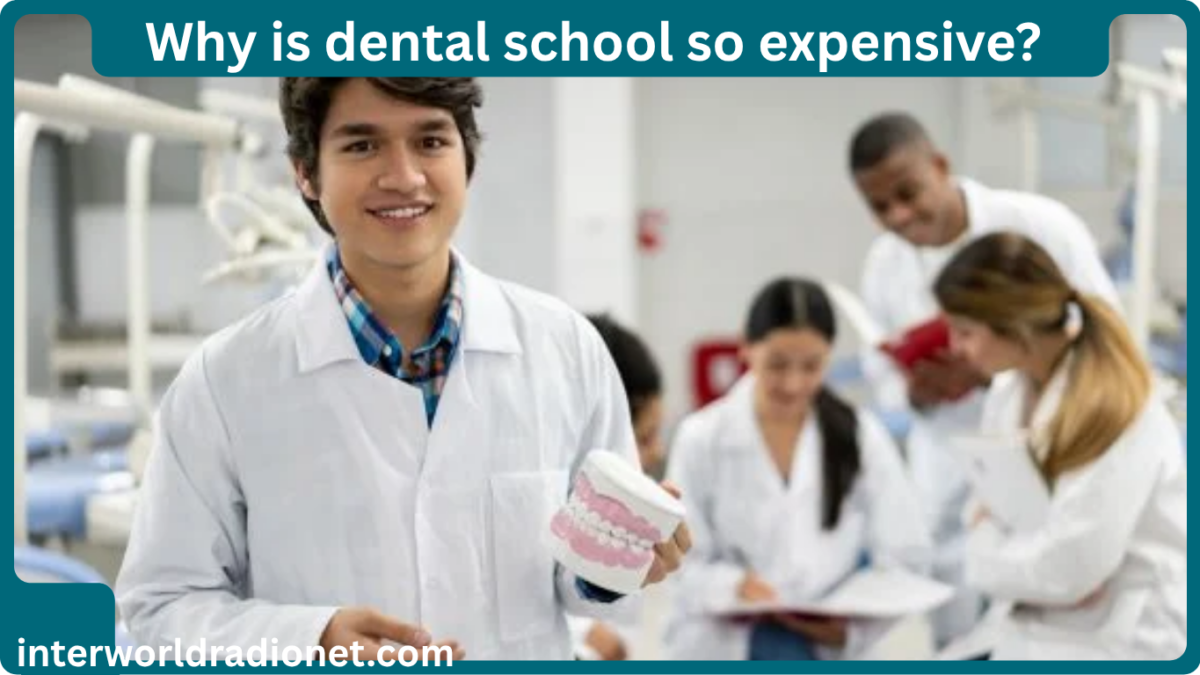
Choosing dentistry can be exciting. You get the chance to build a respected healthcare career, help patients improve their oral health, and eventually have opportunities to work in private practice, public health, hospitals, education, or other areas of dentistry.
But there is one question that many students ask before applying: why is dental school so expensive?
The short answer is that dental school costs much more than a typical college degree because dental students are not only learning from books and lectures. They are also being trained to provide hands-on healthcare. Dental schools need specialized clinics, expensive equipment, dental instruments, simulation laboratories, technology, faculty, patient care systems, infection-control supplies, and other resources that ordinary academic programs may not require.
The price becomes even more significant when tuition is combined with housing, food, transportation, health insurance, instruments, books, fees, and the income a student gives up while studying full time.
According to the American Dental Association, the average first-year cost of dental school in 2025–26, including tuition and mandatory general fees, was about $46,845 for residents at public dental schools, $79,168 for non-residents at public schools, and $90,090 for residents at private dental schools. The actual cost varies widely from school to school.
That means the published tuition price is only part of the story.
This guide explains the major reasons dental school is so expensive, what students actually pay for, why dental school costs can differ dramatically, how student loans increase the real cost, and what future dentists can do to reduce the financial burden.
Why Is Dental School So Expensive?
Dental school is expensive because it combines advanced university education with professional healthcare training.
A dental student must learn subjects such as anatomy, physiology, pathology, pharmacology, microbiology, radiology, oral surgery, periodontics, prosthodontics, endodontics, pediatric dentistry, restorative dentistry, and many other areas.
But classroom learning is only one part of dental education.
Students also have to learn how to examine patients, diagnose oral conditions, take and interpret appropriate images, plan treatment, perform procedures, use dental instruments safely, manage infection control, communicate with patients, and respond to clinical problems.

All of this requires a large amount of equipment, clinical space, faculty supervision, and administrative support.
Also read:What Is a DMD Dentist Meaning? A Simple and Complete Guide for US Patients
In other words, dental school is expensive partly because it is both an academic program and a professional clinical training program.
Dental School Has High Equipment and Technology Costs
One of the biggest differences between dental school and many other graduate programs is the amount of equipment involved.
A dental school cannot train students effectively using only classrooms and computers.
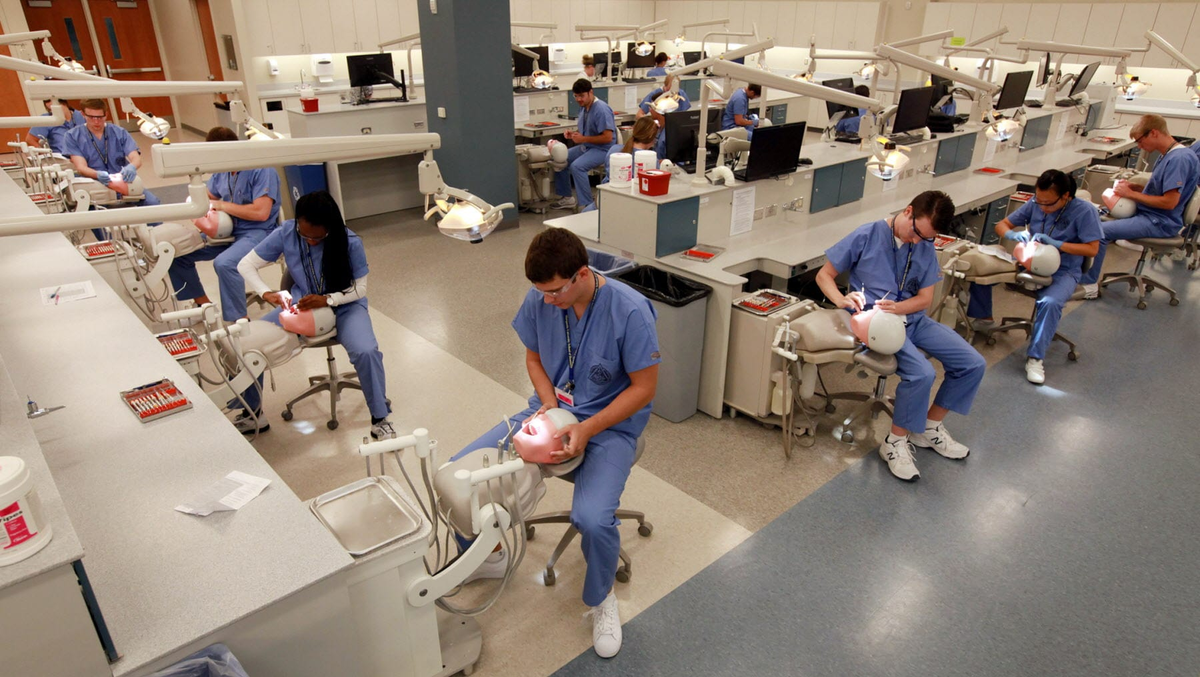
Students need access to dental chairs, handpieces, lights, imaging systems, sterilization equipment, simulation units, laboratory equipment, digital scanners, impression materials, restorative materials, surgical instruments, protective equipment, and other clinical supplies.
Modern dental education may also involve digital dentistry technologies.
Depending on the school, students can be exposed to digital radiography, intraoral scanners, CAD/CAM systems, three-dimensional imaging, digital treatment planning, 3D printing, electronic health records, and computer-based simulation.
These technologies are useful because dentistry is becoming increasingly digital. However, they are also expensive to purchase, maintain, update, and replace.
A dental school may need dozens or hundreds of clinical stations because many students must practice at the same time.
That infrastructure contributes to the cost of education.
Dental Students Need Extensive Hands-On Clinical Training
A major reason dental school cannot simply be delivered online is that dentistry is a hands-on profession.
A student can read about preparing a tooth, placing a restoration, performing a dental extraction, or managing periodontal disease. But reading about a procedure is not enough.
Students need repeated practice.
They begin with simulation and laboratory exercises and eventually move into supervised patient care.
Clinical training requires real patients, dental chairs, instruments, supplies, sterilization systems, faculty supervision, scheduling systems, clinical administrators, and support staff.
The school must also maintain a safe environment for both students and patients.
This creates costs that are not present to the same extent in many other university programs.
Dental School Requires Highly Trained Faculty
Another important factor is the cost of faculty.
Dental students are taught by dentists, scientists, specialists, researchers, and other healthcare professionals.
A dental school may employ specialists in areas such as:
- Oral and maxillofacial surgery
- Orthodontics
- Endodontics
- Periodontics
- Prosthodontics
- Pediatric dentistry
- Oral pathology
- Oral medicine
- Radiology
- Public health
- Restorative dentistry
- General dentistry
Students benefit from learning from professionals who have years of education and clinical experience.
However, highly qualified faculty members are expensive for universities to employ.
Clinical faculty also need to supervise students while they provide patient care. That supervision is essential because dental students are still developing their skills.
The school therefore pays for both teaching expertise and clinical oversight.
Dental School Clinics Are Expensive to Operate
Many dental schools operate large clinics where students treat patients under supervision.
A clinic has ongoing operating costs.
The school may need to pay for:
- Dental chairs
- Sterilization equipment
- Water and electrical systems
- Clinical staff
- Reception staff
- Patient scheduling
- Dental materials
- Personal protective equipment
- Cleaning and infection-control supplies
- Equipment repairs
- Information technology
- Medical and dental waste disposal
- Radiographic systems
- Laboratory services
These expenses continue throughout the year.
A dental school is therefore not simply paying professors to teach classes. It is operating a sophisticated healthcare and educational environment.
That helps explain why dental education has a much higher cost structure than many undergraduate programs.
Infection Control Adds Another Layer of Expense
Infection control is a critical part of modern dentistry.
Dental schools must teach students how to safely treat patients while preventing the spread of infection.
This requires sterilization equipment, disinfectants, personal protective equipment, instrument processing systems, barriers, waste management, monitoring systems, and detailed infection-control procedures.
Dental instruments may need to be cleaned, sterilized, packaged, stored, and processed according to established standards.
The school must also maintain the infrastructure required to support these systems.
These costs may not be obvious when a student looks at a tuition bill, but they are part of the overall cost of delivering dental education.
Dental Instruments Can Be Surprisingly Expensive
Students often discover that tuition is not the only large educational expense.
Many dental programs require students to purchase instruments and equipment.
Depending on the school and year of training, a student may need items such as:
- Hand instruments
- Dental mirrors
- Explorers
- Periodontal instruments
- Restorative instruments
- Handpieces
- Burs
- Impression materials
- Protective equipment
- Simulation materials
- Dental loupes
- Laboratory equipment
- Other clinical supplies
Some schools include certain equipment in tuition or fees, while others require students to purchase some items separately.
This is why prospective students should examine the school’s complete cost-of-attendance information rather than looking only at the advertised tuition.
Dental School Takes Several Years of Full-Time Study
The length of dental education also matters.
Most U.S. dental programs leading to a DDS or DMD require four years of professional dental education after the required undergraduate preparation.
Four years of tuition is significant.
But the bigger issue is that students also need to pay living expenses for those years.
A student who spends four years in dental school may need to pay for housing, food, transportation, utilities, insurance, personal expenses, books, equipment, and other necessities.
Also read:Are Dentists Physicians? A Clear, Friendly Guide for US Patients
If the student borrows money for these expenses, those loans can substantially increase the total financial burden.
The cost is therefore not simply “four years of tuition.”
It is four years of tuition plus four years of living and educational expenses, plus the financial cost of borrowing.
Living Expenses Can Make Dental School Much More Expensive
Two students can attend the same dental school and graduate with very different debt levels.
Why?
One major reason is lifestyle and location.
Housing in a large metropolitan area can cost much more than housing in a smaller city.
Students may also have different transportation costs, family responsibilities, insurance expenses, food budgets, and personal financial situations.
The official cost of attendance usually includes more than tuition.
For example, a student’s financial aid budget may account for housing, food, transportation, books, supplies, health insurance, and other educationally related expenses.
This means the true cost of dental school should be evaluated using the full cost of attendance rather than tuition alone.
Public Dental Schools Are Not Always Cheap
Many students assume that public dental schools are automatically affordable.
That is not always true.
Public schools often have different tuition rates for in-state and out-of-state students.
For students who qualify for resident tuition, a public dental school can be considerably less expensive than many private programs.
However, an out-of-state student may pay substantially more.
The ADA reported that in 2025–26 the average first-year cost including tuition and mandatory general fees was $46,845 for residents at public programs but $79,168 for non-residents. The average resident first-year cost at private programs was $90,090.
These numbers show why residency status can have a major financial impact.
A student should compare the complete four-year cost rather than simply asking whether a school is public or private.
Private Dental Schools Can Have Higher Costs
Private dental schools generally do not receive the same level of state support that public institutions receive.
Their funding models can be different, and tuition may make up a larger part of their revenue.
As a result, private dental schools can have higher tuition.
However, this does not mean every private school is automatically more expensive for every student.
Scholarships, grants, financial aid, family support, and differences in living expenses can change the final amount a student pays.
The best comparison is therefore not “public versus private.”
The better question is:
How much will this specific school cost me from the first day of school until graduation?
That figure should include tuition, fees, instruments, living expenses, expected scholarships, and estimated borrowing.
Dental School Tuition Is Only One Part of the Total Cost
A common mistake is to compare schools using tuition alone.
Suppose School A has lower tuition but is located in a very expensive city.
School B has higher tuition but is located somewhere with much lower housing costs.
The difference in tuition may not represent the difference in total cost.
Students should consider the entire cost of attendance.
This can include:
- Tuition
- Mandatory fees
- Dental instruments
- Books
- Supplies
- Equipment
- Housing
- Food
- Transportation
- Health insurance
- Personal expenses
- Loan fees
- Interest on borrowed money
This broader calculation gives a much clearer picture of the financial commitment.
Student Loans Can Make Dental School More Expensive
Student loans are one of the biggest reasons the final cost of dental school can be much higher than the original tuition bill.
Suppose a student borrows money during four years of dental school.
The student may graduate owing a large principal balance.
Interest can also accumulate on many loans while the student is in school.
That means the amount eventually repaid can be significantly higher than the amount originally borrowed.
This is why two students who attend the same dental school may experience very different financial outcomes.
A student who pays a larger share of the cost with scholarships, savings, or family assistance may graduate with relatively little debt.
Another student who finances most expenses through loans may graduate with a much larger balance.
How Much Dental School Debt Do Graduates Have?
The debt numbers help explain why people are concerned about the cost of dental education.
According to the ADEA 2025 survey, the average education debt among responding dental school graduates who had debt was $297,800. About 82% of respondents graduated with education debt, and dental school loans represented about 94% of that debt.
The figure includes both dental school debt and outstanding predental education debt.
This is an important distinction.
A student who already has undergraduate or graduate loans may enter dental school with debt before borrowing anything for dental school.
That existing debt can make the total financial burden considerably larger.
Why Dental School Debt Can Approach or Exceed $300,000
A six-figure debt balance may seem surprising.
But consider how the costs accumulate.
A student may have:
- Undergraduate education debt
- Four years of dental tuition
- Dental fees
- Instruments
- Housing
- Food
- Transportation
- Health insurance
- Books and supplies
- Interest on loans
Even if tuition were the only expense, four years of a high annual tuition bill can quickly create a large balance.
Once living expenses and other educational costs are added, borrowing can become substantial.
This is one reason students should think about dental school finances before they receive an acceptance letter.
Why Can’t Dental Schools Simply Lower Tuition?
It may seem like dental schools could simply lower their tuition, but their operating costs are very high. Schools have to pay for qualified faculty, dental clinics, buildings, equipment, technology, laboratories, patient-care services, staff, and student support. They may also spend money on research and community dental programs. Public schools can receive support from state funding, while private schools often depend more heavily on tuition and other sources of funding. Because of these different costs and funding systems, lowering tuition is not always simple. Schools would need to find other ways to cover their expenses while still providing safe, high-quality dental education.
Accreditation and Quality Requirements Matter
Dental schools must meet professional education and safety standards before students can graduate and become licensed dentists. Students need proper clinical training, modern equipment, qualified supervision, and enough hands-on experience to safely treat patients. Schools cannot simply remove important training or equipment to reduce costs because patient safety depends on proper education. Maintaining clinics, technology, equipment, and trained faculty costs money, which is another reason dental education can be expensive.
Why Dental School Costs More Than Many Other Graduate Programs
Dental school is often compared with graduate programs such as master’s degrees.
The comparison can be misleading.
A traditional graduate program may require classrooms, laboratories, faculty, research resources, and computers.
Dental education requires many of those things plus a functioning clinical environment.
A dental student is learning to work directly on the human body.
The student must develop precise hand skills and learn to use specialized instruments.
That requires simulation laboratories and clinical practice.
The school must also maintain patient-care facilities.
This is a major reason dental education has a different cost structure.
The Opportunity Cost of Dental School
There is another cost that does not appear clearly on a tuition bill: lost income.
Dental school is demanding.
Many students cannot work enough hours to meaningfully pay for their education while completing the program.
If a student could otherwise earn income during those years, giving up that income is part of the economic cost of attending dental school.
For example, someone working full time might earn tens of thousands of dollars each year.
During dental school, that person may have very limited ability to work.
So the financial cost of dental education can be viewed in two ways:
The direct cost is what the student pays.
The opportunity cost is what the student gives up by spending several years in full-time professional education.
This is an important part of understanding the real investment.
Why Dentistry Can Still Be Financially Attractive
High tuition does not automatically mean dental school is a bad investment.
Dentistry can provide a professional career with multiple income and practice options.
After graduation and licensure, dentists may work in private practices, group practices, community clinics, hospitals, public health, academia, military dentistry, or other settings.
Some dentists eventually become practice owners.
Others specialize after dental school.
The financial value of the degree depends on many factors, including income, location, specialty, practice ownership, debt level, taxes, lifestyle, and repayment strategy.
The key point is that high tuition should be evaluated alongside the potential career benefits rather than considered in isolation.
Does Dental School Cost the Same for Everyone?
No.
The amount a student pays can vary significantly.
Important factors include:
- School type
- Residency status
- Tuition rate
- Scholarships
- Grants
- Family support
- Personal savings
- Living costs
- Existing student loans
- Housing choices
- Transportation
- Personal spending
- Amount borrowed
- Loan interest rates
Two classmates can graduate from the same school with very different debt balances.
This is why financial planning is highly personal.
Scholarships Can Reduce Dental School Costs
Scholarships are one of the most valuable ways to reduce dental school debt because money that does not have to be repaid is generally more valuable than borrowed money.
Also read:Where Can I Find Dental Offices Hiring Near Me and Get Hired?
Students should investigate scholarships early.
Potential sources can include:
- Dental schools
- State organizations
- Professional associations
- Community organizations
- Foundations
- Military programs
- Public service programs
- Programs for students from certain backgrounds or communities
According to ADEA’s 2025 survey, students used several sources to finance dental education, including grants and scholarships, family and friends, savings, and loans. Loans remained the largest source of financing for many students.
The lesson is simple: do not wait until the first semester to think about scholarships.
Choosing a Lower-Cost Dental School Can Matter More Than Small Lifestyle Changes
Students sometimes focus heavily on saving money on coffee, food, or entertainment.
Those choices matter, but school selection can have a much larger financial effect.
A difference of tens of thousands of dollars in annual educational cost can become a very large difference over four years.
Interest can make the gap even larger.
ADEA has warned prospective students to take cost seriously because differences between dental schools can become much larger after loan interest is considered.
This means choosing a reasonably priced school can be one of the strongest financial decisions a future dentist makes.
Why Applying to Dental School Also Costs Money
The expense begins before enrollment.
Dental school applicants may have to pay application fees, supplemental fees, testing expenses, travel costs, interview expenses, and deposits.
ADEA currently lists an ADEA AADSAS fee of $264 for the first dental school and $115 for each additional school designation, with supplemental fees potentially charged separately by individual schools.
Applicants may also need to travel for interviews.
That can involve:
- Airfare
- Hotels
- Transportation
- Food
- Professional clothing
- Other travel expenses
These costs can add up quickly when a student applies to multiple programs.
The 2026 Federal Student Loan Changes Make Cost Even More Important
Dental school financing is changing.
Beginning July 1, 2026, new dental students face significant changes to federal student borrowing.
The American Dental Education Association reports that Direct PLUS loans are being eliminated for new dental students beginning on or after that date, subject to transition rules for certain students already enrolled and borrowing in the same program.
The American Dental Association also reports that new professional-degree students face a $50,000 annual federal borrowing limit under the legislation, which can be below the annual cost of attendance at many dental schools.
This is especially important because many dental programs cost more than $50,000 per year.
Students may therefore need to pay closer attention to scholarships, institutional aid, savings, family resources, and other financing options.
The changing loan environment makes comparing dental school costs more important than ever.
What Does the New Loan Environment Mean for Future Dental Students?
Future dental students should not assume that federal loans will cover the full cost of dental school. Before enrolling, students should calculate tuition, living expenses, and other costs and find out how much financial aid they can receive. They should also check available scholarships and grants and understand whether they may need private loans. Knowing the expected debt and repayment costs before starting school can help prevent financial problems later.
Private Loans Can Be More Complicated
If federal loans and other financial aid do not cover the full cost, some students may consider private loans. These loans can have different interest rates, repayment terms, and borrower protections. Students should compare their options carefully and understand the total cost before borrowing. It is also helpful to discuss financing options with the school’s financial aid office.
How Can Students Reduce the Cost of Dental School?
Students can reduce dental school costs by comparing schools based on their total cost, not just tuition. Applying for scholarships and grants, choosing affordable housing, creating a realistic budget, and avoiding unnecessary borrowing can make a big difference. Students should also understand their loan terms and borrow only what they actually need.
Why Borrowing Less Can Be More Powerful Than Repaying Faster
Reducing the amount borrowed can make dental school debt easier to manage after graduation. Every dollar that a student does not borrow is a dollar that does not need to be repaid, along with any interest that may build on it. Students should therefore avoid accepting more loan money than they need and keep track of their borrowing throughout dental school.
Should You Avoid Dental School Because It Is Expensive?
Dental school is expensive, but the cost does not automatically mean you should avoid becoming a dentist. Students should consider the total cost, expected debt, available financial aid, career goals, and possible income after graduation. Comparing these factors can help students decide whether dental school makes financial sense for their individual situation.
Is Dental School Worth the Cost?
There is no single answer for everyone. Dental school can be a valuable long-term investment, but taking on very high debt can create financial pressure. The value of the degree depends on factors such as the amount borrowed, career choice, income, location, and repayment plan. Instead of asking whether dental school is worth it in general, students should ask whether a specific school is worth its cost for their career goals.
The Cheapest Dental School Is Not Always the Best Choice
Cost is important, but it should not be the only factor when choosing a dental school. Students should also consider clinical training, location, faculty, curriculum, patient experience, student support, and career opportunities. If two schools offer similar opportunities, the one that requires less borrowing may provide a strong financial advantage.
How to Compare Dental School Costs Correctly
Students should compare the full four-year cost of each dental school. Include tuition, fees, instruments, supplies, housing, food, transportation, insurance, and other expenses. Then subtract expected scholarships and grants to estimate how much you may need to borrow. Creating a low-cost, expected, and high-cost budget can also help you understand how different financial situations could affect your future debt.
Why Cost Should Be Considered Before Applying
Many students think about finances only after receiving an acceptance.
That can be too late.
Before applying, students should research:
- Tuition
- Fees
- Residency rules
- Estimated living costs
- Scholarship opportunities
- Average student debt
- Financial aid policies
- Cost of required instruments
- Transportation expenses
- Housing costs
This allows applicants to build a realistic school list.
ADEA specifically encourages prospective dental students to consider the cost of attendance and communicate early with financial aid offices about available funding options.
The Real Reason Dental School Feels So Expensive
When people ask why dental school is so expensive, they often think the main reason is high tuition. However, the real cost is much broader. Dental schools need expensive equipment, modern clinics, simulation labs, dental instruments, technology, supplies, and highly trained teachers. Students also need to pay for housing, food, transportation, insurance, books, and other daily expenses while they study. Because dental school usually requires several years of full-time education, students may also lose the income they could have earned during that time. Many students use loans to pay for these costs, and interest can make the total amount they repay much higher. This is why the tuition price alone does not show the true cost of dental school. Students should look at tuition, fees, living expenses, financial aid, and possible loan interest when calculating how much dental school will really cost.
What Prospective Dental Students Should Do in 2026
Students planning to attend dental school in 2026 should think carefully about the financial side before choosing a school. First, they should calculate the complete cost of attendance, including tuition, fees, dental instruments, supplies, housing, food, transportation, and other expenses. They should also learn how much federal student aid they may receive under the current loan rules and find out whether scholarships or grants can reduce their costs. If they need additional financing, they should carefully review the terms and interest rates before taking private loans. Creating a simple monthly budget can also help prevent unnecessary borrowing. Students should compare the total cost of several dental schools instead of looking only at tuition. Before making a final decision, it is also a good idea to speak with the school’s financial aid office and ask about scholarships, grants, loans, and the estimated cost of completing the entire dental program. Careful planning can help future dentists reduce unnecessary debt and make a smarter financial decision.
Final Thoughts
So, why is dental school so expensive? The answer is not just one thing. Dental education costs more because it combines university-level science education with intensive clinical training, specialized equipment, patient care, technology, laboratories, infection-control systems, highly trained faculty, and several years of full-time study. Students also have to cover living expenses and may rely heavily on loans. Current data show that dental education costs can vary greatly by school and residency status, while average education debt among indebted dental graduates remains close to $300,000.
The good news is that the price of dental school does not have to be accepted blindly. Students can reduce financial pressure by comparing total costs, choosing affordable programs when possible, applying for scholarships and grants, controlling living expenses, and borrowing carefully. The 2026 changes to federal student loans make this planning even more important for new dental students.
Dental school is a major investment, but the smartest approach is not to focus only on the sticker price. Look at the complete financial picture, including what you will borrow, what you can receive in aid, what you may earn after graduation, and how your career plans fit into the repayment equation. A carefully chosen dental education can be expensive without necessarily being financially overwhelming.
FAQs About Why Dental School Is So Expensive
1. Why does dental school cost more than medical school in some cases?
Dental and medical education have different cost structures, so there is no universal rule that one is always more expensive. Dental education has substantial costs related to dental clinics, instruments, simulation laboratories, equipment, materials, and hands-on procedures. The actual cost depends on the school, residency status, living expenses, and financial aid.
2. Can I work while attending dental school?
Some students work limited hours, but dental school is academically and clinically demanding. The amount of work a student can realistically handle varies. Working too many hours can interfere with studying and clinical responsibilities, so students should create a realistic schedule rather than assuming employment will cover a large portion of their expenses.
3. What is the most expensive part of dental school?
For most students, tuition is the largest direct educational expense. However, the total financial burden also includes living expenses, instruments, fees, supplies, insurance, transportation, and loan interest. For students who borrow heavily, interest can become an important part of the final repayment cost.
4. Can dental students get scholarships that cover all four years?
Some scholarships can provide substantial financial assistance, but full-ride opportunities are limited and highly competitive. Students should investigate school-based scholarships, professional organizations, government programs, military opportunities, service-based programs, and other forms of financial assistance.
5. How can I find out whether a dental school is financially worth it?
Compare the school’s estimated four-year cost with your expected scholarships, available financial aid, likely borrowing, and career goals. Do not compare tuition alone. Look at the full cost of attendance and estimate how much debt you could have at graduation. Then consider whether the school’s educational opportunities justify the additional cost compared with less expensive alternatives.