Do Dentists Have Residency After Dental School?
September 15, 2026
Jadeitový Kameň: Complete Guide to Jadeite, Its Meaning, Uses, Value, and Care
September 19, 2026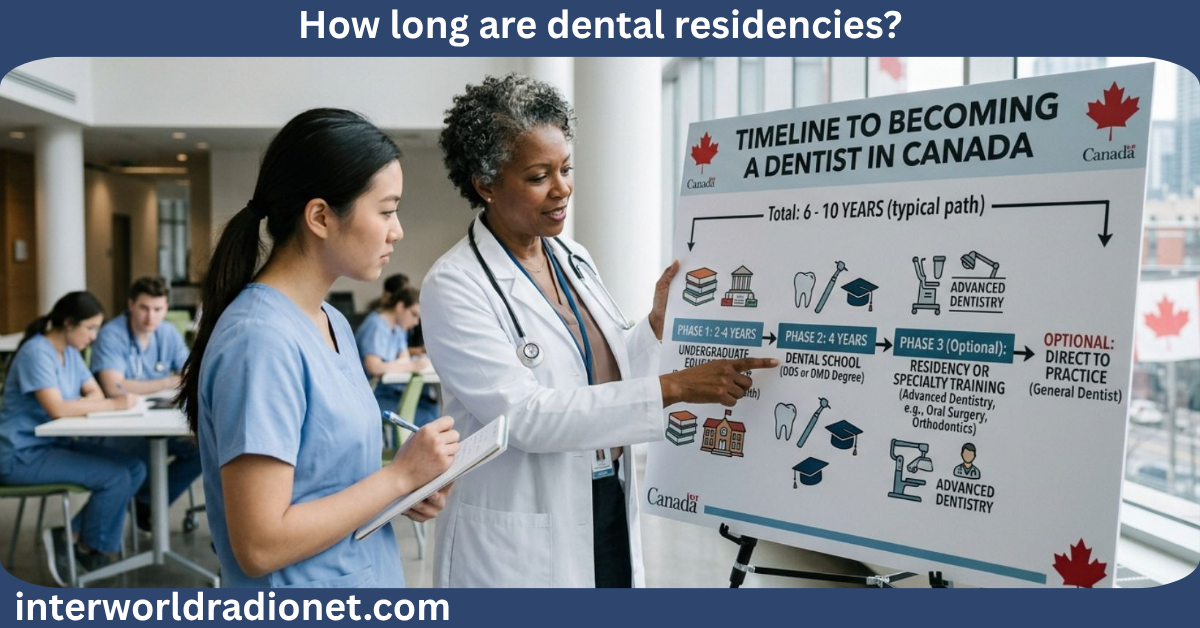
If you are thinking about becoming a dentist, you may wonder, “How long are dental residencies?” This is an important question because dental residency can add several years to your education and training after dental school.
In the United States, dental residencies usually last between one and six years, depending on the type of program and dental specialty. Some general dentistry programs take one year, while advanced specialty programs, such as oral and maxillofacial surgery, can take four to six years.
Not every dentist needs to complete a residency. After earning a dental degree and meeting state licensing requirements, a dentist can generally begin practicing general dentistry without completing a postgraduate residency. However, dentists who want advanced training or a dental specialty may need to complete a residency program.
The length of residency is only one part of the decision. Dentists should also consider the type of training, clinical responsibilities, patient population, lifestyle, income, and career opportunities associated with each specialty.
This guide explains how long dental residencies are, what happens during residency, which specialties require longer training, how dental residency compares with dental school, and what students should know before applying.
How Long Are Dental Residencies in the United States?
Dental residencies in the United States generally last from one to six years.
The exact length depends on the program and specialty. A one-year general practice residency gives dentists additional clinical experience after dental school. A two-year advanced education program can provide broader training and more complex patient care.
Specialty programs can take much longer.
For example, orthodontics and pediatric dentistry commonly require about two to three years of postgraduate education. Periodontics and prosthodontics commonly take around three years. Oral and maxillofacial surgery can require four to six years, depending on the program structure.
The important thing to remember is that there is no single dental residency length.
The answer to “how long are dental residencies?” depends mainly on what type of dentist you want to become.
Also read:What Should You Know Before Choosing a Career in Dental?
Is Dental Residency Required After Dental School?
No, dental residency is not required for every dentist.
A person who completes an accredited dental degree program, passes the required licensing examinations, and meets the licensing requirements of a state can generally begin practicing as a general dentist without completing a residency.
This is different from medical education, where residency is normally required after medical school before independent physician practice.
Dental graduates have more flexibility.
Some graduates go directly into private practice. Others join a group dental practice, community clinic, public health organization, military service, or another dental setting.
Other graduates choose postgraduate education because they want more clinical experience or plan to become specialists.
Why Do Dentists Complete Residencies?
Dental residency gives a dentist an opportunity to gain experience beyond dental school.
Dental school provides broad education across many areas of dentistry. However, a new dentist may still want additional experience before entering independent practice.
A residency can provide exposure to more complex patients and procedures.
Residents may work with patients who have significant medical conditions, dental emergencies, complicated treatment needs, or special care requirements.
Residency can also help dentists become more comfortable making treatment decisions.
The goal is not simply to learn more procedures. It is also to develop clinical judgment, communication skills, diagnosis skills, and confidence.
How Long Is a General Dentistry Residency?
General dentistry postgraduate programs commonly last one year.
These programs are often designed to give newly graduated dentists broader clinical experience before they enter practice.
A general practice residency, often called a GPR, is one common type.
An advanced education in general dentistry program, commonly called an AEGD, is another type of postgraduate general dentistry training.
Both can provide additional clinical education, but the exact experience can vary considerably from one program to another.
Some programs may focus more heavily on hospital-based care, while others may provide extensive experience in general dental procedures.
What Is a General Practice Residency?
A general practice residency allows a new dentist to continue learning while providing patient care.
Residents may treat patients with complex dental needs and may work with specialists and other health professionals.
Hospital-based general practice residencies can be particularly useful for dentists who want experience treating medically complex patients.
Depending on the program, residents may gain experience with areas such as oral surgery, emergency dental care, restorative dentistry, prosthodontics, endodontics, periodontics, and treatment planning.
The exact schedule and clinical exposure vary by program.
What Is an AEGD Program?
AEGD stands for Advanced Education in General Dentistry.
It is a postgraduate dental education program designed to provide additional training in general dentistry.
AEGD programs can help dentists improve their clinical skills while working with patients under supervision.
Some programs last one year, while others may offer longer training options.
An AEGD can be useful for someone who wants more experience in general dentistry but does not necessarily want to become a specialist.
How Long Are Dental Residencies for Specialists?
Specialty dental residencies usually take longer than general dentistry programs.
The length varies by specialty.
A simplified overview looks like this:
| Dental Specialty | Common Residency Length |
| General Practice Residency | About 1 year |
| Advanced Education in General Dentistry | About 1 year, sometimes longer |
| Pediatric Dentistry | About 2–3 years |
| Orthodontics | About 2–3 years |
| Periodontics | About 3 years |
| Prosthodontics | About 3 years |
| Endodontics | About 2–3 years |
| Oral and Maxillofacial Pathology | About 3 years |
| Oral and Maxillofacial Radiology | About 2–4 years |
| Dental Public Health | About 1–2 years |
| Oral and Maxillofacial Surgery | About 4–6 years |
These are general ranges rather than universal rules. Individual programs can have different structures and requirements.
How Long Is an Orthodontic Residency?
Orthodontic residency programs commonly take about two to three years.
Orthodontists specialize in diagnosing and treating problems involving tooth and jaw alignment.
During orthodontic residency, dentists learn advanced methods for moving teeth and managing bite problems.
Training can include traditional braces, clear aligners, growth and development, facial growth, treatment planning, and other orthodontic concepts.
The program is intensive because orthodontic treatment requires careful planning over time.
How Long Is a Pediatric Dentistry Residency?
Pediatric dentistry residency commonly takes two years, although some programs may have different structures.
Pediatric dentists focus on the oral health of children and adolescents.
Training involves more than learning how to treat small teeth.
Residents learn how to communicate with children, manage behavior, understand childhood development, treat dental emergencies, and care for patients with special healthcare needs.
Pediatric dentistry also involves working closely with parents and caregivers.
How Long Is a Periodontics Residency?
Periodontics residency commonly lasts about three years.
Periodontists focus on the structures that support the teeth, including the gums and jawbone.
Their training can involve the diagnosis and treatment of periodontal disease, gum procedures, dental implants, and other advanced treatments involving supporting tissues.
Periodontics requires strong knowledge of both biology and surgical care.
How Long Is a Prosthodontics Residency?
Prosthodontics residency commonly takes about three years.
Prosthodontists specialize in restoring and replacing teeth.
Their work can involve crowns, bridges, dentures, dental implants, and complex full-mouth rehabilitation.
The specialty requires detailed treatment planning because prosthodontic treatment often involves several teeth and multiple stages of care.
How Long Is an Endodontics Residency?
Endodontic residency programs commonly last about two to three years.
Endodontists specialize in treating the inside of the tooth and conditions involving dental pulp and related tissues.
Root canal treatment is one of the procedures most closely associated with endodontics.
Residents receive advanced training in diagnosis, root canal procedures, pain management, and difficult cases.
Endodontic residency is highly focused because the specialty requires detailed knowledge of tooth anatomy and careful clinical technique.
How Long Is an Oral and Maxillofacial Surgery Residency?
Oral and maxillofacial surgery is one of the longest dental specialty training paths.
Programs commonly last four to six years.
The specialty involves surgical treatment of conditions affecting the mouth, jaws, face, and related structures.
Training can include tooth extractions, dental implants, facial injuries, pathology, anesthesia, and other surgical procedures.
Some programs also include extensive medical training.
The longer training period reflects the complexity of the specialty and the broad range of surgical and medical skills required.
Why Does Oral Surgery Residency Take So Long?
Oral and maxillofacial surgery requires skills that go beyond routine dental treatment.
Residents may need to understand anesthesia, surgical procedures, medical emergencies, facial anatomy, trauma care, and complex patient management.
Depending on the program, residents may also spend significant time in a hospital environment.
Some programs award additional degrees or provide extensive medical education as part of the training structure.
This helps explain why oral and maxillofacial surgery residency can take considerably longer than many other dental specialties.
How Long Are Dental Residencies Compared With Medical Residencies?
Dental and medical residency structures are different.
Dental residencies can range from approximately one year for general postgraduate training to six years for some oral and maxillofacial surgery programs.
Medical residency can also range from several years to much longer depending on specialty and additional fellowship training.
One important difference is that general dentists can usually begin independent dental practice after dental school and licensure without completing a residency.
Physicians normally need postgraduate residency training after medical school before practicing independently in their chosen field.
This difference is important for students comparing dental careers with medical careers.
What Happens During a Dental Residency?
Dental residency is not simply more classroom education.
Residents spend a significant amount of time providing patient care under supervision.
A typical residency can involve:
- Patient examinations
- Diagnosis
- Treatment planning
- Clinical procedures
- Emergency care
- Hospital experience
- Case presentations
- Continuing education
- Discussions with faculty
- Medical and dental consultations
- Documentation and patient follow-up
The exact responsibilities depend on the program.
A surgical residency will look very different from an orthodontic residency.
Do Dental Residents Treat Real Patients?
Yes.
Clinical patient care is a major part of dental residency.
Residents typically provide treatment under the supervision of experienced dentists and specialists.
This allows residents to apply what they learned in dental school while developing more advanced clinical judgment.
Patient care also teaches something that textbooks cannot fully provide: how to make decisions when real patients have different needs, medical histories, concerns, and expectations.
Is Dental Residency Difficult?
Dental residency can be challenging.
The difficulty comes from several areas.
Residents have clinical responsibilities while continuing to learn.
They may work long hours depending on the program.
They may see complex patients and need to make careful decisions.
Some programs also involve emergency care, hospital rotations, call schedules, research, presentations, and academic responsibilities.
However, the experience can be highly rewarding.
Many residents finish training with greater confidence and a stronger understanding of their specialty.
How Many Hours Do Dental Residents Work?
Work hours vary by specialty and program.
A general dentistry residency may have a different schedule from an oral and maxillofacial surgery residency.
Hospital-based programs may involve emergency coverage or on-call responsibilities.
Surgical programs can have particularly demanding schedules.
Students should review the actual schedule of each program instead of assuming that every residency has the same workload.
The number of hours is important, but the type of work matters too.
A program with a busy schedule may provide valuable clinical experience, while another program may offer a different balance between clinical care, research, and education.
Do Dental Residents Get Paid?
Many dental residency programs provide a stipend or salary.

However, the amount can vary substantially based on the program, location, specialty, institution, and funding structure.
A dental resident is still in postgraduate training, so the compensation may be lower than what an experienced dentist earns in private practice.
Students should carefully review the financial details of each program before applying.
It is also important to consider benefits such as health insurance, vacation, retirement contributions, educational support, and malpractice coverage when available.
Do Dental Residents Pay Tuition?
The financial structure of dental residency programs varies.
Some programs may charge tuition or educational fees.
Others may provide a salary or stipend without traditional tuition.
Some programs can have a combination of costs and benefits.
Students should never assume that every residency works the same way.
Before accepting a position, review the program’s current information about tuition, fees, salary, benefits, insurance, and other expenses.
Can You Work While Doing a Dental Residency?
Working another job during residency may be difficult.
The amount of outside work that is practical depends on the program schedule and its policies.
Residency requires a significant time commitment.
Residents need enough time for patient care, education, studying, documentation, and rest.
Some programs may restrict outside employment because of workload or professional responsibilities.
Anyone considering outside work should understand the program’s current rules before making a commitment.
What Is the Difference Between Dental School and Dental Residency?
Dental school and dental residency have different purposes.
Dental school provides broad foundational training.
Students learn the major areas of dentistry and develop the skills needed to become licensed dentists.
Residency comes afterward for dentists who want additional training.
Residency is usually more focused on clinical practice and advanced patient care.
A simple way to think about it is:
Dental school teaches you how to become a dentist.
Residency helps you develop advanced skills or deeper experience after becoming a dentist.
How Long Does It Take to Become a Dentist With Residency?
The total timeline depends on the path.
A common U.S. pathway includes about four years of undergraduate education followed by about four years of dental school.
If a student then completes a one-year general dentistry residency, the total educational path after high school may be around nine years.
A student entering a three-year specialty residency may need around eleven years of education after high school.
A longer oral and maxillofacial surgery program can bring the total to approximately twelve to fourteen years, depending on the undergraduate and dental school pathway and the specific residency.
These are general estimates.
Students can have different timelines based on their education, gap years, prerequisites, program structures, and career choices.
Does Residency Make You a Better Dentist?
Residency can provide valuable additional training, but completing a residency does not automatically make someone a better dentist than every dentist who does not complete one.
A dentist’s quality depends on many factors.
These can include education, clinical experience, continuing education, communication, judgment, technical skills, professionalism, and commitment to patient care.
Residency can provide a structured environment for developing these qualities.
For some dentists, direct entry into general practice may provide the experience they need.
For others, residency is an important step toward their career goals.
Who Should Consider a Dental Residency?
A dental residency may be a good choice for someone who wants more clinical experience after dental school.
It may also be useful for students who want to specialize.
Also read:Is Dental Hygiene Considered a Professional Degree or a Healthcare Degree?
A residency can be particularly attractive to someone who enjoys complex cases, hospital dentistry, surgery, academic work, or treating specific patient groups.
However, not every dental graduate needs one.
Students should consider their career goals rather than choosing residency simply because other graduates are doing it.
Who May Not Need a Dental Residency?
A graduate who wants to work as a general dentist may not need postgraduate residency training.
If the person feels prepared to practice and meets all licensing requirements, entering general practice can be a reasonable option.
Some graduates prefer to begin earning a full dentist’s income sooner.
Others may want to gain practical experience in a private practice environment.
There is no single correct path for every dental graduate.
How Competitive Are Dental Residencies?
Competition varies by specialty and program.
Some programs receive many more applications than available positions.
Specialties with limited training positions can be particularly competitive.
Factors that may influence an applicant’s strength include dental school performance, clinical experience, recommendations, research, leadership, interviews, and other qualifications.
The importance of each factor depends on the program.
Students should research individual programs rather than assuming that every residency uses the same selection process.
When Should Dental Students Apply for Residency?
Most students begin thinking about residency well before graduation.
The exact application timeline depends on the program and specialty.
Students should research requirements early because some programs require examinations, recommendations, personal statements, transcripts, interviews, or other materials.
Waiting until the last minute can make the application process stressful.
A good approach is to identify potential specialties early and then build relevant experience during dental school.
What Should You Look for in a Dental Residency Program?
Residency length should not be the only factor.
Students should also consider:
Clinical experience
Patient population
Faculty
Hospital affiliations
Technology
Case volume
Location
Cost
Salary or stipend
Benefits
Call schedule
Research opportunities
Board preparation
Career placement
Program culture
A one-year program with strong clinical exposure may be more useful for one student than a longer program that does not match that student’s goals.
How Does Specialty Choice Affect Residency Length?
Specialty choice is one of the biggest factors affecting residency length.
A dentist interested in orthodontics may need roughly two to three years of postgraduate training.
Someone interested in periodontics or prosthodontics may need around three years.
A person interested in oral and maxillofacial surgery may need four to six years.
This difference means students should decide what kind of dentistry they want to practice before focusing only on the number of years.
The length of training is a trade-off for advanced knowledge and career specialization.
Can You Change Specialties After Residency?
Changing direction after residency is possible, but it can require additional education.
For example, a dentist who completes general dentistry training and later decides to specialize may need to apply to a specialty program.
Likewise, additional postgraduate education may be necessary when moving into a different specialized area.
This is why career planning during dental school can be valuable.
However, students do not need to have every detail of their future career decided immediately.
Clinical rotations and real-world experience can help clarify interests.
Does Every Dental Specialty Require Residency?
Most recognized dental specialties require postgraduate specialty training for dentists who want to formally practice as specialists in that field.
The exact requirements depend on the specialty, program, state rules, and professional regulations.
There can also be differences between completing a residency and meeting the requirements to become formally recognized or board certified as a specialist.
Students should check current requirements for the specialty and state in which they plan to practice.
What Skills Do Dental Residents Develop?
Dental residents develop both technical and professional skills.
Clinical skills are obviously important.
However, residents also learn how to evaluate complex cases, communicate with patients, work with healthcare professionals, manage time, document care, and respond to unexpected situations.
Specialty residents develop deeper skills in their chosen area.
A pediatric dental resident may become more comfortable treating children with behavioral or medical challenges.
An oral surgery resident may develop advanced surgical and anesthesia skills.
An orthodontic resident may focus heavily on diagnosis, growth, treatment planning, and tooth movement.
How Residency Can Help New Dentists Build Confidence
One major benefit of postgraduate training is experience.
Also read:What Dentists Wish You Knew About Your Oral Health?
Dental school provides supervised clinical experience, but a residency can expose graduates to a different level of responsibility and complexity.
Residents see many patients.
They encounter cases that may not be common in a traditional dental school clinic.
They also have access to faculty and other healthcare professionals who can help them evaluate difficult situations.
Over time, this can improve clinical confidence.
Confidence does not mean believing you know everything. Good clinical confidence includes knowing when to ask for help.
Dental Residency and Patient Safety
Patient safety is a major part of postgraduate dental education.
Residents must learn to evaluate medical histories, medications, allergies, health conditions, and other factors that can affect treatment.
They also learn the importance of infection control, accurate documentation, communication, informed consent, and appropriate referrals.
These skills matter because dental care is connected to overall health.
A dentist may need to recognize when a patient requires medical evaluation or specialist care.
Dental Residency and Hospital Experience
Some dental residency programs include hospital-based training.
This can be especially useful for dentists interested in medically complex patients.
Hospital experience can expose residents to other healthcare professionals and different types of patient care.
Depending on the program, residents may work alongside physicians, nurses, anesthesiology teams, pharmacists, and other professionals.
This type of environment can help dentists understand how oral health fits into broader healthcare.
Is a One-Year Dental Residency Worth It?
For many graduates, a one-year residency can be valuable.
It may provide additional clinical experience, exposure to complex patients, and time to improve skills before entering independent practice.
However, the value depends on the individual.
Someone who already feels well prepared for general practice may prefer to begin working immediately.
Another graduate may benefit greatly from an additional year of supervised training.
The best choice depends on confidence, career goals, finances, learning style, and the quality of the residency program.
Is a Longer Dental Residency Better?
Not necessarily.
A longer residency is not automatically better than a shorter one.
Length reflects the training requirements of the specialty and program.
A six-year oral and maxillofacial surgery residency is longer because the specialty requires extensive surgical and medical training.
A one-year general practice residency has a different purpose.
Students should compare programs based on what they teach rather than assuming that more years always mean better education.
How to Choose Between General Dentistry and Specialization
Think about the type of work you enjoy.
If you like variety and want to treat a broad range of patients and dental problems, general dentistry may be a good fit.
If you strongly enjoy a particular area, specialization may make sense.
For example, someone interested in children’s oral health might consider pediatric dentistry.
Someone who enjoys tooth alignment may prefer orthodontics.
Someone interested in surgery may explore oral and maxillofacial surgery.
Someone interested in gum health and implants may consider periodontics.
The best specialty is not necessarily the one with the highest income or longest training. It is the one that fits your interests, abilities, and long-term goals.
Common Misconceptions About Dental Residencies
One common misconception is that every dentist must complete a residency.
That is not true.
Another misconception is that every dental residency takes three or more years.
Many general dentistry programs are about one year.
Some people also assume that all residents perform the same procedures.
In reality, residency experiences vary significantly.
Another misconception is that a longer program automatically produces a better dentist.
Training quality, supervision, clinical experience, and personal effort all matter.
Final Thoughts
So, how long are dental residencies? The answer depends on the type of program. Dental residencies in the United States can range from about one year for general postgraduate training to four to six years for some oral and maxillofacial surgery programs. Other specialties commonly require about two to three years of advanced training.
Dental residency is not required for every dentist. Many graduates can begin practicing general dentistry after completing dental school and meeting state licensing requirements. Others choose residency because they want more clinical experience, want to treat complex patients, or plan to become specialists.
When choosing a residency, do not focus only on the number of years. Look at the clinical experience, faculty, patient population, program culture, cost, compensation, schedule, and career opportunities. The right residency is the one that supports your professional goals and helps you become a confident, skilled, and responsible dental professional.
Frequently Asked Questions About How Long Are Dental Residencies
Can a dentist complete residency part-time?
Most dental residency programs are structured as full-time postgraduate training. Part-time options may exist in limited circumstances, but students should check the requirements of individual programs rather than assuming that a residency can be completed on a flexible schedule.
Do dental residents receive malpractice coverage?
Many residency programs provide some form of professional liability coverage for residents as part of the training program. However, coverage differs between institutions. Applicants should review the exact benefits and insurance terms before accepting a position.
Can international dental graduates apply for U.S. dental residencies?
Some programs accept international dental graduates, but eligibility varies. Certain programs may require a U.S. or Canadian dental degree, while others may have pathways for internationally trained dentists. Additional requirements can include exams, credential evaluation, English-language requirements, and state or program-specific qualifications.
Can dental residency training help with a future academic career?
Yes. Residency can provide experience that may be useful for dentists interested in teaching, research, or academic dentistry. Some postgraduate programs include research, presentations, teaching opportunities, or other academic activities.
What happens after finishing a dental residency?
After completing residency, a dentist can use the additional training to pursue the career path supported by the program. A general dentistry resident may enter private practice, community dentistry, hospital dentistry, or another setting. A specialty resident may continue toward specialist practice and, when applicable, pursue additional certification or licensure requirements.