
Is Being a Dental Hygienist Hard? A Complete Guide to the Job, School, and Career
September 10, 2026
How Much Is Loma Linda Dental School Tuition? A Complete DDS Program Cost Guide
September 11, 2026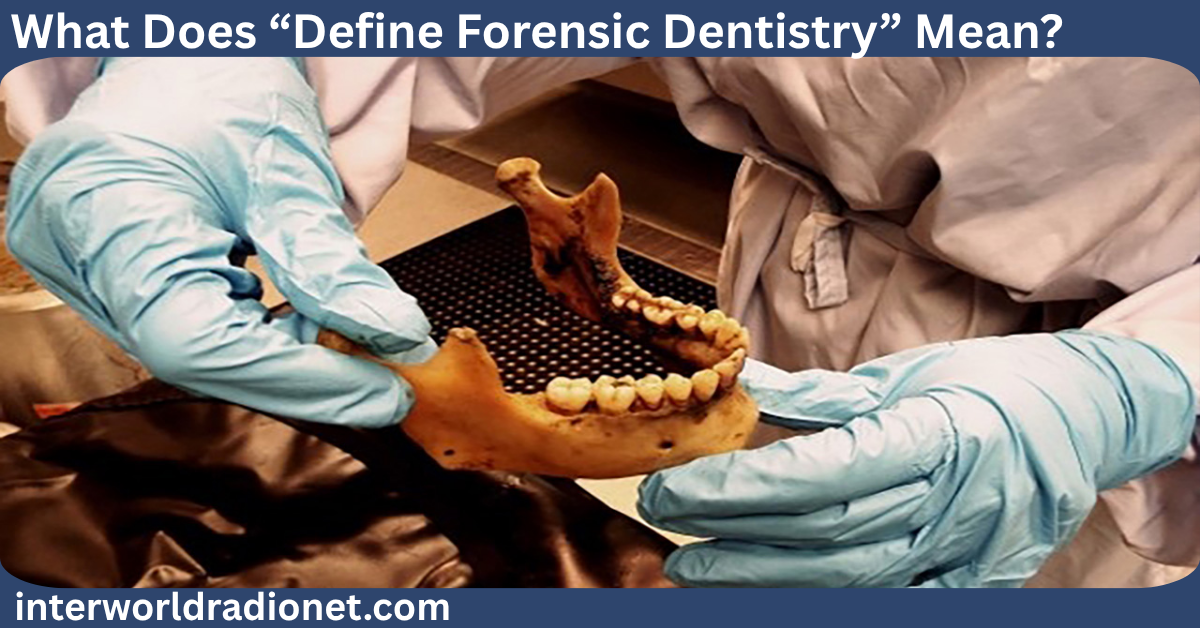
If you are searching for “define forensic dentistry,” you are likely looking for a clear explanation of what this dental specialty means, what forensic dentists do, and how dental evidence can help in legal and identification cases.
Forensic dentistry, also called forensic odontology, is the use of dental knowledge in legal investigations. It can involve identifying unknown human remains, examining dental injuries, documenting evidence, and helping investigators understand information found in the teeth, jaws, and surrounding oral structures.
Teeth are especially useful in forensic work because they are among the hardest parts of the human body. They can sometimes remain identifiable when other tissues have been damaged by decomposition, fire, trauma, or environmental conditions.
However, forensic dentistry is not simply about “matching teeth.” A professional examination may involve dental records, radiographs, treatment history, photographs, medical information, physical findings, and other evidence. The strength of a conclusion depends on the quality of the available evidence.
This article explains how to define forensic dentistry in simple terms, how it works, where it is used, what forensic dentists actually do, and what limitations readers should understand.
What Is Forensic Dentistry?
Forensic dentistry is the branch of dentistry that applies dental science to legal and investigative matters.
In simple words, forensic dentistry uses information about teeth, dental structures, and oral tissues to help answer questions that may arise during an investigation or legal proceeding.
The term “forensic” relates to the use of scientific information in connection with the law. “Dentistry” refers to the study and treatment of teeth and the mouth.
Therefore, a simple definition is:
Forensic dentistry is the use of dental knowledge and evidence to assist with human identification, injury evaluation, and other legal investigations.
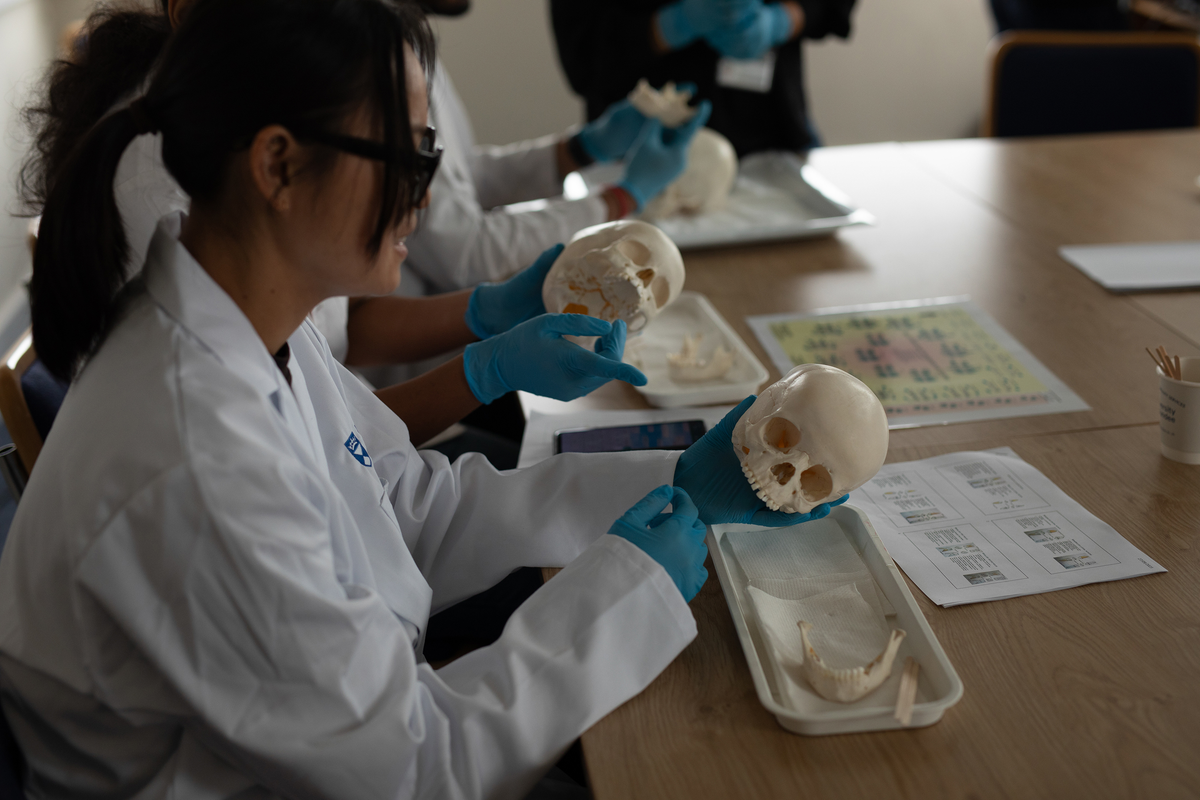
The field is closely related to forensic science. A forensic dentist may work with medical examiners, coroners, law enforcement agencies, forensic anthropologists, pathologists, and other specialists.
Also read:What Are the Benefits of Being a Dentist?
The work can be especially important when a person’s identity cannot easily be established through fingerprints, facial recognition, or other methods.
Define Forensic Dentistry in Simple Words
To define forensic dentistry in the easiest possible way, think of it as dentistry used to help solve legal or identification questions.
A normal dentist mainly focuses on preventing and treating oral disease. A forensic dentist may instead examine dental evidence after a death, during an investigation, or when dental injuries have legal importance.
For example, investigators may have an unidentified body but no identification documents. The person may have received dental treatment during life. If those dental records are available, a forensic dental examination may compare the records with the dental findings after death.
This can help investigators establish or evaluate identity.
Forensic dentistry can also be used to examine injuries involving the mouth, teeth, and jaws. The findings may become part of a larger forensic investigation.
What Is Another Name for Forensic Dentistry?
Another commonly used name for forensic dentistry is forensic odontology.
The word “odontology” relates to the study of teeth. In professional and academic settings, the terms forensic dentistry and forensic odontology may be used interchangeably.
You may therefore see terms such as:
- Forensic dentistry
- Forensic odontology
- Forensic dental science
- Forensic dental examination
- Forensic dental identification
Although the terminology may vary, the basic idea is similar: dental science is being applied to a legal or forensic question.
What Does a Forensic Dentist Do?
A forensic dentist examines dental evidence that may have legal or investigative importance.
One of the best-known responsibilities is assisting with the identification of unknown deceased individuals. This may involve comparing postmortem dental findings with dental records created while the person was alive.
A forensic dentist may examine:
- Teeth
- Dental restorations
- Dental crowns
- Bridges
- Dentures
- Dental implants
- Jaw structures
- Dental radiographs
- Missing teeth
- Root canal treatments
- Orthodontic appliances
- Oral injuries
- Other dental findings
The dentist does not necessarily work alone. Forensic cases often require cooperation among several professionals.
For example, a medical examiner may handle the broader examination of the body, while a forensic dentist focuses on dental evidence.
Why Are Teeth Important in Forensic Investigations?
Teeth can provide useful forensic information because they are highly durable.
The outer layer of a tooth, called enamel, is one of the hardest substances in the human body. Dental structures can sometimes survive conditions that severely damage other tissues.
This durability makes dental evidence useful in certain identification cases.
Another important factor is that dental treatment creates individual patterns.
A person may have a combination of:
- Fillings
- Crowns
- Missing teeth
- Root canals
- Dental implants
- Tooth extractions
- Bridges
- Dentures
- Orthodontic treatment
This combination can sometimes provide valuable information when compared with previous dental records.
However, durability alone does not guarantee identification. The evidence still needs to be properly collected, documented, evaluated, and interpreted.
How Does Forensic Dental Identification Work?
Forensic dental identification usually involves comparing information collected after death with information created while the person was alive.
The process can vary depending on the circumstances of the case.
Step 1: Examination of the Dental Evidence
A forensic dentist examines the teeth, jaws, and other relevant oral structures.
The professional documents findings such as missing teeth, restorations, unusual dental anatomy, and other characteristics.
Radiographs may also be taken when appropriate.
Step 2: Collection of Antemortem Records
Antemortem means information collected before death.
These records may include previous dental records, dental X-rays, treatment notes, charts, photographs, and other relevant information.
Dental offices can create extensive records during routine treatment.
Step 3: Comparison
The forensic dentist compares the antemortem information with postmortem findings.
For example, a dental record may show that a person had a crown on a particular tooth. The postmortem examination may reveal the same restoration and additional matching features.
The professional considers the complete pattern rather than relying on one isolated feature.
Step 4: Evaluation of the Evidence
The dentist evaluates how strongly the available evidence supports a particular conclusion.
The quality of the original records matters greatly.
Clear, detailed, and recent dental records may provide more useful information than incomplete or outdated records.
Step 5: Reporting
The findings are documented in a forensic report.
Depending on the case, the report may be provided to a medical examiner, coroner, law enforcement agency, attorney, or court.
What Is antemortem Dental Information?
Antemortem dental information is dental information that was recorded before a person’s death.
This information is extremely important in many forensic dental identification cases.
Examples include:
- Dental charts
- Dental X-rays
- Treatment notes
- Tooth extraction records
- Records of fillings
- Crown and bridge information
- Implant records
- Denture information
- Orthodontic records
- Dental photographs
The word “antemortem” simply means “before death.”
By comparison, “postmortem” means “after death.”
The comparison between antemortem and postmortem dental information is one of the central concepts in forensic dental identification.
What Is Postmortem Dental Examination?
A postmortem dental examination takes place after death.
The purpose is to document the condition of the teeth, jaws, and related structures.
A forensic dentist may record the presence or absence of teeth and document dental restorations and other features.
Radiographs may be used to provide additional information.
The examination creates a dental record of the person’s condition after death. That record can then be compared with antemortem information.
Can Dental Records Identify a Person?
Yes, dental records can sometimes help identify a person.
The usefulness of dental identification depends on several factors, including the availability and quality of previous dental records and how distinctive the dental findings are.
A person’s dental history can contain many individual features. A combination of restorations, missing teeth, root canal treatments, crowns, implants, and other findings may provide a strong basis for comparison.
Dental identification is particularly useful when other identification methods are difficult or unavailable.
However, it is important not to assume that every dental comparison automatically produces a certain identification. Forensic conclusions must be based on the evidence available in the individual case.
Forensic Dentistry and Human Identification
Human identification is one of the most important applications of forensic dentistry.
An unidentified person may be found after an accident, disaster, fire, or other event. In some situations, the body may be difficult to identify visually.
Dental evidence may then become part of the identification process.
Forensic dental identification is often considered alongside other methods, such as:
- Fingerprint comparison
- DNA analysis
- Forensic anthropology
- Medical records
- Personal identification information
The strongest investigations often use multiple forms of evidence.
This is an important point for readers: forensic dentistry is usually part of a larger forensic identification system rather than a completely separate process.
Forensic Dentistry in Mass Disasters
Forensic dentistry can be particularly valuable during mass disasters.
A mass disaster may involve many victims and difficult identification conditions.
Examples can include:
- Major transportation accidents
- Large fires
- Natural disasters
- Industrial accidents
- Building collapses
- Other large-scale incidents
Dental evidence can help because teeth and dental restorations may survive severe conditions.
During a large disaster, forensic teams may collect dental information and compare it with available records for people who are believed to be missing.
Dental identification can therefore help reduce uncertainty for investigators and families.
Forensic Dentistry After Fires
High temperatures can severely damage human remains.
In some situations, however, dental structures may provide useful information even when other identifying features have been destroyed or altered.
A forensic dentist may examine the remaining teeth and dental restorations.
Certain dental materials can behave differently under extreme heat. The condition of the teeth and restorations may therefore provide information that can assist the broader investigation.
This does not mean teeth are always preserved after a fire. The extent of damage depends on factors such as temperature, exposure time, surrounding materials, and other conditions.
Forensic Dentistry and Dental Injuries
Forensic dentistry is not limited to identifying deceased people.
It can also involve the examination and documentation of dental injuries.
An injury involving the mouth or teeth may have legal importance. A forensic dentist can document relevant findings and provide professional interpretation within the limits of dental science.
Dental trauma can involve:
- Broken teeth
- Tooth displacement
- Tooth loss
- Jaw injuries
- Soft-tissue injuries
- Other oral damage
The dental findings may become part of a larger medical and legal investigation.
Forensic Dentistry and Bite Mark Evidence
Bite mark evidence has historically been associated with forensic dentistry.
A bite mark may appear on skin or another material. Historically, investigators sometimes attempted to compare the pattern with a person’s teeth.
However, this area has faced significant scientific criticism.
Human skin is flexible and can change after an injury. Bite patterns may also be affected by movement, healing, swelling, and other factors.
Because of these limitations, bite mark analysis should not be treated as equivalent to highly established identification methods such as DNA testing.
This is an important modern insight when learning how to define forensic dentistry: forensic dentistry is broader than bite mark analysis, and bite mark evidence has important scientific limitations.
Is Forensic Dentistry Reliable?
The reliability of forensic dentistry depends on the specific method and the quality of the evidence.
Dental identification based on detailed and well-documented antemortem and postmortem records can be highly useful.
At the same time, not every forensic dental technique has the same scientific foundation.
This distinction is important.
Forensic science is not one single method. It includes many different disciplines and techniques with different levels of scientific support.
Modern forensic practice emphasizes careful documentation, validated methods, appropriate interpretation, transparency about limitations, and consideration of other evidence.
Forensic Dentistry vs. Regular Dentistry
Forensic dentistry and general clinical dentistry have different primary goals.
| Feature | Regular Dentistry | Forensic Dentistry |
| Main purpose | Diagnose and treat patients | Address legal and investigative questions |
| Main setting | Dental clinic | Forensic, medical, investigative, or legal setting |
| Focus | Oral health | Dental evidence |
| Common records | Treatment records | Identification and forensic records |
| Patients | Living patients | Often deceased individuals or legal cases |
| Legal role | Usually limited | May include expert evidence |
A general dentist treats dental problems.
A forensic dentist uses dental knowledge to help answer questions connected to investigations or the legal system.
Forensic Dentist vs. Forensic Anthropologist
These professionals can work together, but their areas of expertise differ.
A forensic dentist specializes in dental evidence.
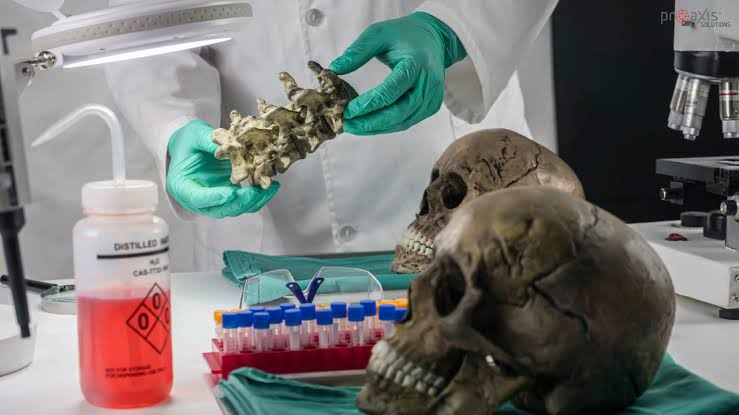
A forensic anthropologist focuses more broadly on human skeletal remains.
A forensic anthropologist may examine skeletal characteristics to help estimate factors such as age, biological profile, trauma, and other information.
Also read:Is Being a Dental Hygienist Hard? A Complete Guide to the Job, School, and Career
A forensic dentist focuses specifically on teeth, jaws, and dental structures.
In complex cases, both professionals may contribute important information.
What Qualifications Does a Forensic Dentist Need?
A person generally begins with professional dental education and training.
In the United States, becoming a dentist requires completion of an accredited dental education program and meeting the licensing requirements of the relevant state.
Additional forensic education and experience may then be obtained through specialized training, courses, professional organizations, casework, and other educational opportunities.
The exact career path can vary.
A person interested in forensic dentistry should understand that forensic work requires more than simply knowing how to treat teeth. It also requires strong documentation skills, knowledge of forensic procedures, scientific reasoning, and an understanding of legal and ethical responsibilities.
Where Do Forensic Dentists Work?
Forensic dentists may work in different professional environments.
Depending on their role, they may interact with:
- Medical examiner offices
- Coroner offices
- Law enforcement agencies
- Government organizations
- Universities
- Dental schools
- Forensic laboratories
- Disaster response teams
- Legal professionals
Some professionals may maintain regular dental practices while also participating in forensic cases.
The work environment depends on the person’s training, employment, and role in the investigation.
What Evidence Does a Forensic Dentist Examine?
Dental evidence can come from many sources.
Common examples include dental charts, radiographs, treatment records, photographs, and physical dental findings.
Important evidence may include:
Dental X-Rays
Dental radiographs can show structures that are not easily visible during a basic visual examination.
They can reveal roots, restorations, bone structures, root canal treatments, and other features.
Dental Restorations
Fillings, crowns, bridges, and implants may provide useful identifying characteristics.
Missing Teeth
Patterns of missing teeth can be compared with previous dental records.
Dentures
Dentures may contain identifying features or information that can contribute to a forensic examination.
Orthodontic Records
Braces and other orthodontic treatment can create records that may help with identification.
Why Dental X-Rays Are Important in Forensic Dentistry
Dental X-rays are especially useful because they show internal structures.
A person’s dental X-ray can contain a combination of features involving tooth roots, restorations, bone, and other anatomical structures.
When suitable antemortem radiographs are available, they may be compared with postmortem radiographs.
The comparison can provide more information than a simple visual examination.
This is one reason dental records are important even when a person has received routine dental care.
The Role of Dental Records in Forensic Identification
Dental records can be valuable long after a dental appointment.
A dental chart may document which teeth are present, missing, restored, or treated.
Radiographs can provide additional information.
Together, these records create a history of a person’s oral condition.
From a forensic perspective, this means routine dental care can unintentionally create information that may become valuable during an identification investigation.
That is one of the most practical reasons people should understand the importance of maintaining accurate dental records.
What Happens When Dental Records Are Missing?
Dental identification becomes more difficult when there are no useful antemortem records.
A forensic dentist may still examine the remains and document the findings, but comparison is more limited without previous information.
Investigators may then need to rely on other identification methods.
These can include DNA testing, fingerprint comparison, medical information, personal belongings, or forensic anthropology.
This demonstrates an important principle: forensic identification is often strongest when several independent forms of evidence are available.
Forensic Dentistry and DNA
DNA and dental evidence can sometimes complement each other.
Teeth may preserve biological material under certain circumstances, although the usefulness of DNA recovery depends on the condition of the remains and other factors.
A forensic investigation may use dental examination and DNA analysis together.
The two methods answer somewhat different questions and have different strengths and limitations.
A dental comparison may identify a distinctive treatment pattern, while DNA analysis may provide genetic evidence.
The appropriate method depends on the circumstances of the case.
What Are the Limitations of Forensic Dentistry?
Understanding limitations is just as important as understanding the benefits.
Forensic dental evidence can be affected by:
- Poor-quality records
- Missing records
- Changes in dental treatment
- Damaged remains
- Incomplete documentation
- Human interpretation
- Limited evidence
- Scientific uncertainty associated with certain techniques
A forensic dentist should not simply force a conclusion when the evidence is weak.
Good forensic practice requires professionals to explain what the evidence can support and what it cannot establish.
This is an important part of trustworthy forensic science.
The Importance of Accurate Dental Records
Accurate dental records benefit patients and dental professionals, but they can also have importance beyond routine treatment.
Records may contain information about a person’s dental history that is difficult to reproduce later.
Forensic investigations sometimes depend on records created years before a person died.
Therefore, clear documentation can become valuable evidence when identification is necessary.
This does not mean dental records are created primarily for forensic purposes. Their main purpose is appropriate patient care and documentation. Their forensic value is an additional benefit.
Is Forensic Dentistry Used in Court?
Forensic dentists may provide information that becomes relevant to legal proceedings.
Depending on the circumstances, a forensic dentist may prepare a report, explain findings to investigators, or provide expert testimony.
Also read:What Is a Hygienist? Role, Duties, Education, and Career Guide
The admissibility and weight of expert evidence depend on the applicable legal rules and the facts of the individual case.
A forensic dentist is not supposed to act as an advocate for one side. The professional role is to explain the dental evidence objectively.
Ethical Responsibilities in Forensic Dentistry
Forensic dentistry involves serious ethical responsibilities.
The findings can affect families, criminal investigations, court proceedings, and the identification of deceased individuals.
For this reason, professionals should work carefully and objectively.
Important principles include:
- Accurate documentation
- Scientific honesty
- Respect for human remains
- Protection of confidential information
- Recognition of uncertainty
- Avoiding unsupported conclusions
- Clear communication of limitations
An expert should not make evidence appear stronger than it actually is.
Privacy and Dental Records
Dental records contain personal information.
In the United States, patient health information is subject to privacy protections, including rules that may apply under the Health Insurance Portability and Accountability Act, commonly known as HIPAA.
The use or disclosure of dental records in a forensic investigation may involve legal requirements and authorized processes.
Dental practices and investigators therefore need to handle records carefully.
People should also be cautious about sharing dental records publicly online because these documents can contain personal information.
How Technology Is Changing Forensic Dentistry
Technology continues to change forensic dentistry.
Digital dental records have made information easier to store, search, transfer, and compare.
Digital radiography can also improve the availability and quality of dental images.
Three-dimensional imaging and computer-assisted techniques may provide additional information in selected cases.
Technology can make forensic work more efficient, but it does not remove the need for professional judgment.
A computer can help organize or compare information, but the interpretation of forensic evidence still requires appropriate expertise.
Artificial Intelligence and Forensic Dentistry
Artificial intelligence may have future applications in forensic dental work, particularly in image analysis, record organization, and pattern recognition.
However, AI should not automatically be treated as an independent forensic expert.
Any technology used in forensic work needs appropriate validation, testing, quality control, and human oversight.
This is especially important because errors in forensic identification can have serious consequences.
The most useful approach is to view AI as a potential support tool rather than a replacement for qualified forensic professionals.
The History of Forensic Dentistry
The use of dental information for identification has a long history.
People have recognized for centuries that teeth can provide information about individuals.
As dentistry became more developed, dental records became more detailed.
The growth of modern forensic science increased the importance of dental evidence, especially during large disasters and cases involving unidentified remains.
Over time, professional organizations and forensic specialists developed more systematic approaches to dental identification.
Today, forensic dentistry is a recognized part of the broader forensic science and medicolegal system.
Why Forensic Dentistry Matters
The importance of forensic dentistry goes beyond identifying teeth.
At its best, the field helps provide reliable information when a person’s identity is uncertain.
Identification can have major practical and emotional importance.
For investigators, knowing who a person is can help reconstruct an event.
For families, identification can provide answers and allow appropriate arrangements to be made.
For courts and legal professionals, reliable expert information can help explain relevant evidence.
The value of forensic dentistry therefore comes from its role within a larger system of evidence and investigation.
Common Misunderstandings About Forensic Dentistry
One common misunderstanding is that forensic dentistry is mainly about bite marks.
Bite mark analysis has received significant attention in popular culture, but forensic dentistry includes much more.
Human identification through dental records is a major area of forensic dental work.
Another misunderstanding is that a forensic dentist can identify anyone simply by looking at their teeth.
In reality, identification often requires comparison with previous records and careful evaluation of the available evidence.
A third misconception is that every forensic dental conclusion is equally certain.
Different methods have different scientific strengths, and responsible forensic professionals must communicate uncertainty when it exists.
Forensic Dentistry in Popular Culture
Television shows and movies often make forensic dentistry appear faster and more certain than it is in real life.
A fictional character may look at a tooth and immediately identify a person.
Real forensic work is usually more careful.
Professionals may need to locate records, review radiographs, document findings, compare multiple characteristics, communicate with other specialists, and prepare formal reports.
The real process may take considerably more time than fictional portrayals suggest.
Understanding this difference helps readers develop better digital and scientific literacy.
What Does “Forensic” Mean in Dentistry?
In dentistry, “forensic” means that dental knowledge is being used in connection with legal or investigative questions.
A normal dental appointment is mainly concerned with a person’s oral health.
A forensic dental examination is concerned with evidence and questions that may have legal significance.
The same basic dental science can therefore be used for two very different purposes.
Frequently Asked Questions About Forensic Dentistry
Is forensic dentistry a medical or dental specialty?
Forensic dentistry is a dental field that applies dental knowledge to forensic and legal matters. It overlaps with medicine, forensic science, pathology, anthropology, and law, but its primary scientific foundation is dentistry.
How long does a forensic dental identification take?
There is no universal time limit. The duration depends on the condition of the remains, availability of dental records, complexity of the comparison, number of individuals involved, and other investigative factors.
Can a forensic dentist work without a dental record?
A forensic dentist can examine and document dental findings without an antemortem record. However, identifying a person through dental comparison can be much more difficult when there is no previous dental information available.
Can children’s teeth be used in forensic identification?
Yes, children’s dental development can provide useful forensic information. However, children’s teeth and jaws change as they grow, so age and developmental stage must be considered when interpreting the findings.
Can a forensic dentist identify someone from one tooth?
Sometimes a single tooth may provide useful information, but a single tooth does not automatically establish someone’s identity. The value depends on what characteristics are present and whether suitable comparison evidence is available.
Conclusion
To define forensic dentistry simply, it is the use of dental science to help answer legal and investigative questions. Forensic dentists may examine teeth, jaws, dental records, X-rays, restorations, and oral injuries to assist with identification and other forensic investigations.
Dental evidence can be especially useful because teeth are durable and dental treatment can create distinctive records. However, forensic dentistry is not a magic identification method. The reliability of a conclusion depends on the evidence, the scientific method used, the quality of records, and professional interpretation.
Forensic dentistry works best as part of a broader forensic system. When dental findings are combined appropriately with other evidence, they can help investigators establish identity and understand important details of a case.