
DDS vs DDS: What Is the Difference Between Two DDS Degrees?
September 8, 2026
Are Dentist Medical Doctors and What Degree Do They Have?
September 9, 2026
Choosing a career is a major decision, especially when the profession requires years of education, professional training, licensing, and continued learning. Dentistry is one healthcare career that combines science, patient care, practical skills, problem-solving, and business knowledge. For people who enjoy working with others and want a healthcare career with hands-on responsibilities, becoming a dentist can offer many potential advantages.
So, what are the benefits of being a dentist? Common benefits include the opportunity to improve patients’ oral health, develop a specialized professional skill set, earn a competitive income, enjoy different career paths, build long-term patient relationships, and potentially have greater control over a work environment through private practice. Dentistry can also provide intellectual variety because dentists diagnose conditions, perform procedures, educate patients, manage technology, and make decisions based on individual needs.
At the same time, dentistry is not an easy career. Dentists must complete extensive education, meet licensing requirements, manage clinical responsibilities, and deal with challenges such as patient anxiety, physical demands, administrative work, and the financial cost of education. Understanding both the advantages and challenges is important before choosing this profession.
This guide explains the major benefits of being a dentist in the United States, how the career works, what dentists actually do, potential career opportunities, earning factors, work-life considerations, and important questions prospective dental students should consider.
What Does a Dentist Do?
A dentist is a healthcare professional who focuses on oral health. Dentists examine the mouth, teeth, gums, and related structures to identify problems and provide appropriate treatment.
Depending on their training and area of practice, dentists may:
- Examine patients’ teeth and gums
- Diagnose oral health problems
- Treat cavities
- Restore damaged teeth
- Perform extractions
- Provide preventive care
- Take and interpret dental images
- Treat certain gum conditions
- Place fillings and crowns
- Provide dental prosthetic services
- Educate patients about oral hygiene
- Monitor changes in oral health
- Refer patients to specialists when appropriate
Dentistry is both a healthcare profession and a hands-on profession. Dentists do not simply give advice. They often use specialized instruments and technology to diagnose and treat patients.

What Are the Main Benefits of Being a Dentist?
The benefits of being a dentist can be grouped into several important areas:
- Helping people improve their health
- Building a specialized professional career
- Potential for strong earning opportunities
- Different career paths
- Opportunities for private practice ownership
- Potential for greater schedule flexibility
- Long-term patient relationships
- Hands-on and practical work
- Continuous learning
- Professional independence
- Opportunities to specialize
- Ability to combine healthcare and business
- Community involvement
- Career stability
- Personal satisfaction from solving health problems
The value of each benefit depends on the dentist’s location, specialty, practice model, experience, goals, and financial situation.
Also read:DDS vs DDS: What Is the Difference Between Two DDS Degrees?
1. Dentists Can Make a Direct Difference in Patients’ Lives
One of the biggest benefits of being a dentist is the ability to help people directly.
Oral health can affect comfort, eating, speaking, appearance, and overall quality of life. A dentist may help a patient manage pain, restore a damaged tooth, prevent future problems, or improve their ability to maintain good oral health.
For many professionals, seeing a patient move from discomfort or anxiety to better oral health can be personally rewarding.
Dentists can also help patients understand preventive care. Teaching someone how to brush, floss, manage dietary habits, or maintain regular dental visits can contribute to better long-term oral health.
2. Dentistry Offers a Specialized Healthcare Career
Dentistry provides a clearly defined professional path.
After completing the required undergraduate education and dental school training, graduates can pursue professional licensure and begin practicing dentistry according to the requirements of their state.
This specialized education gives dentists knowledge in areas such as:
- Anatomy
- Physiology
- Oral pathology
- Pharmacology
- Dental materials
- Radiology
- Periodontology
- Prosthodontics
- Restorative dentistry
- Oral surgery
- Patient management
The combination of scientific knowledge and clinical skills makes dentistry different from many general careers.
3. Dentists Can Have Strong Earning Potential
Income is another reason some people consider dentistry.
Dentist earnings can vary significantly depending on experience, geographic location, specialty, practice ownership, employment model, hours worked, and patient volume.
According to U.S. labor-market data, dentists are generally among the higher-earning healthcare professionals. However, prospective students should not assume that a dental degree automatically guarantees a particular income.
Income should be evaluated alongside:
- Dental school costs
- Student loan payments
- Practice expenses
- Taxes
- Insurance
- Continuing education
- Staff costs
- Equipment costs
- Business expenses
A dentist who owns a successful practice may have a different financial situation from an employed dentist.
Therefore, earning potential is an important benefit, but it should be considered together with the costs and responsibilities of the profession.
4. Dentistry Offers Different Career Paths
Dentistry is not limited to one type of job.
A dentist may work in:
- Private practice
- Group practice
- Community health centers
- Hospitals
- Academic institutions
- Government facilities
- Public health programs
- Research
- Military healthcare
- Corporate dental organizations
This variety can allow dentists to choose an environment that matches their professional goals.
Someone who enjoys business may prefer private practice. Another person may enjoy teaching and choose academia. Someone interested in complex cases may pursue specialty training.
5. Dentists Can Own Their Own Practice
Practice ownership is one of the most distinctive potential benefits of being a dentist.
A practice owner can have greater control over certain aspects of the workplace, including:
- Office culture
- Equipment decisions
- Staffing
- Scheduling
- Patient experience
- Services offered
- Business strategy
However, ownership also brings additional responsibilities.
A practice owner may need to manage:
- Employees
- Payroll
- Insurance
- Supplies
- Equipment
- Marketing
- Compliance
- Rent or property costs
- Technology
- Accounting
Therefore, practice ownership can provide professional independence, but it also requires business and leadership skills.
6. Dentistry Can Offer Schedule Flexibility
Schedule flexibility is another potential advantage.
Depending on the practice model, dentists may have more control over their working hours than professionals in some other healthcare fields.
For example, a dentist in private practice may be able to design a schedule around:
- Patient demand
- Office hours
- Personal goals
- Family responsibilities
- Business needs
- Continuing education
This does not mean every dentist has a flexible schedule. New dentists, associates, hospital-based dentists, and practice employees may have less control over their hours.
The level of flexibility depends heavily on the employment arrangement.
7. Dentists Can Build Long-Term Patient Relationships
Dentistry often involves recurring appointments.
Patients may visit the same dental office for years, allowing dentists and dental teams to develop long-term relationships.
This can be rewarding because dentists may become familiar with:
- Patients’ oral health histories
- Family dental histories
- Treatment preferences
- Previous procedures
- Preventive-care needs
- Long-term health goals
Long-term relationships can also make healthcare feel more personal.
A dentist may see a child become an adult or treat several generations of the same family.
8. Dentistry Is a Hands-On Career
People who dislike sitting behind a desk all day may appreciate dentistry’s practical nature.
Dentists frequently work with their hands and perform precise procedures.
Their work may involve:
- Dental instruments
- Digital imaging
- Dental materials
- Restorative procedures
- Surgical techniques
- Computer-based systems
- Laboratory-created restorations
This combination of technology and manual skill can make dentistry engaging for people who enjoy practical work.
9. Dentists Use Science and Technology
Modern dentistry is strongly connected to science and technology.
Dental offices may use digital imaging, electronic health records, computer-aided design and manufacturing, intraoral scanning, digital radiography, and other technologies.
Technology can support:
- Diagnosis
- Treatment planning
- Patient education
- Documentation
- Communication
- Restoration design
- Practice management
Dentists therefore have opportunities to keep learning as technology develops.
10. Dentistry Encourages Lifelong Learning
Completing dental school does not mean education ends.
Dentists generally need to maintain their knowledge and professional skills throughout their careers.
Continuing education can involve subjects such as:
- New dental materials
- Digital dentistry
- Infection control
- Pain management
- Patient communication
- Oral pathology
- Practice management
- New treatment techniques
- Professional regulations
Lifelong learning can make the profession intellectually active.
11. Dentists Can Choose a Specialty
General dentistry is only one career option.
Dentists who want additional training can pursue specialties recognized within the dental profession.
Examples include:
- Orthodontics
- Pediatric dentistry
- Periodontics
- Prosthodontics
- Endodontics
- Oral and maxillofacial surgery
- Oral and maxillofacial pathology
- Oral and maxillofacial radiology
- Dental anesthesiology
- Public health dentistry
Specialization typically requires additional education and training.
A specialty can allow a dentist to focus on a specific patient group, procedure type, or area of oral healthcare.
12. Dentists Can Work With Different Patient Groups
Dentistry provides opportunities to work with a broad range of patients.
Depending on the practice, a dentist may treat:
- Children
- Teenagers
- Adults
- Older adults
- Families
- Patients with complex medical needs
- Patients requiring specialized dental care
This variety can help dentists develop strong communication and clinical skills.
Also read:DMD vs DDS: What Is the Difference Between These Dental Degrees?
Pediatric dentists, for example, may focus primarily on children, while other dentists may work with adults or patients of many ages.
13. Dentistry Can Provide Professional Independence
Dentists often have significant responsibility for clinical decisions within their scope of practice.
They evaluate patients, identify dental problems, develop treatment plans, perform procedures, and monitor outcomes.
This level of responsibility can be attractive to people who want a profession requiring independent judgment.
However, professional independence also means dentists must take their responsibilities seriously. Clinical decisions should be based on appropriate evidence, professional standards, patient needs, and applicable laws and regulations.
14. Dentistry Combines Healthcare With Business
Dentistry is unusual because many dentists operate or participate in healthcare businesses.
A practice may require knowledge of:
- Budgeting
- Staffing
- Scheduling
- Inventory
- Customer service
- Insurance processes
- Compliance
- Financial planning
- Leadership
A dentist who owns a practice therefore has two major roles: healthcare professional and business leader.
People who enjoy both areas may find this combination particularly interesting.
15. Dentists Can Contribute to Preventive Healthcare
Dentistry is not only about treating existing problems.
Prevention is a major part of oral healthcare.
Dentists can help patients understand the importance of:
- Regular dental examinations
- Professional cleanings when recommended
- Fluoride use
- Oral hygiene
- Dietary habits
- Tobacco avoidance
- Protection from dental injuries
- Early detection of oral conditions
Preventive care can reduce the risk of more serious dental problems in the future.
16. Dentistry Can Provide Community Impact
Dentists can contribute to public health beyond individual appointments.
They may participate in:
- School dental programs
- Community health initiatives
- Oral health education
- Free or reduced-cost clinics
- Public health programs
- Professional organizations
- Dental outreach programs
These activities can help increase awareness of oral health and improve access to dental services.
17. Dentists Can Teach Future Professionals
Dentists who enjoy education may work in dental schools or training programs.
Academic dentists can:
- Teach dental students
- Supervise clinical training
- Conduct research
- Develop educational materials
- Mentor students
- Participate in professional education
Teaching can add another dimension to a dental career.
18. Dentistry Can Offer Research Opportunities
Research is another potential career path.
Dental research can explore subjects such as:
- Oral diseases
- Dental materials
- Biomaterials
- Preventive care
- Dental technology
- Oral microbiology
- Treatment techniques
- Population oral health
Dentists with research interests may work in universities, research institutions, healthcare organizations, or other settings.
19. Dentistry Can Provide Career Stability
Healthcare services are generally an ongoing need.
People continue to need preventive dental care, restorative treatment, oral examinations, and other services.
This creates potential career stability, although the demand for dentists can vary by location and specialty.
Local population growth, access to healthcare, insurance coverage, competition, and community needs can all influence employment opportunities.
Career stability should therefore be viewed as a potential benefit rather than a guarantee.
20. Dentistry Can Be Personally Rewarding
Financial and professional benefits are only part of the picture.
Many dentists find meaning in solving problems and helping patients.
For example, a dentist may diagnose the cause of recurring dental pain, restore a damaged tooth, help a patient improve their oral hygiene, or identify a concerning oral condition that requires further evaluation.
The ability to use professional skills to create a measurable improvement can provide a strong sense of accomplishment.
What Education Is Required to Become a Dentist in the United States?
Becoming a dentist requires substantial education and professional preparation.
The exact path can vary, but the general route includes:
- Undergraduate education
- Dental school
- Clinical training
- Required examinations
- State licensure
- Continuing professional education
Dental schools typically award the Doctor of Dental Surgery (DDS) or Doctor of Dental Medicine (DMD).
Despite the different names, DDS and DMD degrees represent equivalent levels of dental education when granted by accredited dental schools.
Students should research individual state licensing requirements because requirements can differ.
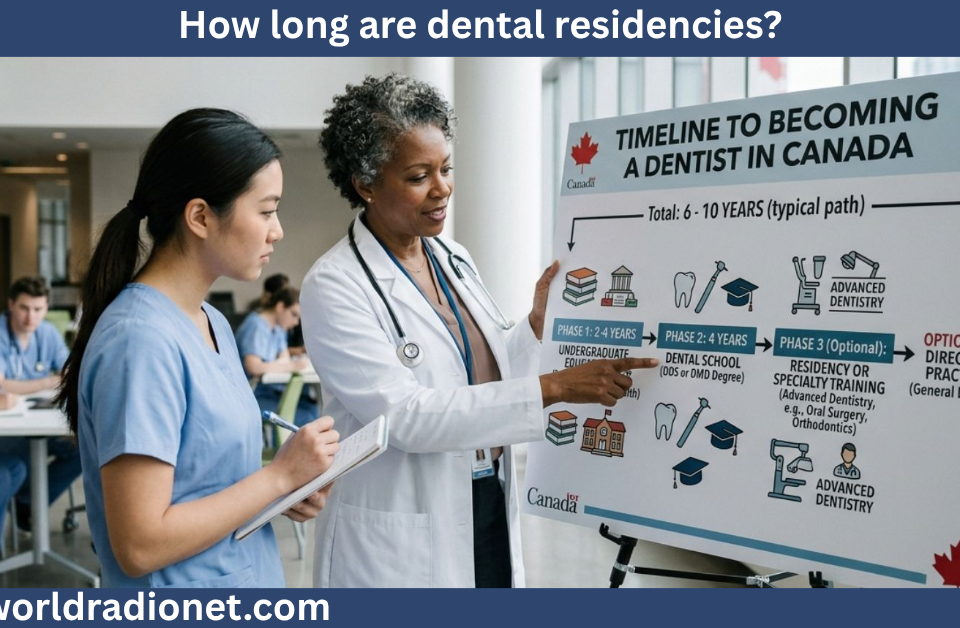
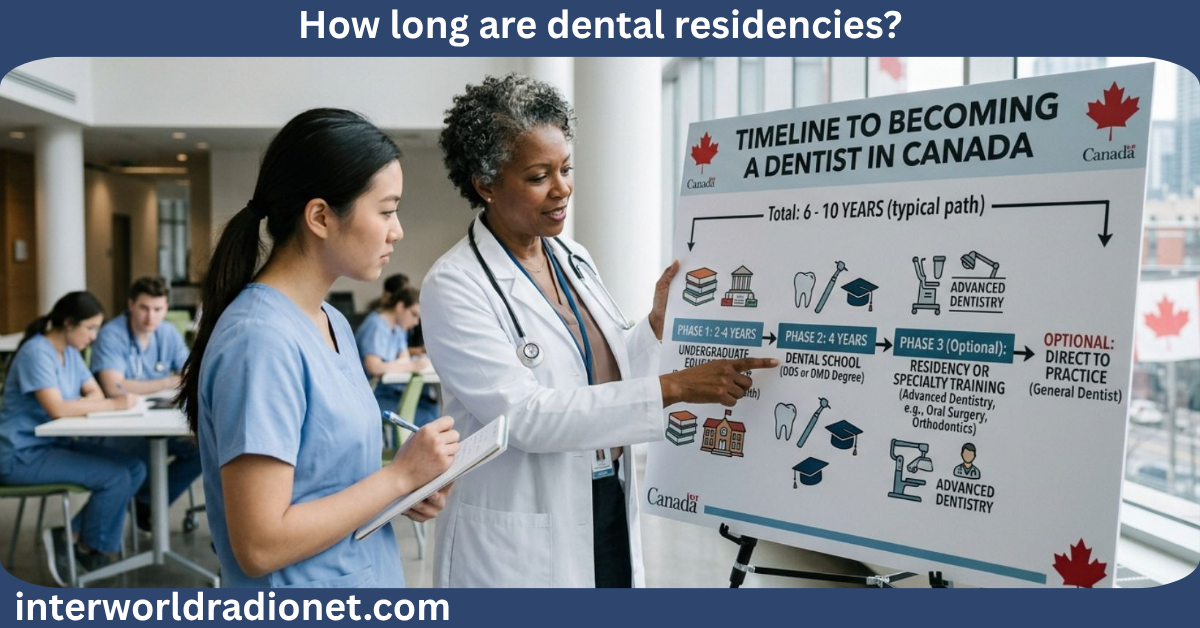
How Long Does It Take to Become a Dentist?
The process commonly takes many years.
Students generally complete an undergraduate degree or required college coursework before dental school. Dental school itself commonly takes four years.
Additional training is required for many dental specialties.
The total time can therefore vary based on the student’s educational path and career goals.
What Skills Does a Dentist Need?
Successful dentists need more than scientific knowledge.
Important skills include:
Communication
Dentists need to explain diagnoses and treatment options in language patients can understand.
Hand-Eye Coordination
Many dental procedures require careful and precise hand movements.
Attention to Detail
Small differences can matter when examining teeth, gums, restorations, and dental images.
Problem-Solving
Dentists frequently need to determine why a patient has a particular problem and identify appropriate treatment options.
Empathy
Patients may feel nervous about dental procedures. Understanding their concerns can improve communication and trust.
Time Management
Dental practices often operate according to scheduled appointments, making efficient time management important.
Leadership
Practice owners and senior dentists may manage employees and coordinate teams.
Is Being a Dentist Stressful?
Dentistry can be rewarding, but it can also be stressful.
Potential sources of stress include:
- Patient anxiety
- Complex procedures
- Time pressure
- Administrative duties
- Financial responsibilities
- Staff management
- Regulatory requirements
- Continuing education
- Physically demanding work
A dentist’s stress level can vary considerably depending on practice type, workload, support staff, management systems, and personal coping strategies.
This is why prospective dentists should consider both the benefits and demands of the profession.
What Are the Challenges of Being a Dentist?
A balanced career assessment should include disadvantages as well as benefits.
Long Education
Dental education requires a significant investment of time.
Educational Costs
Dental school can be expensive, and students should carefully evaluate tuition, living expenses, interest costs, and repayment options.
Physical Demands
Dentists often maintain seated or standing positions while performing precise procedures. Repetitive posture and hand movements can contribute to physical strain.
Patient Anxiety
Some patients experience significant dental fear, requiring patience and strong communication.
Business Responsibilities
Practice owners must deal with many responsibilities beyond clinical treatment.
Continuing Education
Dentists need to maintain professional knowledge and meet applicable continuing education requirements.
Clinical Responsibility
Dentists are responsible for providing appropriate care within their training, professional standards, and legal scope of practice.
Is Dentistry a Good Career Choice?
Dentistry can be a strong career choice for people who enjoy healthcare, science,
practical work, patient interaction, and problem-solving.
Also read:How Long Does It Take to Become a Dentist After College
However, it is not automatically the right choice for everyone.
Before choosing dentistry, prospective students should consider:
- Interest in oral healthcare
- Comfort working closely with patients
- Willingness to complete extensive education
- Financial considerations
- Interest in hands-on work
- Ability to manage responsibility
- Long-term career goals
- Desired lifestyle
- Interest in business or practice ownership
A career decision should be based on more than expected salary.
Dentistry Compared With Other Healthcare Careers
Dentistry has similarities with medicine and other healthcare professions, but there are important differences.
Dentists generally focus on oral health and perform many procedures themselves.
Physicians may focus on broader systemic health and may work in hospitals, clinics, or other settings.
Pharmacists specialize in medications and medication management.
Nurse practitioners provide a broad range of healthcare services within their scope of practice.
Dental hygienists focus heavily on preventive oral healthcare and patient education.
Each profession has different education requirements, responsibilities, work environments, and career paths.
How Can a Dentist Improve Work-Life Balance?
Work-life balance depends greatly on practice structure.
Dentists can potentially improve balance by:
- Creating realistic appointment schedules
- Using effective office systems
- Building a reliable team
- Delegating appropriate administrative tasks
- Taking regular breaks
- Setting clear working hours
- Avoiding unnecessary overbooking
- Using digital practice-management tools
- Planning vacations in advance
Practice owners may have greater control over scheduling, but ownership can also create additional responsibilities.
What Is the Future of Dentistry?
The dental profession continues to change as technology, patient expectations, healthcare systems, and scientific knowledge develop.
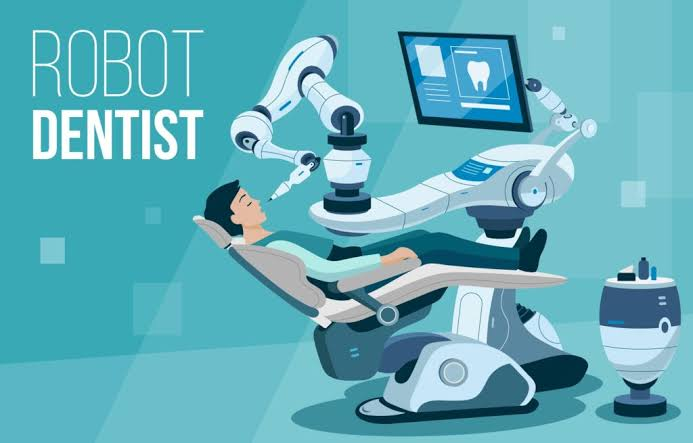
Important trends include:
- Digital dentistry
- Electronic health records
- Digital imaging
- Computer-aided design and manufacturing
- Teledentistry in appropriate settings
- Artificial intelligence-assisted tools
- Improved preventive approaches
- Greater emphasis on patient experience
- Expanded use of minimally invasive techniques
Technology is unlikely to eliminate the need for dentists. Instead, it may change how dentists diagnose, plan, communicate, document, and deliver care.
Human judgment, communication, clinical skills, and patient relationships remain important.
How Technology Is Changing the Dentist’s Role
Digital technology can help dentists work more efficiently.
For example, digital scans can provide detailed information about oral structures, while digital imaging can support diagnosis.
Computer-assisted systems may also support treatment planning and laboratory communication.
Artificial intelligence is increasingly being studied and used in healthcare-related applications, including areas of dental imaging and decision support.
However, technology should be viewed as a tool rather than a replacement for professional responsibility. Dentists must still interpret information, communicate with patients, consider individual circumstances, and make appropriate clinical decisions.
Is Dentistry a Good Career for Someone Who Likes Helping People?
It can be.
Dentistry allows healthcare professionals to interact directly with patients and address problems that can affect comfort, function, and oral health.
However, helping people also requires dealing with difficult situations. Dentists may treat patients who are anxious, frustrated, uncomfortable, or worried about costs.
Someone considering dentistry should therefore be comfortable with both the rewarding and challenging parts of patient care.
Is Dentistry a Good Career for Someone Who Likes Science?
Dentistry can be an excellent match for people who enjoy science.
Dental education includes subjects related to biology, anatomy, physiology, pathology, microbiology, pharmacology, and materials science.
Dentists also apply scientific knowledge when evaluating symptoms and selecting treatment approaches.
At the same time, dentistry is not purely theoretical. Students and dentists must also develop practical clinical skills.
Is Dentistry a Good Career for Someone Who Likes Business?
It can be particularly attractive to people interested in both healthcare and business.
Practice ownership can provide opportunities to manage a team, develop systems, make purchasing decisions, improve patient experiences, and build a sustainable organization.
However, business responsibilities can also be demanding.
Someone interested in practice ownership should consider developing skills in accounting, leadership, human resources, compliance, and operations.
How to Decide if Dentistry Is Right for You
A useful way to evaluate dentistry is to look beyond the title.
Ask yourself:
- Do I enjoy science?
- Do I like practical, hands-on work?
- Am I comfortable working closely with patients?
- Can I communicate clearly?
- Am I willing to complete extensive education?
- Can I handle responsibility?
- Do I enjoy solving problems?
- Would I be interested in learning about business?
- Can I remain calm when patients are anxious?
- Am I prepared for the financial investment of dental education?
Talking with practicing dentists and gaining appropriate exposure to dental environments can also help prospective students understand the day-to-day reality of the profession.
Tips for Students Considering Dentistry
Students interested in dentistry can begin preparing early.
Focus on developing strong academic foundations in science and other required subjects.
Learn about dental school admission requirements before choosing college courses.
Research dental schools carefully and compare:
- Accreditation
- Curriculum
- Clinical opportunities
- Location
- Cost
- Financial aid
- Graduation outcomes
- Specialty opportunities
It can also be useful to learn about the difference between general dentistry and dental specialties.
Most importantly, do not choose dentistry solely because it appears financially attractive. A successful dental career requires commitment to patient care and professional development.
Frequently Asked Questions About the Benefits of Being a Dentist
What is the biggest benefit of being a dentist?
One of the biggest benefits is the combination of healthcare, hands-on work, and professional independence. Dentists can directly improve patients’ oral health while developing specialized clinical skills. Some dentists also value the potential for practice ownership and schedule flexibility.
Can dentists work part-time?
Yes, some dentists work part-time, although availability depends on the practice and employment arrangement. Practice owners may have more control over their schedules, while employees may have schedules determined by their employer. Part-time work can affect income, benefits, and patient continuity.
Do dentists have opportunities outside private practice?
Yes. Dentists can work in hospitals, community health centers, academic institutions, government programs, research, public health, military healthcare, and group practices. Additional training may open further opportunities.
Can a dentist change careers later?
Yes. Dental training provides skills that can support several professional directions. Some dentists move toward teaching, research, public health, administration, consulting, healthcare leadership, or other related areas. Career changes depend on individual qualifications and goals.
Does being a dentist require strong people skills?
Yes. Clinical knowledge is essential, but communication and interpersonal skills are also important. Dentists need to explain treatment options, understand patient concerns, manage expectations, and build trust. Strong communication can be especially helpful when working with patients who are nervous about dental care.
Conclusion
The benefits of being a dentist extend far beyond earning potential. Dentistry can provide a meaningful healthcare career in which professionals use science, technology, practical skills, and communication to improve patients’ oral health. Dentists may also enjoy different career paths, opportunities for specialization, long-term patient relationships, professional independence, and, depending on their practice model, greater control over their schedule.
At the same time, dentistry requires a substantial investment in education, licensing, professional development, and often significant financial resources. The work can be physically demanding and may involve patient anxiety, administrative responsibilities, and clinical pressure.
For someone who enjoys science, hands-on work, patient care, problem-solving, and lifelong learning, dentistry can be a rewarding professional path. The best decision comes from considering both the benefits and responsibilities of the profession and understanding how they fit with your long-term goals.