How Long Does It Take to Become a Dentist After College
September 7, 2026
DDS vs DDS: What Is the Difference Between Two DDS Degrees?
September 8, 2026
If you are researching dental school, comparing dentists, or simply wondering what the letters after a dentist’s name mean, you may have come across two common degrees: DMD and DDS.
The question “DMD vs DDS” sounds like it should have a complicated answer. In the United States, however, the basic answer is surprisingly simple: DMD and DDS are equivalent professional dental degrees. Both prepare graduates to become licensed dentists, and neither degree is automatically better than the other.
The main difference is the name used by the dental school that awards the degree. DDS stands for Doctor of Dental Surgery, while DMD generally stands for Doctor of Dental Medicine or Doctor of Medicine in Dentistry. U.S. dental schools awarding either degree must meet accreditation standards established through the Commission on Dental Accreditation (CODA). The American Dental Association (ADA) also explains that DDS and DMD graduates receive the same type of professional education and are accepted as equivalent for general dental practice.
That does not mean every dental school is identical. Schools can differ significantly in curriculum structure, teaching style, clinical opportunities, research, location, tuition, technology, specialty programs, and student experience. These differences matter much more when choosing a dental school than whether the school awards a DMD or DDS.
This guide explains DMD vs DDS in simple language, including what each degree means, how they developed, education requirements, licensing, specialization, career options, cost considerations, international dentists, common misconceptions, and what students should actually compare when choosing a dental school.
What Does DDS Mean?
DDS stands for Doctor of Dental Surgery.
It is a professional doctoral degree awarded by many dental schools in the United States. Despite the word “surgery” in the name, a DDS degree does not mean that the dentist is automatically a dental surgeon or an oral and maxillofacial surgeon.
A general dentist with a DDS can provide a broad range of dental services within the scope permitted by their state license. Depending on training, experience, and state rules, this can include examinations, preventive care, fillings, crowns, bridges, root canal treatment, extractions, dentures, certain surgical procedures, and other dental treatments.
The word “surgery” is largely part of the historical name of the degree. It should not be interpreted as meaning that a DDS dentist has completed specialist surgical residency training.

A dentist who wants to become an oral and maxillofacial surgeon generally needs additional postgraduate education after earning a DDS or DMD. CODA-accredited specialty programs provide advanced training beyond dental school.
Also read:How Long Does It Take to Become a Dentist After College
What Does DMD Mean?
DMD generally stands for Doctor of Dental Medicine or Doctor of Medicine in Dentistry.
It is another professional doctoral degree for dentists.
A DMD graduate receives dental education designed to prepare them for professional dental practice in much the same way as a DDS graduate. The degree title does not make a DMD dentist more medically trained than a DDS dentist.
The DMD title has an interesting historical connection to Harvard University. Harvard established its dental school in the 19th century and selected the Latin-based degree title Dentariae Medicinae Doctorae, which became DMD. The use of DMD continued at Harvard and was later adopted by other dental schools.
Today, both DMD and DDS are established dental degrees in the United States.
DMD vs DDS: The Simple Answer
For most people, the easiest way to understand DMD vs DDS is this:
A DMD and a DDS are equivalent dental degrees in the United States.
Both are doctoral-level professional degrees.
Both are awarded by dental schools.
Both require extensive scientific and clinical education.
Both can lead to general dental practice after the graduate meets state licensing requirements.
Both can lead to dental specialties after additional education.
Neither degree is automatically more advanced than the other.
The ADA states that dentists with DMD and DDS degrees have the same education and that both degrees use the curriculum requirements established by the ADA’s Commission on Dental Accreditation. State licensing boards generally recognize them as equivalent for general dentistry.
So, if you are searching for the “better” degree between DMD vs DDS, the answer is that there is no universal winner.
The dental school itself is usually much more important than the letters DMD or DDS.
DMD vs DDS Comparison
| Feature | DMD | DDS |
| Full name | Doctor of Dental Medicine / Doctor of Medicine in Dentistry | Doctor of Dental Surgery |
| Professional dental degree | Yes | Yes |
| Prepares students for dentistry | Yes | Yes |
| Accredited U.S. dental programs | Yes | Yes |
| Can lead to general dentistry | Yes | Yes |
| Can lead to specialty training | Yes | Yes |
| Equivalent for U.S. dental licensing | Generally yes | Generally yes |
| Automatically better than the other | No | No |
| Requires additional specialty training for specialists | Yes | Yes |
The most important point is that the letters are different, but the professional level of the degrees is essentially the same.
Why Are There Two Dental Degrees?
The existence of DMD and DDS can be confusing because many healthcare professions use one common degree title.
The reason is largely historical.
Early American dental education developed through different institutions and traditions. Some schools used Doctor of Dental Surgery, while Harvard chose Doctor of Dental Medicine. Over time, both titles became established.
As dental education became more standardized, the important issue became the quality and content of the education rather than the exact name printed on the diploma.
Today, dental accreditation standards help ensure that students in accredited programs receive the education necessary for professional dental practice.
This is an important insight when considering DMD vs DDS: the degree title tells you less about the dentist’s training than the accreditation of the dental program, the dentist’s license, clinical experience, and any additional postgraduate training.
Is a DMD Better Than a DDS?
No.
A DMD is not inherently better than a DDS.
There is a common misconception that “medicine” in DMD makes the degree more advanced or that “surgery” in DDS makes it more surgical. Neither interpretation is accurate.
A DMD dentist is not automatically more qualified than a DDS dentist.
A DDS dentist is not automatically more qualified than a DMD dentist.
Both degrees are professional dental degrees that can meet the educational requirement for U.S. dental licensure when earned through an appropriately accredited program.
When evaluating dentists, factors such as experience, specialty training, clinical skills, communication, continuing education, treatment approach, and professional reputation are generally more meaningful than whether the dentist has DMD or DDS after their name.
Is DDS More Surgical Than DMD?
No.
This is one of the most common misunderstandings about DMD vs DDS.
The word “surgery” in Doctor of Dental Surgery does not mean DDS dentists receive a special surgical degree that DMD dentists do not receive.
Both DDS and DMD dental programs include clinical training and education in areas that can involve surgical procedures.
If someone wants to become an oral and maxillofacial surgeon, they normally need to complete additional specialty education after dental school.
The ADA identifies oral and maxillofacial surgery as an advanced dental specialty requiring postgraduate training.
Therefore, do not choose a dentist simply because the letters DDS contain the word “surgery.”
Do DMD and DDS Dentists Have the Same Education?
Generally, yes.
The exact curriculum can vary by school, but accredited DMD and DDS programs must meet professional education standards.
Dental school typically includes intensive instruction in biomedical sciences, clinical sciences, diagnosis, prevention, treatment planning, patient care, and hands-on clinical dentistry.
Students learn about areas such as:
- Anatomy
- Physiology
- Biochemistry
- Microbiology
- Pathology
- Pharmacology
- Oral pathology
- Dental materials
- Radiology
- Periodontics
- Endodontics
- Prosthodontics
- Operative dentistry
- Oral surgery
- Pediatric dentistry
- Orthodontic principles
- Patient diagnosis
- Infection control
- Ethics
- Professional practice
The precise organization of these subjects varies between schools.
Some programs introduce students to patients early. Others organize education around integrated courses, clinical groups, simulation laboratories, problem-based learning, or other teaching methods.
This is why comparing actual dental schools is more useful than comparing DMD and DDS as though they were competing levels of education.
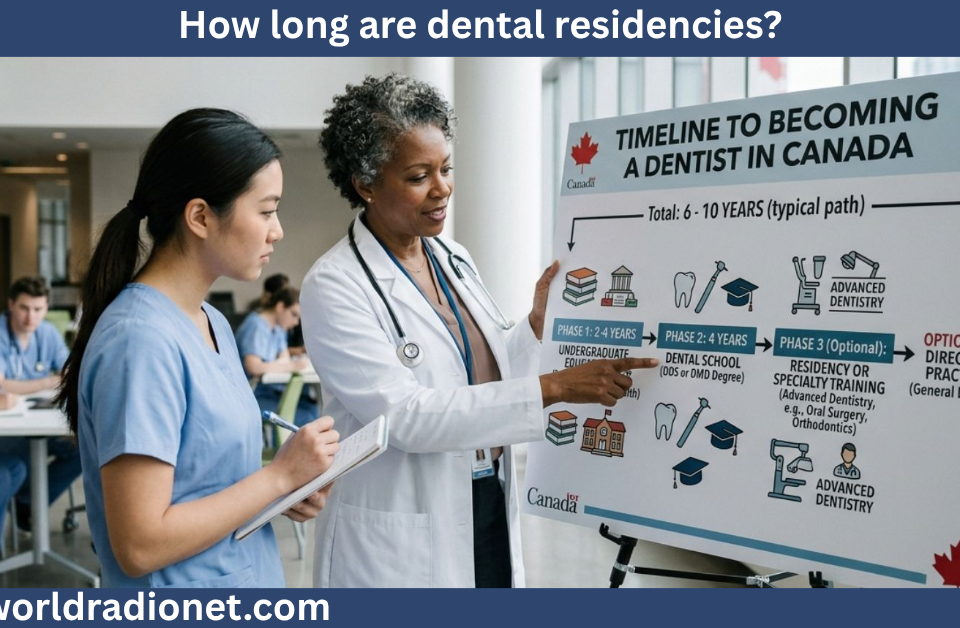
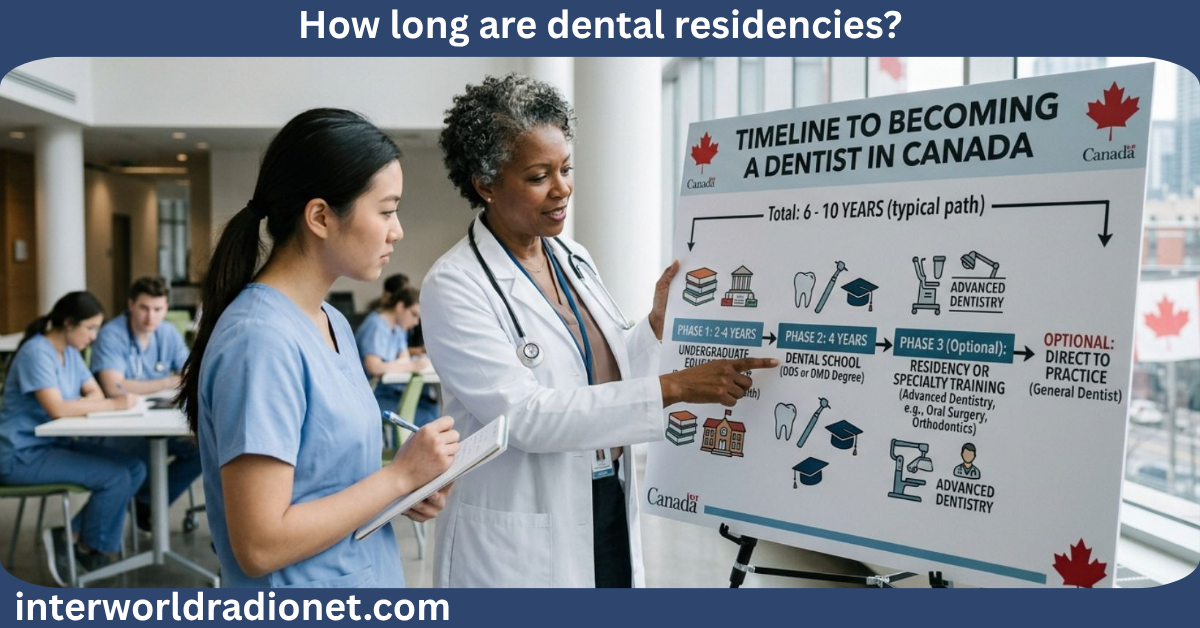
How Long Does It Take to Become a Dentist?
A traditional U.S. pathway generally involves undergraduate education followed by four years of dental school.
The ADA states that becoming a dentist generally requires three to four years of undergraduate education plus four years of dental school, although individual educational pathways can vary.
Many students complete a bachelor’s degree before entering dental school.
Dental school itself is usually four years for a standard DMD or DDS program.
A simplified pathway looks like this:
High school → undergraduate education → dental school → DMD or DDS → state licensure → dental practice
Students who want to become specialists generally continue into postgraduate training after dental school.
The total timeline therefore depends on the student’s career goal.
What Happens During Dental School?
Dental school is much more than learning how to fill cavities.
Students spend significant time studying science and developing clinical judgment.
During the early portion of dental education, students commonly focus heavily on biomedical and dental sciences. They also begin developing practical skills through simulation exercises and laboratory work.
As training progresses, students spend more time treating patients under supervision.
Clinical education can include:
- Patient examinations
- Medical and dental histories
- Diagnosis
- Treatment planning
- Preventive dentistry
- Restorative procedures
- Periodontal care
- Prosthetic procedures
- Pediatric care
- Oral surgery procedures
- Emergency dental care
- Radiographic evaluation
- Patient communication
The exact structure differs between institutions.
That variation is another reason why prospective dental students should examine the actual curriculum of each school instead of assuming that every DMD program or every DDS program is identical.
DMD vs DDS and Dental School Accreditation
Accreditation is a major issue for anyone comparing dental schools.
In the United States, CODA is the national programmatic accrediting agency for dental and dental-related education programs. CODA evaluates dental education programs through a formal accreditation process.
For students, this matters because accreditation provides an important quality and eligibility framework.
When comparing dental schools, look beyond the DMD or DDS label and investigate whether the program is accredited and whether it meets the requirements relevant to your intended state of practice.
This is especially important for students considering dental education outside the United States.
DMD vs DDS for Dental Licensing
One of the biggest practical questions is whether a DMD or DDS graduate can become licensed.
In the United States, dental licensure is handled by state or territorial dental boards.
Requirements vary by jurisdiction, but the ADA explains that U.S. dental licensure generally involves an educational requirement, a written examination, and a clinical assessment. The Integrated National Board Dental Examination, or INBDE, replaced the former NBDE Part I and Part II examinations.
Importantly, the type of degree title is generally not the deciding factor.
A graduate from an appropriately accredited DMD program and a graduate from an appropriately accredited DDS program can both pursue licensure, provided they meet the applicable state requirements.
This distinction is important:
DMD vs DDS is about degree title.
Dental licensure is about meeting the requirements of the relevant state dental board.
Can a DDS Dentist Practice in Every State?
Not automatically.
A DDS degree does not itself provide a nationwide license.
Likewise, having a DMD does not automatically provide a nationwide license.
Dentists must satisfy the requirements of the state or jurisdiction where they want to practice.
Licensing rules can differ, particularly concerning examinations, clinical assessments, background requirements, jurisprudence requirements, continuing education, and license transfer or portability.
If a dentist moves from one state to another, they should review the current rules of the new jurisdiction rather than assuming their existing license transfers automatically.
Can a DMD Dentist Practice in Every State?
The same principle applies to DMD graduates.
The degree itself does not create a national dental license.
A DMD graduate must meet the licensing requirements of the state where they intend to practice.
This demonstrates why the question “DMD vs DDS—which one is better for licensing?” is usually based on a misunderstanding.
Neither degree provides a universal shortcut.
The key issues are accreditation, education, examinations, clinical requirements, and state-specific licensing rules.
DMD vs DDS for Specialization
Both DMD and DDS graduates can pursue dental specialties.
Depending on the specialty and program, additional postgraduate education may be required.
Dental specialties can include areas such as:
- Orthodontics
- Periodontics
- Endodontics
- Prosthodontics
- Pediatric dentistry
- Oral and maxillofacial surgery
- Oral and maxillofacial pathology
- Oral and maxillofacial radiology
- Oral medicine
- Dental anesthesiology
- Dental public health
The exact recognized specialties and training requirements should be checked through current professional and regulatory sources.
The important point is that a dentist does not become a specialist simply because the degree says DMD or DDS.
Specialization depends on additional accredited training and applicable credentialing or licensing requirements.
DMD vs DDS for Orthodontics
An orthodontist first needs a dental degree.
That dental degree may be DMD or DDS.
The dentist then completes additional orthodontic education.
Orthodontic programs generally focus on diagnosing and treating malocclusion and other dental and facial alignment problems.
Therefore, if you are comparing orthodontists, the more meaningful question is not whether they have DDS or DMD.
Instead, consider whether they completed recognized orthodontic specialty training, their experience, treatment approach, credentials, and the specific needs of the patient.
DMD vs DDS for Oral Surgery
The same principle applies to oral and maxillofacial surgery.
A DDS or DMD can provide the foundation for entry into oral and maxillofacial surgery training, but the dental degree itself does not make someone an oral and maxillofacial surgeon.
Advanced training is required.
CODA’s information on oral and maxillofacial surgery indicates that accredited programs provide substantial postgraduate training, with the minimum training period currently listed as four years, while some programs include additional medical or research degrees.
So, when looking for a surgical dental specialist, focus on the surgeon’s specialty training rather than simply the DMD or DDS designation.
DMD vs DDS: Does One Earn More Money?
The degree title itself does not automatically determine a dentist’s income.
A dentist’s earnings can be influenced by many factors, including:
- Location
- Years of experience
- Practice ownership
- Specialty
- Patient volume
- Working hours
- Practice expenses
- Insurance participation
- Type of practice
- Procedures performed
- Business skills
- Local demand
A DMD dentist can earn more than a DDS dentist, and a DDS dentist can earn more than a DMD dentist.
There is no reliable rule saying one degree produces higher income.
If you are researching dentistry as a career, it is more useful to investigate the financial realities of dental education, student debt, practice ownership, specialty training, and local employment conditions.
DMD vs DDS: Does One Have More Prestige?
Not in any meaningful professional sense.
Both are respected dental degrees.
Some people may personally associate DMD or DDS with particular universities, regions, or dental schools, but that does not establish a universal prestige ranking.
A highly regarded dental program may award either DMD or DDS.
For example, the ADEA’s dental school information includes schools awarding both types of degrees across different parts of the United States.
The school, training environment, clinical experience, research opportunities, faculty, and outcomes are more useful factors to examine.
Which Degree Should You Choose: DMD or DDS?
If you are a prospective dental student, you generally should not choose a school simply because it awards a DMD rather than a DDS.
Instead, compare the dental schools themselves.
Consider:
Curriculum
Look at how the program teaches foundational science and clinical dentistry.
Ask whether the curriculum matches the way you learn best.
Clinical Experience
Find out when students begin treating patients and how much clinical experience they receive.
Hands-on training is an important part of becoming a competent dentist.
Faculty
Investigate faculty backgrounds, clinical experience, research activity, and availability to students.
Technology
Consider whether the school provides modern simulation systems, digital dentistry tools, imaging technologies, and other resources.
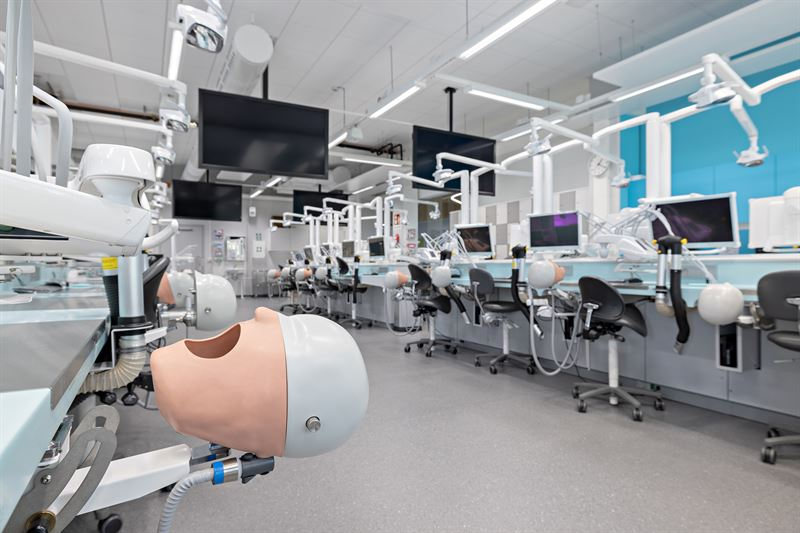
Technology alone does not guarantee educational quality, but it can influence the learning environment.
Also read:How to Remove Tartar From Teeth Without a Dentist: Safe Methods That Work
Specialty Opportunities
If you already have an interest in orthodontics, oral surgery, pediatric dentistry, endodontics, or another area, investigate the school’s specialty exposure and postgraduate opportunities.
Cost
Compare tuition, fees, living expenses, financial aid, and expected debt.
Two schools offering the same type of dental degree can have dramatically different total costs.
Location
Location affects living expenses, transportation, family support, lifestyle, and potentially future professional opportunities.
Student Experience
Speak with current students and recent graduates when possible.
They can often explain aspects of a program that are difficult to understand from a brochure.
DMD vs DDS for Patients: Does It Matter?
For a patient choosing between dentists, DMD vs DDS usually should not be the deciding factor.
Both degrees represent professional dental education.
Instead, patients should consider whether the dentist is properly licensed, what services they provide, their experience with the needed treatment, communication style, practice environment, and whether they are appropriately trained for the procedure.
For complex treatment, specialist credentials may be more important.
For example, a patient needing orthodontic treatment may want to consider an orthodontist with appropriate specialty training.
Someone needing complex oral surgery may need an oral and maxillofacial surgeon.
Someone seeking routine preventive and restorative care may work with a general dentist.
The letters DMD and DDS alone do not tell the whole story.
Is a DMD a Medical Doctor?
No.
DMD stands for a dental professional degree. A person with a DMD is a dentist, not automatically a physician with an MD degree.
Dentists receive extensive medical and scientific education relevant to oral health and the relationship between oral and systemic health.
However, DMD and MD are different professional degrees with different educational pathways and scopes of practice.
The term “Doctor” in DMD refers to the doctoral level of the professional degree. It should not be interpreted as meaning the person earned an MD.
Is a DDS a Medical Doctor?
No.
A DDS is a dental doctorate.
A dentist with a DDS has completed professional dental education and may become licensed to practice dentistry after satisfying the applicable licensing requirements.
A DDS should not be confused with an MD.
The dental and medical professions overlap in some areas, but their education, training, licensing, and professional scopes are distinct.
Are DMD and DDS the Same Degree?
They are equivalent professional dental degrees in the United States, although their names are different.
The ADA and ADEA both describe the degrees as equivalent. ADEA specifically states that DMD and DDS mean the same thing in terms of the professional dental degree awarded after completion of an accredited dental program.
A useful way to think about it is similar to two universities offering the same level of professional qualification but choosing different names for the credential.
The title differs.
The professional purpose is essentially the same.
Why Do Some Dentists Use DDS and Others Use DMD?
The answer usually comes down to the dental school they attended.
Schools determine which degree they award.
Some schools award DDS.
Others award DMD.
The ADA notes that universities have the prerogative to determine which degree title they award while following the applicable curriculum requirements.
This explains why you may see DMD dentists in one region and DDS dentists in another.
It does not necessarily reflect differences in clinical ability.
DMD vs DDS and International Dentists
International dentists should pay especially close attention to the difference between degree equivalence and U.S. licensing.
A dental degree earned outside the United States or Canada may not automatically satisfy the educational requirements for U.S. dental licensure.
The rules vary by state, but many states require graduation from a CODA-accredited dental education program.
Internationally educated dentists may therefore need to complete an advanced standing program in the United States.
ADEA explains that advanced standing programs can allow eligible internationally educated dentists to enter U.S. dental education with advanced standing and complete a DMD or DDS degree in a shorter period than the traditional four-year program.
This is an important distinction:
An international dentist may already have extensive dental education and clinical experience, but that does not necessarily mean the dentist can immediately practice independently in every U.S. state.
Licensing requirements must be reviewed carefully.
What Is an Advanced Standing Dental Program?
An advanced standing dental program is designed for dentists educated outside the United States or Canada who need additional U.S. dental education to meet applicable requirements.
These programs can be shorter than traditional dental programs because students already have dental education.
According to ADEA, advanced standing programs may allow international dentists to complete a U.S. DMD or DDS degree in approximately two to three years, although individual program requirements vary.
International applicants should carefully review:
- Eligibility requirements
- Required examinations
- English-language requirements
- Dental school prerequisites
- Credential evaluation
- Clinical experience expectations
- Application deadlines
- Tuition and fees
- State licensing requirements
ADEA operates CAAPID, the centralized application service used by participating advanced standing programs for international dentists.
DMD vs DDS and the INBDE
Another important topic for future dentists is the Integrated National Board Dental Examination, commonly called the INBDE.
The INBDE was introduced to replace the older NBDE Part I and Part II examination structure.
The ADA states that all U.S. licensing jurisdictions require applicants to pass the INBDE as part of the written examination requirement, subject to the applicable jurisdictional rules.
The important point for DMD vs DDS is that the examination is not designed as a separate test for one degree.
DMD and DDS students are preparing for professional dental practice within the same broad U.S. dental education system.
Common Myths About DMD vs DDS
Myth: DDS Is More Surgical
This is false.
The word “surgery” is part of the traditional degree name. It does not mean DDS graduates automatically receive more surgical training than DMD graduates.
Myth: DMD Is More Medical
This is also misleading.
The word “medicine” in DMD does not mean DMD graduates are physicians or that they receive an MD degree.
Myth: DMD Dentists Can Do More Procedures
Not simply because they have a DMD.
Scope of practice is determined by education, training, professional licensing, and applicable law.
Myth: DDS Is Older and Therefore Better
Historical age does not make one degree superior.
DDS and DMD developed through different naming traditions.
Myth: Patients Should Always Choose a DMD
There is no general professional basis for this rule.
A patient’s needs should determine the type of dentist or specialist they seek.
Myth: A DDS Cannot Become a Specialist
Incorrect.
DDS graduates can pursue postgraduate specialty training.
Myth: A DMD Does Not Need a Dental License
Incorrect.
The DMD degree is an educational credential. Dental practice generally requires professional licensure.
What Really Matters More Than DMD vs DDS?
This is perhaps the most useful conclusion for students and patients.
When comparing dentists or dental schools, the degree abbreviation is often one of the least important pieces of information.
For a dental student, look at the complete educational experience.
For a patient, look at the dentist’s qualifications and whether their training matches the treatment needed.
For an employer or professional organization, licensing, education, experience, and applicable credentials matter.
The letters after the dentist’s name provide useful information, but they should be interpreted correctly.
How to Evaluate a Dental School in the United States
If you are applying to dental school, consider creating a comparison list.
You might score each school on:
- Accreditation status
- Total cost
- Tuition
- Financial aid
- Clinical opportunities
- Curriculum structure
- Faculty
- Location
- Student support
- Research opportunities
- Specialty exposure
- Technology
- Patient population
- Graduation outcomes
- Personal fit
This approach is much more useful than asking whether DMD or DDS is the superior degree.
The ADEA provides information about U.S. dental programs, while the ADA provides information about dental education and accredited programs.
Does the Dental School Name Matter More Than DMD vs DDS?
Yes, in many cases, the dental school itself matters more than whether it awards a DMD or DDS. If both schools are properly accredited, compare their tuition, clinical training, curriculum, faculty, research opportunities, location, and student support. One school may be more affordable, while another may offer stronger clinical experience or better opportunities for your career goals. The best choice depends on your budget, learning style, location, and future plans rather than simply choosing DMD or DDS.
DMD vs DDS for a Career in General Dentistry
If your goal is to become a general dentist, either degree can lead you toward that career.
After completing the appropriate dental education and satisfying licensing requirements, graduates can enter general practice.
General dentists may provide preventive care, restorative treatment, diagnosis, treatment planning, and many other services.
Some general dentists also develop advanced skills in areas such as cosmetic dentistry, implant dentistry, sedation, restorative dentistry, or other clinical interests.
The DMD or DDS title does not prevent a dentist from developing a particular professional focus.
DMD vs DDS for Practice Ownership
Both DMD and DDS dentists can pursue practice ownership, subject to applicable laws and professional requirements.
Owning a dental practice involves more than clinical dentistry.
Dentists who own practices may need to understand:
- Staffing
- Scheduling
- Patient communication
- Insurance
- Billing
- Compliance
- Equipment
- Supplies
- Marketing
- Accounting
- Business planning
- Leadership
A DMD degree does not provide an automatic business advantage over a DDS.
The same is true in reverse.
Business success depends on many factors beyond the degree title.
DMD vs DDS and Continuing Education
Graduating from dental school is not necessarily the end of professional learning.
Also read:How Can I Fix My Teeth? A Complete Guide to Repairing, Straightening, Whitening, and Replacing Teeth
Dentists often continue education throughout their careers.
Continuing education can help dentists maintain knowledge, develop new skills, learn about emerging technologies, and satisfy licensing requirements.
State requirements differ, so dentists should check the rules of the relevant dental board.
This is another reason why a dentist’s current professional development can be more informative than the original degree title.
What Should Patients Ask a Dentist?
When choosing a dentist, focus less on whether they have a DMD or DDS and more on their experience and qualifications. Ask what treatment you need, why it is recommended, what other options are available, and what the risks and benefits are. You can also ask how often the dentist performs the procedure, whether you should see a specialist, what the treatment will involve, and what follow-up care you may need. These questions can help you make a confident and informed decision about your dental care.
How DMD and DDS Appear After a Dentist’s Name
A dentist may write credentials such as:
Jane Smith, DDS
or
Jane Smith, DMD
The letters indicate the professional dental degree the dentist earned.
The dentist should generally use the degree designation that was actually awarded by their institution. Professional guidance also recognizes the importance of using the appropriate degree designation.
You may also see additional credentials after a dentist’s name.
For example, a dentist who completed specialty training may have professional credentials related to that specialty.
Therefore, it is useful to read the entire professional profile rather than focusing on DMD or DDS alone.
DMD vs DDS: A Practical Decision Guide
If you are a patient:
Choose based on licensing, experience, treatment needs, communication, and appropriate specialty training.
If you are applying to dental school:
Choose based on accreditation, curriculum, clinical education, cost, financial aid, location, faculty, and career opportunities.
If you are an international dentist:
Research state-specific licensing rules and advanced standing options before assuming your existing degree is sufficient.
If you are comparing dentists:
Do not assume DMD is better than DDS or DDS is better than DMD.
If you want to become a specialist:
Focus on postgraduate specialty programs rather than the title of your initial dental degree.
The Future of Dental Education
Dental education continues to evolve.
Digital dentistry, artificial intelligence, 3D printing, digital imaging, CAD/CAM technology, teledentistry, minimally invasive techniques, and new approaches to patient care are changing the profession.
The most valuable dentist in the future will not necessarily be the person with one particular degree title.
Instead, successful dentists will need strong clinical foundations combined with lifelong learning and the ability to adapt to new technology and evidence.
The ADA continues to track changes in U.S. dental education, including enrollment, graduates, programs, and educational trends.
This reinforces an important point: dental education is an ongoing professional journey, not simply a choice between two abbreviations.
Frequently Asked Questions About DMD vs DDS
Is DMD the same as DDS?
Yes. In the United States, DMD and DDS are equivalent professional dental degrees. The main difference is the title used by the dental school.
Which is better, DMD or DDS?
Neither is automatically better. Both degrees can prepare graduates for dental practice when earned through an appropriately accredited program and followed by the required licensing process.
Can a DDS become an orthodontist?
Yes. A DDS graduate can pursue postgraduate orthodontic education and become an orthodontist after completing the appropriate specialty training and meeting applicable requirements.
Can a DMD become an oral surgeon?
Yes. A DMD graduate can apply to oral and maxillofacial surgery training. The DMD itself does not make someone an oral and maxillofacial surgeon; additional specialty training is required.
Does DMD mean Doctor of Medicine?
DMD refers to Doctor of Dental Medicine or, depending on the institution’s terminology, Doctor of Medicine in Dentistry. It is a dental degree and should not be confused with an MD medical degree.
Is a DDS a doctor?
Yes. DDS stands for Doctor of Dental Surgery and is a professional doctoral dental degree.
Final Thoughts
The DMD vs DDS debate is much simpler than it first appears. In the United States, DMD and DDS are equivalent professional dental degrees. Both provide the educational foundation for becoming a licensed dentist, and both can lead to general dentistry or additional specialty training. The difference is mainly the name of the degree awarded by the dental school.
For students, the smarter question is not “DMD or DDS?” but “Which dental school gives me the education, clinical experience, financial situation, and professional opportunities that fit my goals?” For patients, the more useful question is not whether a dentist has DMD or DDS, but whether that dentist is properly licensed and appropriately trained for the care you need.
In short, there is no universal winner in DMD vs DDS. Both are respected pathways into dentistry, and the quality of the dental program, the dentist’s training and experience, state licensure, continuing education, and patient-centered care are far more important than the three letters appearing after the dentist’s name.