How to Clean Teeth at Home? A Complete Guide to Proper Oral Hygiene
September 6, 2026
How to Remove Tartar From Teeth Without a Dentist: Safe Methods That Work
September 7, 2026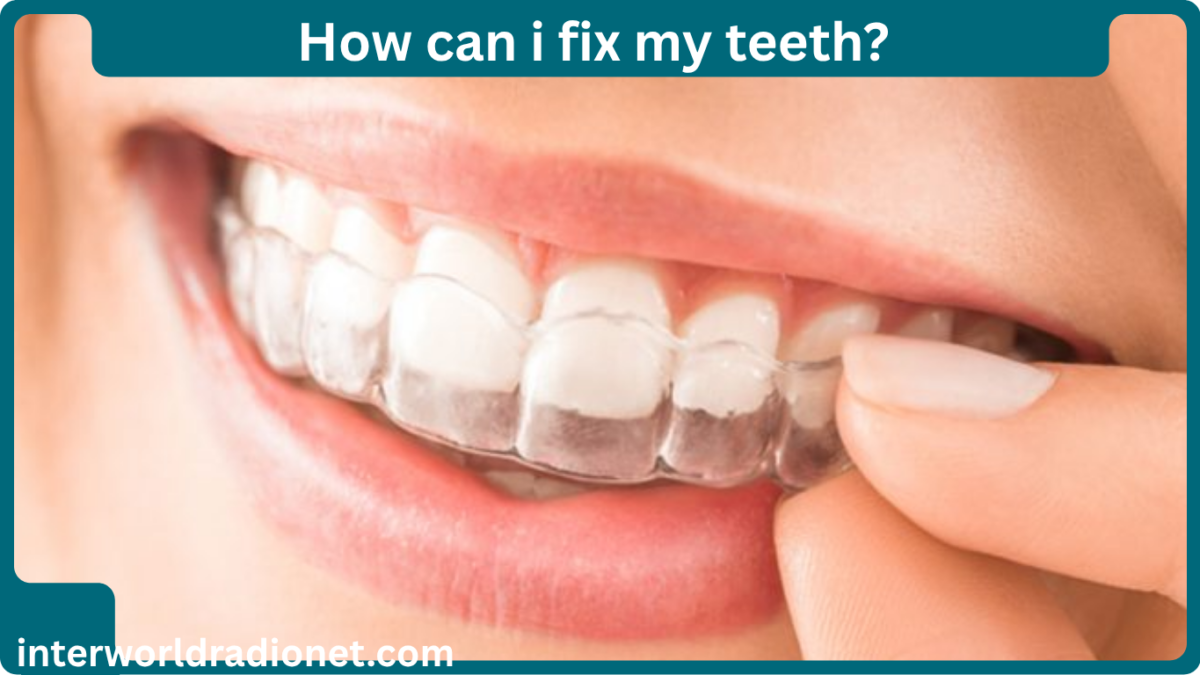
If you are asking, “How can I fix my teeth?” you are not alone. Many people are unhappy with their teeth because they are crooked, yellow, chipped, cracked, worn down, missing, sensitive, or damaged by cavities. The good news is that modern dentistry offers many ways to improve both the health and appearance of your teeth.
The best treatment depends on what is actually wrong with your teeth. A cavity needs a different solution from a chipped tooth. Crooked teeth may need orthodontic treatment, while missing teeth may require implants, bridges, or dentures. Yellow teeth may respond to professional whitening, but whitening will not repair decay or change the color of fillings, crowns, or veneers.
This is why there is no single answer to “how can I fix my teeth?” The first step is finding the cause of the problem.
Some problems can be improved with better daily care. Early tooth decay may sometimes be stopped or reversed before a true cavity forms. Once a cavity has created a hole in the tooth, however, it generally needs professional treatment rather than a home remedy. The American Dental Association notes that early noncavitated decay can sometimes be managed with remineralization strategies, while established cavities may require restorative treatment.
This guide explains the most common ways to fix teeth, what treatments are used for different problems, what you can safely do at home, and when you should see a dentist.
What Does It Mean to Fix Your Teeth?
“Fixing your teeth” can mean several different things.
You may want to:
- Repair a cavity
- Fix a chipped tooth
- Repair a cracked tooth
- Replace a missing tooth
- Straighten crooked teeth
- Close gaps between teeth
- Whiten yellow or stained teeth
- Repair worn-down teeth
- Improve the shape of uneven teeth
- Treat sensitive teeth
- Stop bleeding or unhealthy gums
- Replace old or damaged dental work
- Improve your bite
- Make your smile look more even
The right treatment depends on whether the problem is related to tooth structure, tooth position, color, gums, or missing teeth.
A good dental plan usually starts with health before appearance. There is little benefit in whitening teeth that have untreated cavities or placing cosmetic restorations over unhealthy gums.
Also read:Why Is Dental School So Expensive? A Complete Guide for Future Dental Students
The healthiest smile is usually also the easiest smile to maintain.
Can You Fix Your Teeth at Home?
You can improve your oral health at home, but you cannot safely repair every dental problem yourself.
Daily oral care is extremely important. The ADA recommends brushing twice a day with fluoride toothpaste for about two minutes and cleaning between the teeth every day.
Home care can help you:
- Reduce plaque
- Lower your risk of cavities
- Reduce gum inflammation
- Prevent new stains
- Protect enamel
- Maintain dental work
- Reduce bad breath
- Support healthier gums
However, home care cannot rebuild a tooth that has lost a large amount of structure.
For example, brushing cannot close a large cavity. Whitening toothpaste cannot repair a broken tooth. Floss cannot replace a missing tooth. DIY filing cannot safely straighten a crooked tooth.
Trying to physically change your teeth at home can actually make the problem worse.
How Can I Fix a Cavity?
A cavity develops when acids produced by bacteria contribute to the loss of minerals from the tooth.
In the earliest stage, the tooth may have a white or discolored area without an actual hole. At this stage, the decay process may sometimes be slowed, stopped, or reversed with appropriate preventive treatment.
Once a true cavity has formed, however, the damaged tooth structure generally cannot simply grow back.
A dentist may recommend a filling or another restorative treatment depending on the size and location of the decay.
Common treatments include:
- Fluoride treatment for early lesions
- Dental sealants in appropriate situations
- Composite fillings
- Other restorative materials
- Crowns for severely weakened teeth
- Root canal treatment when decay reaches the pulp
The treatment depends on how much healthy tooth remains.
The ADA’s restorative caries guideline provides evidence-based recommendations for treating cavities and selecting appropriate restorative approaches.
Can Early Tooth Decay Be Reversed?
Sometimes.
This is one of the most important differences between early tooth decay and a developed cavity.
Early decay can involve mineral loss from enamel without a physical hole. Saliva and fluoride can support remineralization, especially when the causes of repeated acid exposure are addressed.
Using fluoride toothpaste, reducing frequent sugar exposure, drinking fluoridated water when available, and maintaining good plaque control can help reduce the risk of progression.
But once a cavity has created a hole in the tooth, brushing alone will not rebuild the missing structure.
This is why seeing a dentist early can be much easier than waiting until the tooth hurts.
How Can I Fix Yellow Teeth?
If your main concern is yellow teeth, the first question is why they are yellow.
Teeth can become darker because of surface stains from coffee, tea, tobacco, certain foods, and other substances. Teeth can also naturally become darker with age as enamel becomes thinner and the underlying dentin becomes more visible.
Some discoloration comes from inside the tooth and may not respond well to ordinary whitening.
Professional cleaning can remove some surface stains.
Whitening treatments can lighten certain types of tooth discoloration. Common bleaching ingredients include hydrogen peroxide and carbamide peroxide.
Whitening does not work equally well for every type of discoloration.
For example, whitening generally does not change the color of:
- Crowns
- Veneers
- Fillings
- Some types of deep discoloration
- Certain injury-related discoloration
This is why it is smart to identify the cause of discoloration before spending money on whitening.
Is Professional Teeth Whitening Better?
Professional whitening can be a good option when your teeth and gums are healthy and the type of discoloration is likely to respond.
A dentist may offer:
- In-office whitening
- Custom take-home trays
- Other professionally supervised options
Over-the-counter products are also available.
If you choose an at-home whitening product, consider products with the ADA Seal of Acceptance and follow the instructions carefully. The ADA explains that whitening products vary in their ability to address different types of discoloration.
Whitening can also cause temporary tooth sensitivity in some people.
If you already have untreated cavities, cracked teeth, exposed roots, or gum problems, whitening may cause discomfort and should be discussed with a dentist first.
How Can I Fix Crooked Teeth?
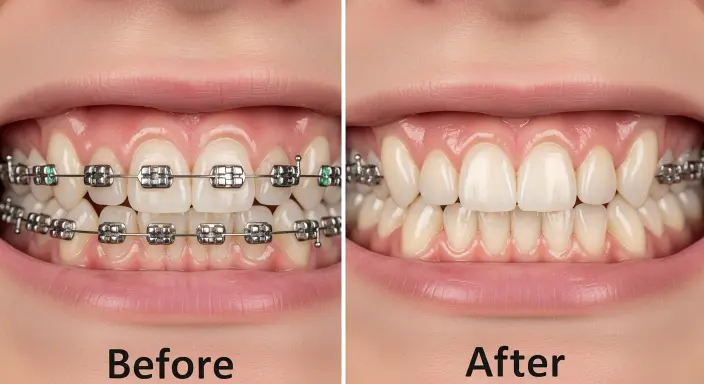
Crooked teeth can often be corrected with orthodontic treatment.
The most familiar option is traditional braces. Braces use brackets, wires, and other components to gradually move teeth into better positions.
Another option for certain patients is clear aligner treatment.
The best choice depends on:
- How crooked the teeth are
- Whether there is crowding
- Your bite
- Jaw position
- Your gum health
- Your age
- Your treatment goals
- The complexity of the movement needed
Orthodontic treatment is not only about appearance.
Poor tooth alignment can make cleaning more difficult and may contribute to problems such as tooth decay, gum disease, abnormal enamel wear, and chewing problems.
Adults can also receive orthodontic treatment. Being an adult does not automatically mean that crooked teeth cannot be corrected.
Can Clear Aligners Fix Teeth?
Clear aligners can correct many types of tooth movement, but they are not suitable for every orthodontic problem.
They are removable trays designed to gradually move teeth.
One advantage is that they can be removed for eating and oral hygiene.
However, successful treatment requires wearing them as instructed.
Clear aligners are not simply a cosmetic product. They are orthodontic treatment, and proper diagnosis matters.
A dentist or orthodontist should determine whether aligners are appropriate for your teeth and bite.
Avoid choosing treatment based only on photographs or advertisements that promise extremely fast results.
How Can I Fix a Chipped Tooth?
A chipped tooth may be repaired in several ways.
For a small chip, dental bonding may be enough.
Bonding involves applying tooth-colored material to the damaged area and shaping it to look natural.
For larger damage, a dentist may recommend a veneer, crown, or another restoration depending on the location and strength of the remaining tooth.
The best treatment depends on how much tooth structure is missing.
A small chip on the edge of a front tooth may need a very different treatment from a molar that has lost a large portion of its structure.
Dental bonding can be especially useful for small cosmetic changes because it can preserve more natural tooth structure than some other options.
How Can I Fix a Cracked Tooth?
A cracked tooth should be examined by a dentist.
Not every crack can be treated in the same way.
A minor enamel crack may require little or no restorative treatment if the tooth is otherwise healthy.
A deeper crack can be more serious.
Possible treatments may include:
- Bonding
- A crown
- Other restorative treatment
- Root canal treatment in selected situations
- Extraction when the tooth cannot be predictably saved
Do not ignore a tooth that hurts when you bite down or release your bite.
Pain from a cracked tooth can be difficult to interpret, and delaying evaluation may allow the damage to progress.
How Can I Fix Broken Teeth?
A broken tooth needs professional evaluation because the treatment depends on how much of the tooth remains.
A dentist may use a filling or bonding material when enough healthy structure remains.
A crown may be recommended when the tooth is significantly weakened.
If the inner pulp is damaged or infected, root canal treatment may be necessary before the tooth is restored.
If the tooth cannot be saved, extraction may be considered.
The goal is usually to preserve natural tooth structure whenever it is reasonably possible.
How Can I Fix a Tooth That Is Worn Down?
Teeth can become worn for several reasons.
Possible causes include:
- Teeth grinding
- Clenching
- Acid erosion
- Frequent acidic drinks
- Certain medical conditions
- Aggressive brushing
- Normal aging
- Abnormal bite forces
Treatment should focus on both restoring the damaged teeth and identifying why the wear happened.
If grinding continues, simply rebuilding the teeth without addressing the cause may lead to another cycle of damage.
Depending on the situation, treatment can include bonding, fillings, crowns, bite protection, dietary changes, or treatment of an underlying condition.
How Can I Fix a Tooth Gap?
Small gaps may sometimes be improved with dental bonding.
Orthodontic treatment can also close spaces by moving teeth into better positions.
Veneers may change the appearance of certain gaps, but they are not always the best first option.
If a gap exists because a tooth is missing, the treatment is different.
The dentist may consider:
- Dental implants
- Dental bridges
- Partial dentures
- Orthodontic movement
The cause of the gap matters.
A gap caused by tooth position should not automatically be treated the same way as a gap caused by tooth loss.
How Can I Fix Missing Teeth?
Missing teeth can usually be replaced in several ways.
The main options include:
- Dental implants
- Bridges
- Partial dentures
- Complete dentures for people who have lost all teeth
Dental implants are placed into the jawbone and can support replacement teeth such as crowns or bridges. The implant needs time to integrate with the surrounding bone before the final restoration is attached in many cases.
Implants can be an excellent long-term option for many people, but they are not appropriate for everyone.
Your dentist may evaluate your bone, gums, general health, medications, and tobacco use before recommending implant treatment.
Are Dental Implants Permanent?
Dental implants are designed as a long-term tooth replacement option, but no dental restoration should be considered completely maintenance-free.
The implant itself and the crown attached to it are different components.
Good oral hygiene remains important.
Regular dental visits are also important because tissues around implants can develop inflammation and other problems.
Smoking and certain health conditions can also affect healing and implant outcomes.
A dentist can determine whether an implant is appropriate for your specific situation.
How Can I Fix Bad or Uneven Teeth?
If your teeth are uneven, the solution depends on what “uneven” means.
If the teeth are different lengths because of natural shape, bonding or veneers may sometimes improve the appearance.
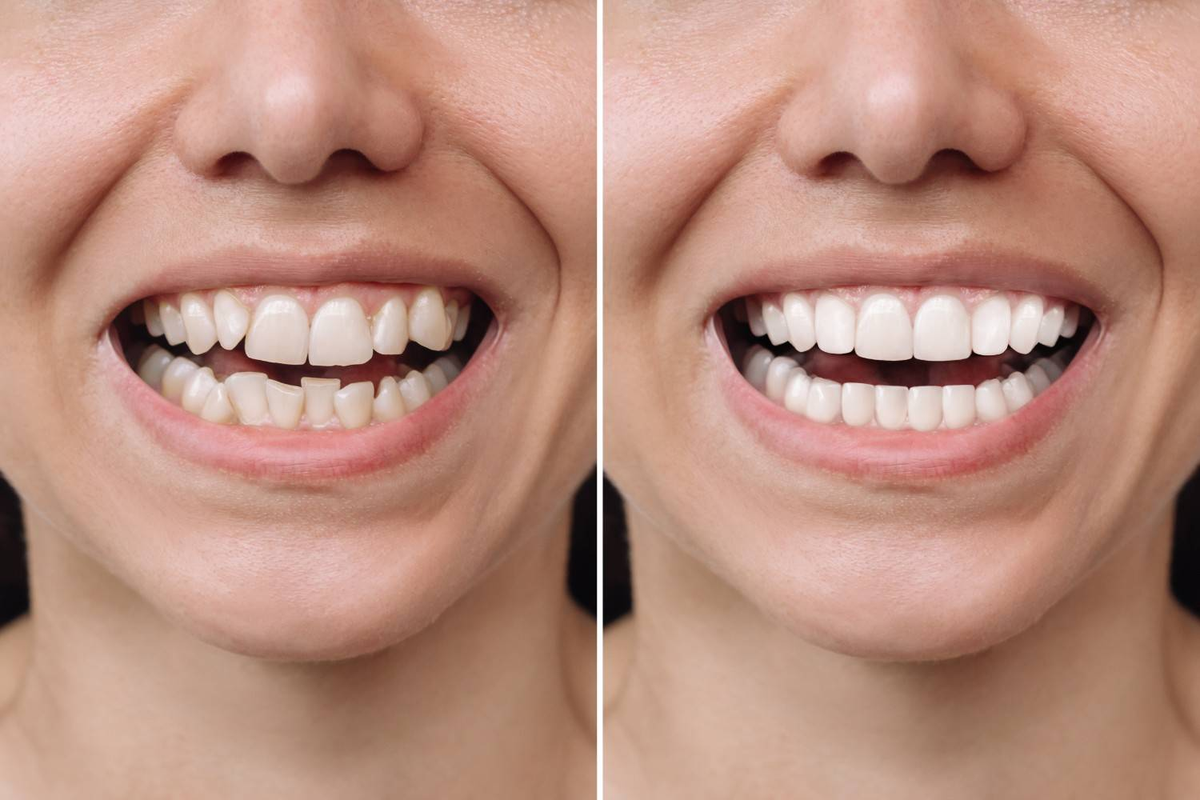
If the teeth are uneven because they are crooked or crowded, orthodontics may be more appropriate.
Also read:What Is General Dentistry? A Complete Guide to General Dental Care
If they are uneven because of wear or broken areas, restorative dentistry may be needed.
This is an important example of why cosmetic dentistry should start with diagnosis.
The same appearance can have completely different causes.
Can Veneers Fix My Teeth?
Veneers are thin coverings placed over the front surfaces of teeth.
They can improve the appearance of certain teeth that are:
- Discolored
- Slightly uneven
- Chipped
- Small
- Misshapen
- Slightly spaced
However, veneers are not a universal solution.
They do not automatically make unhealthy teeth healthy.
They may also require removal of some enamel, depending on the type and treatment plan.
Because veneers are a dental restoration rather than a temporary makeup product, you should consider the long-term maintenance and replacement implications before choosing them.
Are Crowns Good for Fixing Teeth?
Crowns cover a damaged or weakened tooth.
They may be used when a tooth has:
- Significant decay
- A large filling
- A major fracture
- Severe wear
- Structural weakness
- Certain root canal-related restoration needs
Crowns can improve both function and appearance when properly planned.
But a crown is not simply a better version of a filling.
Dentists generally consider how much healthy tooth structure remains and how much protection the tooth needs.
The goal is to use the least invasive treatment that can reliably solve the problem.
How Can I Fix Sensitive Teeth?
Tooth sensitivity can happen when the inner parts of the tooth become more exposed to temperature or other triggers.
Possible causes include:
- Gum recession
- Enamel wear
- Tooth decay
- Cracks
- Acid erosion
- Recent dental treatment
- Aggressive brushing
The solution depends on the cause.
Using a toothpaste designed for sensitivity may help some people.
However, persistent or severe sensitivity should be checked because sensitivity can sometimes be a sign of a cavity, crack, gum problem, or another dental issue.
Do not assume that every sensitive tooth simply needs sensitive toothpaste.
How Can I Fix Bleeding Gums?
Bleeding gums are not something you should simply accept as normal.
Plaque buildup around the gumline can cause inflammation and bleeding.
Cleaning between the teeth is important because toothbrush bristles cannot effectively reach every area between teeth. The ADA recommends daily interdental cleaning to help remove plaque and reduce the risk of gum disease and tooth decay.
Treatment may involve:
- Better daily brushing
- Daily interdental cleaning
- Professional dental cleaning
- Improved plaque control
- Treatment for gingivitis
- Periodontal treatment when gum disease is more advanced
If your gums bleed frequently, swell, become painful, or pull away from your teeth, arrange a dental examination.
Can Gum Disease Cause Teeth to Become Loose?
Yes.
Advanced gum disease can damage the tissues and bone that support teeth.
Loose adult teeth should be evaluated by a dentist.
Treatment can range from improved plaque control and professional cleaning to more advanced periodontal treatment.
The American Dental Association notes that scaling and root planing is a key nonsurgical treatment for periodontitis.
The earlier gum disease is addressed, the better the opportunity to prevent further damage.
How Can I Make My Teeth Stronger?
You cannot rebuild badly damaged teeth at home, but you can protect the healthy tooth structure you have. Brush twice a day with fluoride toothpaste, clean between your teeth daily, drink water, and limit sugary foods and drinks. Avoid tobacco and use a mouthguard when needed to protect your teeth from injury. Regular dental checkups can also help find problems early.
Does Sugar Really Damage Teeth?
Yes, frequent sugar exposure can increase the risk of tooth decay. When you often eat sugary foods or sip sweet drinks, bacteria in your mouth can produce acids that weaken tooth enamel. Having sweets occasionally is generally less harmful than eating or drinking sugary items throughout the day. Reducing how often your teeth are exposed to sugar can help protect them.
What Is the Best Toothpaste for Fixing Teeth?
There is no toothpaste that can repair every type of dental damage.
For most people, fluoride toothpaste is an important part of preventing cavities.
Whitening toothpaste may help remove some surface stains, but it does not rebuild damaged enamel or change every type of internal discoloration.
Toothpaste designed for sensitivity may help with certain types of sensitivity.
Prescription-strength fluoride toothpaste may be recommended for people at increased risk of tooth decay.
The best toothpaste therefore depends on the problem you are trying to manage.
Can Mouthwash Fix Teeth?
Mouthwash can be a useful addition to an oral-care routine, but it should not replace brushing and cleaning between your teeth.
Some mouth rinses are designed to provide fluoride.
Others may help with plaque or gingival inflammation.
However, mouthwash cannot repair a large cavity, straighten crooked teeth, replace a missing tooth, or rebuild a broken tooth.
Think of mouthwash as one tool rather than the entire treatment plan.
Is Flossing Necessary If I Brush Well?
Yes, cleaning between the teeth is important because a toothbrush cannot effectively reach every surface between teeth.
Dental floss is one option.
Other options include:
- Interdental brushes
- Water flossers
- Other interdental cleaners
The best tool depends on the spaces between your teeth and your dental needs.
The ADA recognizes interdental cleaning as an important part of oral hygiene.
Can Oil Pulling Fix Teeth?
Oil pulling should not be considered a replacement for evidence-based dental care.
It cannot close cavities, rebuild broken teeth, straighten teeth, replace missing teeth, or remove established tartar.
If you enjoy oil pulling as an additional habit, it should not replace brushing with fluoride toothpaste and cleaning between your teeth.
Be especially careful with any online method that promises to regrow teeth or permanently repair large cavities without dental treatment.
Extraordinary claims need strong evidence.
Can You Regrow a Broken Tooth Naturally?
No.
A broken adult tooth cannot naturally grow back into its original shape.
The body can perform some repair and mineralization processes in tooth tissues, particularly during very early stages of mineral loss, but that is different from growing a new tooth.
Once a substantial portion of a tooth has broken away, professional restorative treatment may be necessary.
How Can I Fix My Teeth Without Braces?
It depends on the problem.
If the concern is a small cosmetic imperfection, bonding may sometimes improve the appearance.
If the problem is discoloration, whitening may help.
If the teeth are genuinely crooked, orthodontic treatment may be needed.
Clear aligners can be an alternative to traditional braces for selected cases.
Veneers can make teeth look straighter without actually moving them, but this involves altering the tooth structure and does not correct the underlying bite.
For a healthy long-term result, actual orthodontic correction is often preferable when tooth position is the problem.
What Is the Fastest Way to Fix Teeth?
There is no single fastest treatment because different problems require different solutions.
A small chip may be repaired with bonding during a relatively short appointment.
Professional whitening can brighten teeth relatively quickly.
A cavity may require a filling.
Crooked teeth usually require a period of orthodontic treatment.
Dental implants require a longer process because the implant and replacement tooth need to be planned and, in many cases, allowed time to heal.
Be careful with dental advertisements that promise to completely transform your teeth in an unusually short period.
Fast does not always mean better.
A good treatment should protect your natural teeth and provide a result that you can maintain.
How Much Does It Cost to Fix Teeth?
The cost depends heavily on what needs to be done.
A simple filling may cost much less than an implant.
Orthodontic treatment can cost more because treatment may continue for many months.
Crowns, bridges, dentures, veneers, periodontal treatment, and root canals all have different costs.
Your location, dental insurance, treatment complexity, materials, and dentist can also affect the price.
Instead of asking for one universal price to “fix your teeth,” it is more useful to ask the dentist for a treatment plan with separate costs for each problem.
This can also help you decide which treatment should be done first.
Should You Fix Your Teeth for Health or Appearance?
Ideally, both goals should work together.
Health should usually come first.
For example, if a tooth has decay, treating the decay is more important than whitening the tooth.
If the gums are unhealthy, treating the gum problem should come before extensive cosmetic treatment.
Once the mouth is healthy, cosmetic options can be considered.
This order can prevent you from spending money on cosmetic treatment while an underlying disease continues.
What Should You Do First If You Hate Your Smile?
Start with a dental checkup and explain what you do not like about your smile. It may be yellow teeth, crooked teeth, gaps, chips, small teeth, old fillings, missing teeth, or sensitivity.
Ask your dentist which concerns are related to dental health and which are mainly cosmetic. This can make it easier to choose the right treatment. Sometimes, one treatment can improve more than one concern.
A Practical Step-by-Step Plan to Fix Your Teeth
Step 1: Identify the main problem
Look at what concerns you most.
Is it pain, decay, crookedness, discoloration, missing teeth, chips, gaps, or gum problems?
Do not assume you know the cause just by looking in the mirror.
Step 2: Schedule a dental examination
A dentist can examine the teeth, gums, bite, and surrounding tissues.
X-rays may be recommended when necessary.
This helps identify problems that cannot be seen from the outside.
Step 3: Treat disease first
If you have cavities, gum disease, infection, or damaged teeth, deal with those problems before focusing heavily on cosmetic improvements.
Step 4: Protect your remaining teeth
Start or improve your daily routine.
Brush twice a day with fluoride toothpaste.
Clean between your teeth daily.
Limit frequent sugary snacks and drinks.
Avoid tobacco.
Step 5: Choose cosmetic improvements afterward
Once your mouth is healthy, you can discuss whitening, bonding, veneers, orthodontics, or other cosmetic options.
Also read:What Is a DMD Dentist Meaning? A Simple and Complete Guide for US Patients
Step 6: Think about long-term maintenance
Before choosing a treatment, ask:
How long can it last?
Will it need replacement?
How do I maintain it?
Will it change my natural tooth structure?
What happens if it breaks?
What are the alternatives?
These questions can help you avoid choosing a treatment based only on its appearance.
What Treatments Can Fix Different Tooth Problems?
| Dental problem | Common treatment options |
| Early tooth decay | Fluoride, prevention, professional monitoring |
| Cavity | Filling or other restoration |
| Large damaged tooth | Crown or other restoration |
| Chipped tooth | Bonding, veneer, or restoration |
| Cracked tooth | Evaluation, restoration, crown, or other treatment |
| Crooked teeth | Braces or clear aligners |
| Yellow teeth | Cleaning or whitening when appropriate |
| Missing tooth | Implant, bridge, or denture |
| Small cosmetic gap | Bonding, veneers, or orthodontics |
| Large tooth gap | Orthodontics or restorative treatment |
| Tooth sensitivity | Cause-specific treatment and desensitizing products |
| Bleeding gums | Improved plaque control and professional treatment |
| Advanced gum disease | Periodontal treatment |
| Worn teeth | Cause control and restorative treatment |
This table is only a general guide. The same dental problem can require different treatments depending on the person’s mouth.
When Should You See a Dentist Immediately?
Do not wait for a routine appointment if you have signs of a dental emergency.
Seek urgent dental or medical care for symptoms such as:
- Severe tooth pain
- Facial swelling
- Swelling around the jaw
- Fever with dental pain
- Difficulty breathing
- Difficulty swallowing
- Heavy bleeding
- A serious facial injury
- A knocked-out permanent tooth
A dental infection can become serious if it spreads.
Severe swelling or difficulty breathing or swallowing can require emergency medical care.
What Not to Do When Trying to Fix Your Teeth
Do not try to file, cut, or repair your teeth at home. Never use household glue, sharp objects, or aspirin directly on your tooth or gums. Avoid using too much whitening product or buying dental appliances that claim to move teeth without a dentist’s advice. If severe tooth pain suddenly stops, do not assume the problem is gone. A badly damaged tooth may still need treatment.
How Can I Keep My Teeth Fixed After Treatment?
Taking care of your teeth after treatment helps protect your results. Brush twice a day with fluoride toothpaste, clean between your teeth daily, and visit your dentist regularly. Limit sugary foods and drinks, avoid tobacco, and do not use your teeth to open packages or chew very hard objects. If you grind your teeth or play sports, ask your dentist if a mouthguard or protective appliance is right for you.
Can You Fix Your Teeth Without Spending a Lot of Money?
Sometimes you can reduce future dental costs by focusing on prevention.
Preventing cavities is generally easier than repairing large cavities.
Treating early gum inflammation can be easier than treating advanced periodontal disease.
Fixing a small chip may be simpler than waiting until the tooth breaks further.
If cost is a concern, tell the dental office before treatment begins.
Ask about:
- Dental insurance benefits
- Payment plans
- Dental schools
- Community dental clinics
- Which treatments are urgent
- Which treatments can safely wait
- Lower-cost treatment alternatives
Do not feel embarrassed about discussing cost.
A good treatment conversation should include both your health needs and your financial situation.
Can Dental Schools Help Fix Teeth?
Dental schools may provide lower-cost treatment in some communities.
Treatment is generally performed by dental students under supervision from experienced dental professionals.
Availability, eligibility, waiting times, and prices vary.
Community health centers and nonprofit dental clinics may also provide services to eligible patients.
If cost is preventing you from receiving necessary dental treatment, asking about local options is better than delaying care indefinitely.
How Can I Fix My Teeth Naturally?
Natural habits can help protect your teeth, but they cannot replace restorative dentistry when damage has already occurred.
The most useful natural-supportive habits are basic:
- Drink water
- Eat a balanced diet
- Limit frequent sugar exposure
- Eat nutrient-rich foods
- Avoid tobacco
- Maintain good oral hygiene
- Get enough saliva flow
- Address dry mouth with professional guidance
There is no reliable natural remedy that can rebuild a large cavity or grow back a missing adult tooth.
The safest approach is to combine healthy habits with evidence-based dental treatment.
How Long Does It Take to Fix Teeth?
The timeline depends on the problem.
A small filling or bonding procedure may be completed relatively quickly.
Whitening may take days or weeks depending on the method.
Orthodontic treatment commonly takes considerably longer.
Implant treatment can take months because healing and bone integration may be required.
Extensive dental rehabilitation may take even longer because several problems need to be treated in stages.
A longer treatment plan is not necessarily a worse plan.
Sometimes taking the time to restore the mouth properly produces a more stable result.
Can One Dentist Fix All My Teeth?
A general dentist can manage many common dental problems.
However, some situations may require a specialist.
Examples include:
- Orthodontists for complex tooth movement
- Periodontists for advanced gum disease
- Endodontists for complicated root canal problems
- Oral and maxillofacial surgeons for certain surgical procedures
- Prosthodontists for complex tooth replacement and reconstruction
Your general dentist can often coordinate care when multiple specialists are needed.
The Most Important Thing to Remember About Fixing Teeth
If you are unhappy with your teeth, you may not need expensive cosmetic treatment. The right solution depends on the actual problem.
A professional cleaning can remove some stains and buildup. A filling can repair a cavity, while bonding can fix a small chip. Braces or clear aligners can straighten crooked teeth and improve your bite. Professional whitening can brighten natural teeth, while a crown can protect a badly damaged tooth. If a tooth is missing, a dental implant, bridge, or denture may replace it.
There is no single treatment that is best for everyone. The best approach is to find the cause of the problem, treat any dental disease first, and preserve as much healthy natural tooth structure as possible. A dentist can help you choose a treatment that improves both the health and appearance of your smile.
Final Thoughts
So, how can I fix my teeth? The answer depends on what is wrong with them. Cavities may need fillings, severely damaged teeth may need crowns, crooked teeth can often be treated with braces or clear aligners, stains may respond to professional cleaning or whitening, chips can sometimes be repaired with bonding, and missing teeth can be replaced with implants, bridges, or dentures. Healthy gums and good daily oral care are important regardless of which treatment you choose.
The smartest approach is to start with a dental examination rather than choosing a cosmetic treatment based only on how your teeth look. Treat active dental disease first, protect your natural teeth with fluoride toothpaste and daily interdental cleaning, and then consider cosmetic options if you still want to change your smile. The ADA recommends brushing twice daily with fluoride toothpaste, cleaning between teeth every day, limiting sugary foods and drinks, and maintaining regular dental care.
Most importantly, do not try to physically reshape, repair, or straighten your teeth at home. Modern dentistry offers many safe ways to improve damaged, crooked, stained, worn, or missing teeth, and the right treatment can often make a major difference in both your oral health and your confidence.
Frequently Asked Questions About How to Fix Your Teeth
Can I fix my teeth if I have not been to a dentist in years?
Yes. It is never too late to start improving your oral health. A dentist can identify which problems need immediate treatment and which can be addressed gradually.
Can I fix my teeth if they are naturally small?
Sometimes. If the teeth are healthy but appear unusually small, options such as bonding or veneers may improve their proportions. However, a dentist should first check your bite and tooth structure.
Can I fix uneven front teeth without removing them?
Often, yes. Depending on the cause, bonding, orthodontics, or other conservative treatments may improve the appearance without removing the teeth.
Can I fix my teeth if I have dental anxiety?
Yes. Tell the dental office about your anxiety before your appointment. Many dentists can modify the appointment, explain each step carefully, use comfort techniques, and discuss appropriate anxiety-management options.
Can I fix my teeth if I have old fillings?
Possibly. Old fillings do not automatically need to be replaced. A dentist can determine whether a filling is still functioning properly or whether it has decay, cracks, leakage, wear, or another problem.
Can I fix my teeth after years of smoking?
Yes. You can still improve your teeth and gums after years of tobacco use. A dentist can evaluate stains, gum health, cavities, and other problems. Stopping tobacco use can also help protect your future oral health.