DMD vs DDS: What Is the Difference Between These Dental Degrees?
September 8, 2026
What Are the Benefits of Being a Dentist?
September 9, 2026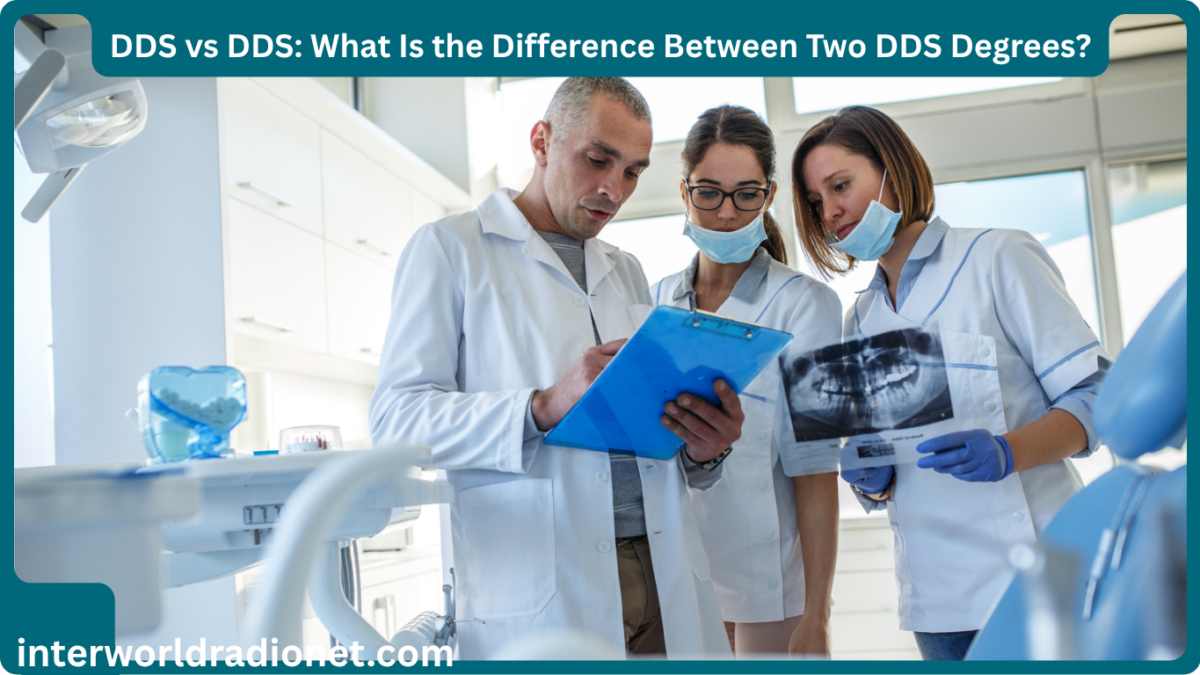
If you searched for “DDS vs DDS,” you may be expecting a comparison between two different dental degrees. However, there is an important point to understand first: DDS and DDS are the same degree title.
In the United States, DDS stands for Doctor of Dental Surgery. When the same abbreviation appears on both sides of a comparison, there is no academic difference to compare. A dentist with a DDS degree has earned the same type of dental doctorate represented by DDS.
The confusion usually happens because people actually mean “DDS vs DMD,” which is a common comparison among students, patients, and people researching dental careers. DDS and DMD are different abbreviations, but in the United States they represent equivalent professional dental degrees. The American Dental Association explains that dentists with either degree receive the same education and are licensed to practice the same scope of general dentistry.
This guide explains what DDS means, why someone may search for DDS vs DDS, how DDS compares with DMD, how dental school works, what accreditation means, whether one degree is better, and what students should actually consider when choosing a dental school.
What Does DDS Mean?
DDS stands for Doctor of Dental Surgery.
It is a professional doctoral degree awarded by dental schools in the United States and some other countries. In the United States, a person who earns a DDS from an appropriately accredited dental education program can pursue state dental licensure after meeting the applicable examination and other requirements.
The word “surgery” in the degree name can sometimes make the DDS appear different from other dental degrees. However, DDS is not a surgical-only degree.
A DDS graduate receives broad dental education. Training can include areas such as:
- Preventive dentistry
- Restorative dentistry
- Oral diagnosis
- Periodontology
- Endodontics
- Prosthodontics
- Oral surgery
- Pediatric dentistry
- Oral pathology
- Radiology
- Dental materials
- Patient management
- Dental ethics
- Clinical treatment planning
The goal is to prepare graduates to provide comprehensive dental care within the scope permitted by their state license.

The American Dental Association states that dental schools may award either a Doctor of Dental Surgery or a Doctor of Dental Medicine degree and that both meet the same educational requirements established through the accreditation system.
Also read:How Long Does It Take to Become a Dentist After College
DDS vs DDS: Is There Actually a Difference?
No.
If you are literally comparing DDS with DDS, there is no difference in the degree name.
For example:
| Comparison | Meaning |
| DDS vs DDS | Same degree |
| Doctor of Dental Surgery vs Doctor of Dental Surgery | Same degree |
| DDS from one dental school vs DDS from another | Same degree type, but schools can differ |
| DDS vs DMD | Different names for equivalent U.S. dental degrees |
| DDS vs dental hygiene degree | Different levels and professional roles |
This distinction is important because two dentists can both have DDS degrees while having very different educational experiences.
One may have graduated from a public university. Another may have attended a private dental school. One may have completed a specialty residency. Another may practice general dentistry. Their degrees are both DDS, but their training after dental school, professional interests, location, experience, and practice settings can differ.
Therefore, the meaningful comparison is usually not DDS vs DDS. It is the individual dentist, dental school, accreditation, clinical training, licensing, and additional education that deserve attention.
Why Do People Search for DDS vs DDS?
There are several possible reasons someone might search for DDS vs DDS.
First, the searcher may have accidentally entered the same abbreviation twice.
Second, the person may actually mean DDS vs DMD but type DDS twice.
Third, the searcher may be comparing dentists who both have DDS credentials and wants to know whether one DDS is more valuable than another.
Fourth, someone researching dental school may see different universities using DDS and wonder whether there are multiple versions of the DDS degree.
This is where context matters.
There is only one basic professional degree represented by the abbreviation DDS in this comparison. However, different dental programs can have different admission standards, teaching methods, clinical opportunities, costs, locations, class sizes, and institutional resources.
So while the letters “DDS” remain the same, the educational experience behind them can vary.
DDS vs DMD: The Comparison People Usually Mean
The most common comparison is actually DDS vs DMD.
DDS means Doctor of Dental Surgery.
DMD commonly means Doctor of Dental Medicine. It may also be written as Doctor of Medicine in Dentistry depending on the institution’s terminology.
Despite their different names, the degrees are considered equivalent for general dental practice in the United States.
The ADA specifically states that dentists holding DDS or DMD degrees have completed the same educational requirements and that state licensing boards accept both degrees as equivalent.
This means a patient should not assume that a DMD dentist has more medical training than a DDS dentist simply because the word “medicine” appears in the degree name.
Likewise, a DDS dentist is not automatically more qualified because the word “surgery” appears in the title.
The degree name primarily reflects the historical choice made by the dental school.
Why Are There Two Dental Degree Names?
The history of American dentistry helps explain the difference.
The Doctor of Dental Surgery degree has a long history in the United States. The first dental school in the world was established in Baltimore, and the DDS degree was established in 1840.
Later, Harvard University created a different naming tradition and awarded a DMD degree.
Over time, both degree titles became established in American dental education.
The result is an interesting situation: different universities may use different names for essentially the same professional dental education.
This is why one school may award DDS while another awards DMD.
The name itself does not determine whether the dentist can provide a particular type of general dental care.
Is DDS Better Than DMD?
No.
For U.S. dental practice, DDS is not automatically better than DMD.
A DDS dentist and a DMD dentist can both become licensed dentists if they satisfy their state’s licensing requirements. The ADA notes that state licensing boards accept DDS and DMD degrees as equivalent.
This is one of the most important points for people researching dentistry.
The letters after a dentist’s name do not tell you everything about that professional.
For example, a DDS dentist may have:
- Ten years of clinical experience
- A general dentistry practice
- Advanced continuing education
- Experience with complex restorative cases
Another dentist with a DMD may have:
- Five years of clinical experience
- Additional training in cosmetic dentistry
- A focus on pediatric patients
- Extensive continuing education in digital dentistry
The degree title alone cannot tell you which professional is the better choice for a particular patient.
What Is the Difference Between DDS and DMD Curriculum?
At the professional level, the educational requirements are designed to prepare students for competent dental practice.
The exact curriculum can vary from school to school, but dental students generally study both scientific foundations and clinical dentistry.
Early education commonly includes subjects such as:
- Anatomy
- Physiology
- Biochemistry
- Microbiology
- Pharmacology
- Oral biology
- Pathology
- Dental anatomy
- Radiology
- Biomaterials
Students then develop clinical skills in areas such as:
- Diagnosis
- Treatment planning
- Restorative procedures
- Periodontal care
- Prosthetic treatment
- Oral surgery
- Endodontic procedures
- Preventive care
- Patient communication
The important point is that the degree label does not create a separate curriculum category called “better dentistry.”
Dental programs must meet accreditation standards. CODA, the Commission on Dental Accreditation, is the national programmatic accrediting agency for dental and dental-related education programs in the United States.
How Long Does It Take to Earn a DDS?
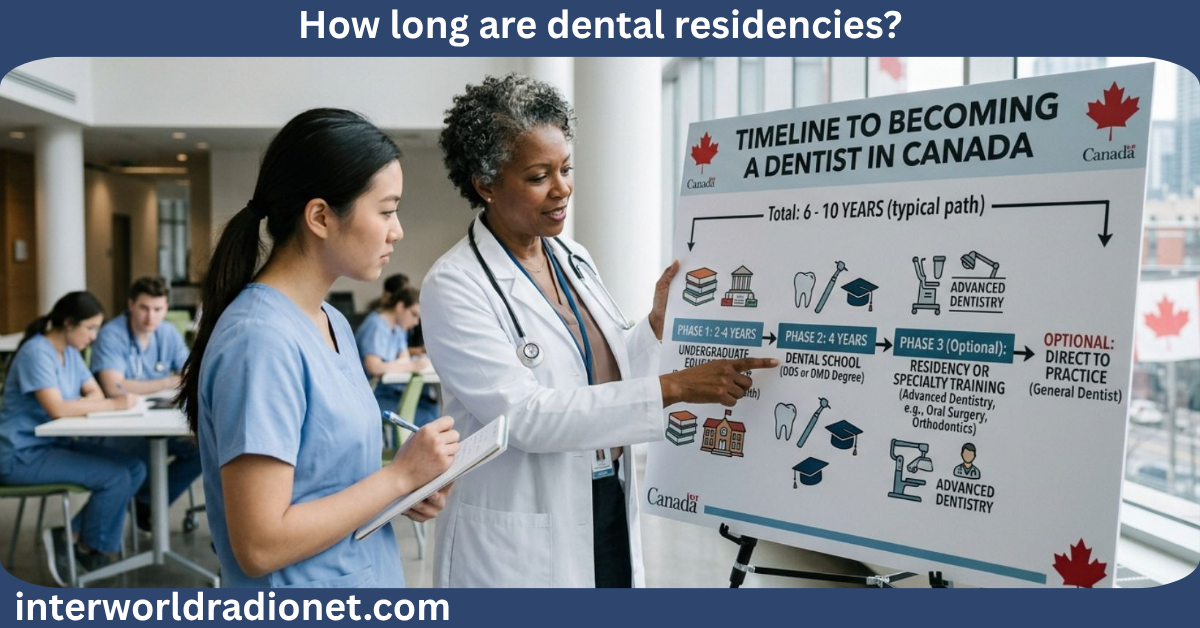
A traditional U.S. dental program generally takes four academic years after the required undergraduate preparation.
The American Dental Association explains that becoming a dentist generally involves three to four years of undergraduate education followed by four years of dental school.
The exact path can vary.
A simplified pathway looks like this:
Step 1: Complete College Prerequisites
Students normally complete undergraduate coursework before entering dental school.
Common prerequisite subjects can include:
- Biology
- General chemistry
- Organic chemistry
- Physics
- English
- Other science courses required by individual schools
Not every dental school has identical admission requirements, so students should always check each program’s current requirements.
Step 2: Apply to Dental School
Applicants compete for admission to dental schools.
The application process can include academic records, entrance testing, letters of recommendation, personal statements, interviews, and other requirements.
Step 3: Complete Dental School
The traditional DDS or DMD program generally takes four years.
Students move from foundational sciences toward increasingly advanced clinical education.
Step 4: Graduate With a DDS or DMD
After successfully completing the program, the student earns the degree selected by that university.
Step 5: Meet State Licensing Requirements
Graduation does not automatically mean a person can practice dentistry independently in every state.
Each state or territory establishes its own dental licensure rules.
The ADA explains that U.S. licensing requirements generally include an educational requirement, a written examination, and a clinical assessment, although exact requirements vary by jurisdiction.
What Is CODA and Why Does It Matter?
CODA stands for the Commission on Dental Accreditation.
It is an important organization for students researching dental education in the United States.
CODA evaluates dental and dental-related education programs against established accreditation standards. Its program finder allows students to search accredited dental programs.
Accreditation matters because the dental degree itself is only one part of the pathway toward professional practice.
If you are choosing a dental school, do not simply search for “DDS school.” Check whether the program is appropriately accredited and whether it satisfies the licensing requirements relevant to the state where you intend to practice.
This is much more useful than trying to decide whether one DDS is somehow stronger than another DDS.
Can Two DDS Programs Be Different?
Yes.
This is an important distinction.
The degree title can be identical while the student experience differs substantially.
Two dental schools may both award a DDS but differ in:
- Tuition
- Location
- Cost of living
- Class size
- Clinical patient volume
- Faculty structure
- Research opportunities
- Technology
- Simulation facilities
- Community outreach
- Specialty exposure
- Curriculum design
- Student support
- Financial aid
- Residency preparation
Therefore, “DDS vs DDS” can become meaningful when the comparison is actually between two dental schools that award the DDS.
For example, comparing School A DDS with School B DDS is not a comparison of two different degrees. It is a comparison of two educational programs leading to the same degree type.
Does the Dental School Name Affect a Dentist’s License?
The degree title alone does not determine a dentist’s license.
Licensing is handled by state dental boards and other applicable authorities.
The ADA states that nearly all states require a DDS or DMD from a university-based dental education program accredited by CODA, along with other licensing requirements.
This means students should focus on whether their educational pathway satisfies the rules of the jurisdiction where they want to practice.
Licensing rules can change, so students should verify current requirements with the relevant state dental board before making educational decisions.
What Is the INBDE?
The INBDE is the Integrated National Board Dental Examination.
It is a major written examination used in the U.S. dental licensure pathway.
According to the ADA, the INBDE was launched in August 2020 and replaced the earlier NBDE Part I and Part II examinations.
The examination is designed to assess knowledge needed for safe dental practice.
However, passing a national written examination is not the same thing as receiving a dental license. State-specific requirements still matter.
This is another reason why the letters DDS alone should not be viewed as the entire qualification.
Does a DDS Dentist Have to Become a Specialist?
No.
A DDS graduate can practice general dentistry after meeting the applicable licensing requirements.
Some dentists decide to continue their education and become specialists.
Examples include:
- Orthodontics
- Periodontics
- Endodontics
- Pediatric dentistry
- Prosthodontics
- Oral and maxillofacial surgery
- Oral and maxillofacial pathology
- Oral medicine
Additional postgraduate training is required for recognized dental specialties. The ADA notes that additional training is required to become a dental specialist.
This creates another useful distinction.
A DDS degree tells you that someone completed the professional dental education represented by that degree. It does not automatically mean that the person is an orthodontist, oral surgeon, periodontist, or another specialist.
DDS vs DDS for Patients: Does It Matter?
If you are a patient choosing between two dentists who both have DDS degrees, the comparison should focus on factors beyond the degree.
Consider:
Experience
How long has the dentist been practicing?
Experience can be useful, especially when a treatment involves complicated planning or unusual clinical circumstances.
Scope of Practice
What services does the dentist routinely provide?
A general dentist may provide preventive care, fillings, crowns, routine extractions, and other services, while a specialist focuses on a narrower area.
Education After Dental School
Some dentists complete residencies, fellowships, or extensive continuing education.

Communication
A technically skilled dentist still needs to communicate clearly with patients.
Also read:How to Remove Tartar From Teeth Without a Dentist: Safe Methods That Work
A good dentist should explain treatment choices, expected benefits, risks, alternatives, and costs in language the patient can understand.
Technology and Facilities
Modern equipment can support diagnosis and treatment, although technology alone does not determine quality.
Patient Experience
Office organization, accessibility, scheduling, hygiene practices, and communication can all affect a patient’s experience.
The most useful approach is to evaluate the whole professional rather than focusing only on DDS after the name.
Does DDS Mean Doctor?
Yes.
DDS is a doctoral-level professional degree in dentistry.
A dentist who has earned a DDS may use the professional title “Doctor” subject to applicable rules and professional standards.
However, the title should not be confused with a medical doctor degree such as an MD.
Dentists and physicians are different health professionals with different professional education, licensing structures, and scopes of practice.
At the same time, dentistry is a doctoral health profession and requires extensive education in biomedical science and clinical care.
Can a DDS Perform Surgery?
A general dentist can perform certain surgical dental procedures within the scope of their training and state license.
For example, some general dentists perform routine tooth extractions.
More complex surgical procedures may require referral to an oral and maxillofacial surgeon.
Oral and maxillofacial surgery is a specialized field involving surgical treatment of conditions affecting the oral and maxillofacial region. The ADA identifies DDS or DMD education as an entry requirement for oral and maxillofacial surgery training.
Therefore, the word “surgery” in DDS should not be interpreted as meaning every DDS dentist is an oral surgeon.
DDS vs DMD vs MD: Why the Names Can Be Confusing
Dental and medical degree abbreviations can be confusing because they use similar terminology.
Here is a simple overview:
| Degree | General meaning | Professional field |
| DDS | Doctor of Dental Surgery | Dentistry |
| DMD | Doctor of Dental Medicine / Doctor of Medicine in Dentistry | Dentistry |
| MD | Doctor of Medicine | Medicine |
| DO | Doctor of Osteopathic Medicine | Medicine |
DDS and DMD are dental degrees.
MD and DO are medical degrees.
The professional roles can overlap in certain healthcare settings, but they are not interchangeable degrees.
Does a DDS Degree Have the Same Value Across the United States?
A properly earned DDS from an appropriately accredited U.S. dental program is a recognized professional dental degree.
However, the process of obtaining a license can vary by state.
The ADA notes that dental licensure requirements vary among states and territories.
Therefore, students should not assume that every state has exactly the same licensing pathway.
Someone planning to practice in California, Texas, New York, Florida, or another state should check the requirements of that state’s dental board.
This is especially important for graduates who move between states.
What About International Dentists With a DDS?
International dental graduates face a different pathway in many cases.
A dental degree earned outside the United States or Canada may not automatically satisfy the educational requirement for U.S. dental licensure.
The American Dental Association explains that many states require an appropriately accredited dental education program and that internationally educated dentists may need additional U.S. dental education.
Advanced standing programs are one possible pathway.
These programs are designed for internationally educated dentists and can allow qualified students to enter a U.S. DDS or DMD program with advanced placement rather than starting the full four-year curriculum.
The American Dental Education Association also explains that many internationally educated dentists pursue advanced standing programs leading to a U.S. DDS or DMD degree.
The exact requirements depend on the program and state.
Is a DDS From One University Better Than a DDS From Another?
Not automatically.
A university’s reputation may matter to an applicant for certain career goals, but the DDS degree itself is still a DDS.
Students should compare programs based on factors that actually affect their education.
Important questions include:
- Is the program accredited?
- What are the total educational costs?
- What is the clinical training like?
- How much patient experience do students receive?
- What support is available?
- What are the school’s residency outcomes?
- What are the admission requirements?
- Is the location practical?
- What financial aid is available?
- What specialties and research opportunities are offered?
These questions provide much more useful information than asking whether one DDS is academically “higher” than another DDS.
DDS vs DDS: Degree Difference or School Difference?
This is perhaps the clearest way to understand the search term.
If the comparison is:
“DDS vs DDS”
then the degrees are identical.
If the comparison is:
“DDS School A vs DDS School B”
then the educational programs may be very different.
The difference can exist in cost, location, curriculum, clinical exposure, student experience, facilities, and other factors.
The distinction is similar to comparing two universities that both award the same bachelor’s degree. The degree name may be identical while the educational experience is not.
How Much Does Dental School Cost?
Dental education can be expensive, and costs vary widely.
The ADA’s recent dental school data show significant differences in first-year costs among public in-state, public out-of-state, and private dental schools.
This is one reason students should not choose a DDS program based only on its name.
When comparing schools, look beyond tuition.
Consider:
- Tuition
- Mandatory fees
- Instruments
- Books and supplies
- Health insurance
- Housing
- Transportation
- Food
- Loan interest
- Opportunity cost
- Living expenses
The cheapest tuition does not always mean the lowest total cost, and the highest tuition does not automatically mean the best educational experience.
What Should Students Look for in a DDS Program?
A strong DDS program should provide more than classroom instruction.
Students should look for a balanced education that includes scientific knowledge, technical skills, clinical experience, professional ethics, and patient communication.
Accreditation
Verify the program’s accreditation status.
Clinical Education
Look at how much hands-on patient care students receive.
Faculty
Experienced and accessible faculty can make a major difference in learning.
Student Support
Dental school can be demanding, so academic and wellness resources can be valuable.
Cost
Calculate the total cost rather than looking only at advertised tuition.
Location
Think about housing, transportation, family responsibilities, and future career goals.
Specialty Opportunities
Students interested in postgraduate training should investigate research, specialty exposure, and residency preparation.
Common Myths About DDS
Myth 1: DDS Is Better Than DMD
This is false.
DDS and DMD are equivalent professional dental degrees in the United States.
Myth 2: DDS Dentists Are Surgeons
Not necessarily.
DDS means Doctor of Dental Surgery, but it does not mean every DDS graduate is an oral and maxillofacial surgeon.
Myth 3: DMD Dentists Are More Medical
The DMD name does not automatically mean a dentist received more medical education.
Both DDS and DMD programs must meet applicable dental education standards.
Myth 4: Every DDS Dentist Has the Same Experience
The degree is the same, but individual dentists can have very different experience and postgraduate training.
Myth 5: A Famous Dental School Guarantees a Better Dentist
School reputation can be one factor, but it does not tell you everything about an individual dentist’s skills, communication, experience, or continuing education.
How to Compare Two Dentists With DDS Degrees
If you are choosing between two dentists who both have DDS credentials, create a broader comparison.
| Factor | Dentist A | Dentist B |
| DDS degree | Yes | Yes |
| State license | Verify | Verify |
| Years of experience | Compare | Compare |
| Specialty training | Check | Check |
| Services offered | Compare | Compare |
| Continuing education | Check | Check |
| Office location | Compare | Compare |
| Communication | Consider | Consider |
| Patient reviews | Review carefully | Review carefully |
| Treatment approach | Discuss | Discuss |
This method provides a more realistic comparison than simply looking at DDS after each dentist’s name.
What Does E-E-A-T Mean for Dental Information?
When researching healthcare topics, readers should pay attention to trustworthy information.
E-E-A-T stands for:
- Experience
- Expertise
- Authoritativeness
- Trustworthiness
For dental education and licensing information, authoritative organizations such as the American Dental Association, the Commission on Dental Accreditation, state dental boards, and the American Dental Education Association are useful starting points.
Dental licensing requirements can change, so current official information should take priority over outdated blog posts or social media claims.
How to Avoid Confusion When Searching for Dental Degrees
If your search is “DDS vs DDS,” try identifying what you really want to compare.
Also read:How Can I Fix My Teeth? A Complete Guide to Repairing, Straightening, Whitening, and Replacing Teeth
You may actually be looking for:
- DDS vs DMD
- DDS vs MD
- DDS vs dental hygienist
- DDS vs DMD salary
- DDS vs DMD curriculum
- DDS vs DMD school cost
- DDS vs DMD career options
- DDS school requirements
- How long does a DDS take?
- How to become a dentist
- How to become a licensed dentist in the United States
Each search has a different intent.
Understanding search intent is also useful for students because it helps them find more precise information.
What Is the Most Important Difference Between Two DDS Dentists?
The biggest difference is usually not the degree.
Both have DDS.
Instead, differences may come from:
- Experience
- Clinical skills
- Areas of interest
- Continuing education
- Specialty training
- Patient communication
- Practice environment
- Professional judgment
- Technology
- Services provided
This is an important practical insight.
A professional credential establishes a foundation, but it does not completely describe an individual’s career.
Can DDS Dentists Become Specialists?
Yes.
A dentist with a DDS can pursue postgraduate specialty training.
The same is true for a dentist with a DMD.
The ADA lists multiple advanced dental education pathways, including programs in orthodontics, oral and maxillofacial surgery, periodontics, pediatric dentistry, and other specialties.
This means the initial degree does not prevent a dentist from pursuing advanced training.
Does a DDS Degree Expire?
The degree itself does not simply expire.
However, a professional license is different from the academic degree.
Dentists must comply with the licensing and continuing education requirements established by the jurisdiction where they practice.
Therefore, someone should distinguish between:
“earned a DDS degree”
and
“currently holds an active dental license.”
Those are related but different concepts.
Is DDS a Good Career Choice?
For people interested in healthcare, science, hands-on work, and patient care, dentistry can be a rewarding career.
However, it requires significant education and financial investment.
A person considering dentistry should think about:
- Academic preparation
- Dental school competitiveness
- Educational costs
- Clinical responsibilities
- Patient interaction
- Long-term career goals
- Work-life preferences
- Business responsibilities
- Interest in lifelong learning
Dentistry is not simply about fixing teeth. Dentists diagnose oral health conditions, prevent disease, educate patients, manage treatment plans, and work with other healthcare professionals when appropriate.
The Bottom Line on DDS vs DDS
The phrase “DDS vs DDS” does not represent a genuine degree-versus-degree comparison. DDS is the same degree abbreviation on both sides.
The more useful comparison is often DDS vs DMD. In the United States, the American Dental Association considers DDS and DMD equivalent professional dental degrees. Both are designed to prepare graduates for dental practice, and state licensing boards generally treat them as equivalent degrees for licensure purposes.
If you are comparing two dentists who both have DDS degrees, focus on their education, licensure, clinical experience, specialty training, services, communication, and professional reputation rather than assuming one DDS is superior to another.
For students comparing dental schools, look at accreditation, curriculum, clinical opportunities, total cost, location, student support, and career outcomes.
In short, the letters DDS tell you what professional degree a dentist earned. They do not tell the entire story about the dentist’s abilities, experience, or career.
FAQs About DDS vs DDS
Are DDS and DDS the same degree?
Yes. DDS and DDS are exactly the same degree designation. DDS stands for Doctor of Dental Surgery.
Is one DDS degree higher than another DDS degree?
No. A DDS is a professional dental degree. Two schools may provide different educational experiences, but one DDS is not automatically a higher level than another DDS.
Does DDS mean the dentist is an oral surgeon?
No. DDS means Doctor of Dental Surgery. A general dentist with a DDS is not automatically an oral and maxillofacial surgeon. Oral and maxillofacial surgery requires additional specialized education and training.
Can a DDS dentist work in a hospital?
Yes, depending on the dentist’s training, license, role, and the hospital’s requirements. Some dentists pursue additional education that prepares them for hospital-based or specialized care.
Can a DDS dentist become a specialist later?
Yes. A DDS graduate can pursue postgraduate dental specialty education. The same opportunity is available to graduates with a DMD degree.
Final Thoughts
When someone searches for “DDS vs DDS,” the simple answer is that there is no difference between the two degree titles because both are DDS. The more meaningful question is usually DDS vs DMD, and in the United States those two dental degrees are considered equivalent for general dental practice. The better way to evaluate a dental professional or dental school is to look beyond the abbreviation and consider accreditation, education, licensing, clinical experience, additional training, cost, and the quality of care.