How to Remove Tartar From Teeth Without a Dentist: Safe Methods That Work
September 7, 2026
DMD vs DDS: What Is the Difference Between These Dental Degrees?
September 8, 2026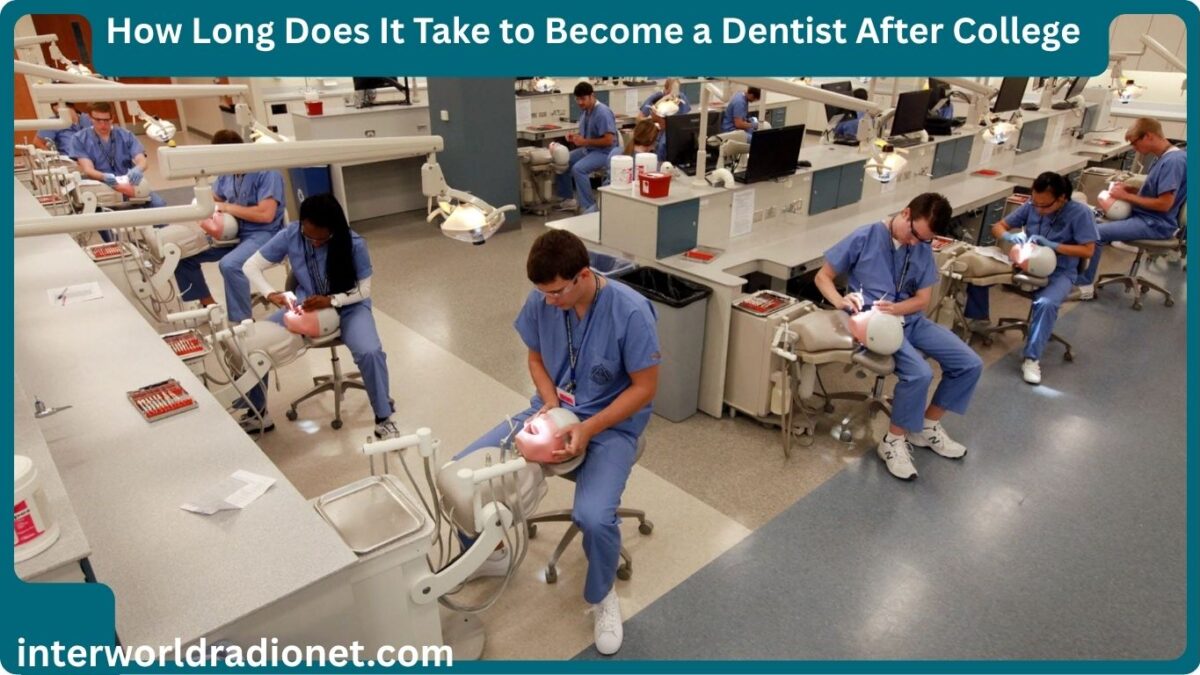
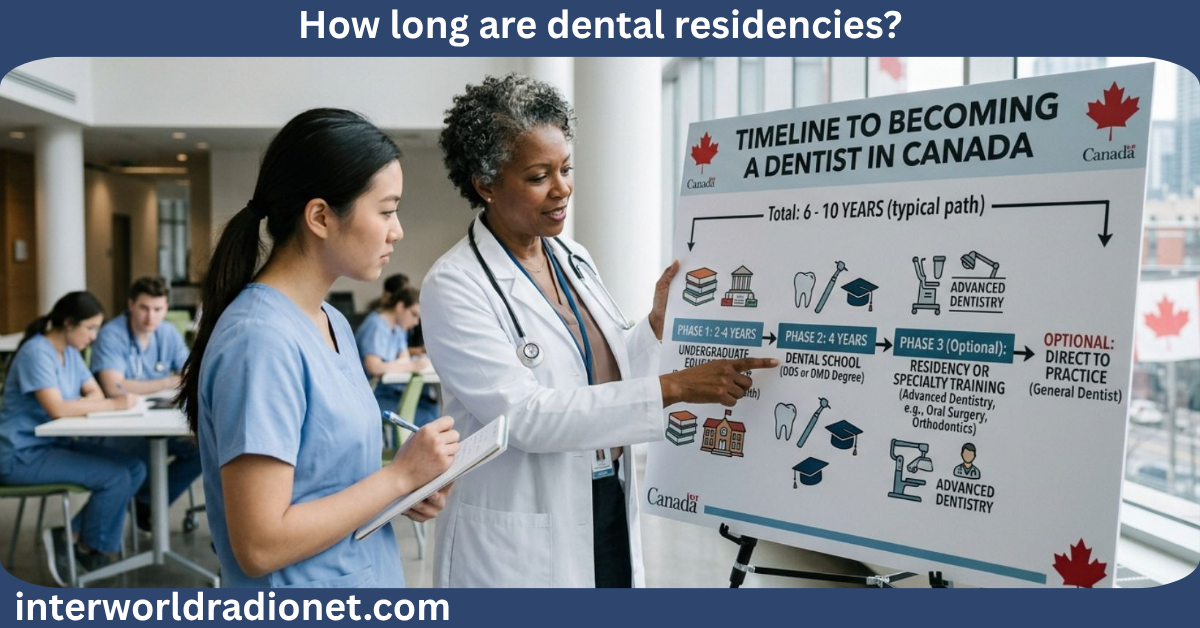
If you are asking, “how long does it take to become a dentist?” the short answer is usually about 7 to 8 years after high school in the United States. A common path includes about 3 to 4 years of undergraduate education followed by 4 years of dental school. Some students complete a full 4-year bachelor’s degree before dental school, making the total closer to 8 years. Others may enter dental school after completing the required undergraduate coursework in about 3 years, depending on the dental school’s admission requirements.
After dental school, a person who wants to become a general dentist usually does not need a separate residency before practicing, although state licensure requirements must be met. Dentists who want to specialize, such as orthodontists, pediatric dentists, periodontists, or oral and maxillofacial surgeons, generally need additional postgraduate education.
The American Dental Association explains that students generally complete three to four years of undergraduate education plus four years of dental school. Dental schools award either a Doctor of Dental Surgery (DDS) or Doctor of Dental Medicine (DMD), and these degrees have the same professional standing for general dentistry.
The exact timeline can be longer if you take a gap year, need additional prerequisite courses, repeat courses, reapply to dental school, or pursue a dental specialty.
Quick Answer: How Long Does It Take to Become a Dentist?
For most students in the United States, becoming a general dentist takes approximately 7 to 8 years after high school.
A typical timeline looks like this:
| Education or training stage | Typical time |
| Undergraduate education and dental prerequisites | 3–4 years |
| Dental school | 4 years |
| General dentist education total | About 7–8 years |
| Optional dental residency or specialty training | Usually 1–6+ additional years |
| Total for a dental specialist | Often 8–14+ years |
The four years of dental school are generally required to earn a DDS or DMD. Dental school itself is a professional doctoral program with classroom instruction, laboratory work, simulation training, and direct patient care.
What Is the Fastest Way to Become a Dentist?
The fastest traditional route can take about 7 years after high school, but it depends on the dental school and the student’s academic preparation.
A student may complete the necessary undergraduate education and prerequisite courses in approximately three years and then enter a four-year dental program. However, this does not mean every dental school allows students to enter after only three years of college.

Many applicants complete a four-year bachelor’s degree because it provides time to complete prerequisite courses, prepare for the Dental Admission Test (DAT), gain dental experience, build a competitive application, and meet individual dental school requirements.
Therefore, the practical answer for many students is about eight years from high school graduation to a dental degree.
What Are the Steps to Become a Dentist?
The path to becoming a dentist generally involves several major steps:
- Finish high school or an equivalent program.
- Complete undergraduate education and dental school prerequisites.
- Prepare for and take the Dental Admission Test if required.
- Apply to dental schools.
- Complete a four-year DDS or DMD program.
- Meet the licensing requirements of the state where you want to practice.
- Pass the required examinations.
- Begin practicing as a general dentist or continue into specialty training.
The exact requirements can vary between dental schools and states, so students should check the current requirements for each program and state licensing board.
Step 1: Complete High School
The journey to becoming a dentist starts before college.
High school students who are interested in dentistry can benefit from taking strong courses in subjects such as biology, chemistry, physics, mathematics, and English.
Good study habits are also important. Dental school is academically demanding, and students need to understand scientific concepts while also developing practical skills.
High school students can also explore dentistry through career programs, volunteer activities, job shadowing, or conversations with dental professionals when opportunities are available.
You do not need to know everything about dentistry in high school. The main goal is to build a strong academic foundation and determine whether healthcare and patient care are areas that interest you.
Step 2: Complete College or Undergraduate Prerequisites
The next major stage is undergraduate education.
Many dental schools expect applicants to complete substantial college-level science coursework before admission. Common prerequisites include biology, general chemistry, organic chemistry, and physics, usually with laboratory components.
Also Read: Why Is Dental School So Expensive? A Complete Guide for Future Dental Students
The American Dental Education Association notes that traditional prerequisite coursework commonly includes two semesters of biology with lab, general chemistry with lab, organic chemistry with lab, and physics with lab. Individual dental schools may require additional courses.
A common undergraduate path takes four years.
However, there is an important distinction between earning a bachelor’s degree and completing dental school prerequisites. Requirements differ by institution, and some applicants may be able to apply without completing all four years of a bachelor’s degree if they satisfy a particular school’s admission requirements.
Because admission policies change, students should always check the current requirements of each dental school they are considering.
Do You Need a Bachelor’s Degree to Become a Dentist?
Not necessarily in every situation, but a bachelor’s degree is a common and practical route.
Many U.S. dental programs require or strongly prefer applicants to have completed a bachelor’s degree or substantial undergraduate coursework. The Bureau of Labor Statistics reports that most dental programs require applicants to have at least a bachelor’s degree and specific science courses, although requirements vary.
There is also no universal rule that you must major in biology.
Students can major in subjects such as biology, chemistry, psychology, business, engineering, humanities, or other fields if they complete the required dental school prerequisites and meet the school’s admission standards.
ADEA specifically notes that a particular undergraduate major is not required for dental school admission, although applicants need a strong science foundation.
This gives students some flexibility.
For example, someone who loves psychology could major in psychology while completing the required biology and chemistry courses for dental school.
How Long Is College Before Dental School?
For many students, college takes four years.
During this time, students usually complete:
- General education courses
- Major requirements
- Biology
- General chemistry
- Organic chemistry
- Physics
- Other required science courses
- Courses such as biochemistry or anatomy when required
- Additional courses required by individual dental schools
Students also often use their college years to prepare for dental school applications.
This may include shadowing dentists, volunteering, participating in research, gaining leadership experience, and developing relationships with professors who can provide recommendations.
Step 3: Take the Dental Admission Test
The Dental Admission Test, commonly called the DAT, is an important part of the dental school application process.
The DAT evaluates areas including natural sciences, perceptual ability, reading comprehension, and quantitative reasoning. ADEA states that the test is computer-based and is offered throughout much of the year.
Students generally take the DAT after completing relevant prerequisite science courses.
Preparation time varies significantly.
Some students may prepare for several weeks, while others spend several months studying.
The DAT should not necessarily be treated as a separate “extra year.” With careful planning, students can prepare for the examination while completing college.
However, a student who needs to retake the test, complete additional prerequisites, or strengthen an application may spend additional time before entering dental school.
Step 4: Apply to Dental School
Dental school admission is competitive.
Students typically submit an application that includes academic records, test information, recommendations, personal information, and other materials required by participating dental schools.
The application process can take many months.
It is important to understand that “how long does it take to become a dentist” is not only a question about classroom time. The application timeline can influence the total time considerably.
A student who applies successfully on the first cycle may move directly into dental school.
A student who does not receive an offer may choose to improve their application and apply again. That can add a year or more to the overall timeline.
The American Dental Association recommends that prospective students plan ahead and apply well before the desired dental school start date.
Step 5: Complete Four Years of Dental School
Once admitted, the traditional dental school program usually takes four academic years.
Dental schools award either a Doctor of Dental Surgery (DDS) or Doctor of Dental Medicine (DMD).
Despite the different names, DDS and DMD degrees represent equivalent professional dental education when awarded by appropriately accredited programs. State licensing systems generally recognize both degrees for general dental practice.
Dental school is where students move from primarily learning about science to learning how to diagnose, prevent, and treat oral health conditions.
What Do You Learn in Dental School?
Dental school combines several types of education.
Students study subjects related to the human body, oral health, disease, diagnosis, treatment planning, patient communication, and clinical care.
Common areas include:
- Anatomy
- Physiology
- Biochemistry
- Microbiology
- Pharmacology
- Oral anatomy
- Oral pathology
- Oral histology
- Radiology
- Periodontology
- Operative dentistry
- Prosthodontics
- Endodontics
- Pediatric dentistry
- Oral surgery
- Dental materials
- Pain management
- Patient communication
- Ethics and professional practice
ADEA explains that the first two years commonly emphasize biological sciences and simulation-based clinical education.
Later years generally involve more direct patient care and clinical responsibilities.
What Happens During the First Two Years of Dental School?
The first two years often focus heavily on foundational science and preclinical education.
Students learn how the human body works and how diseases affect the body.
They also begin learning dentistry through laboratory and simulation exercises.
For example, students may practice techniques on dental models before performing similar procedures with actual patients.
This stage is important because dentistry requires both scientific knowledge and technical skill.
A dentist must understand what is happening medically while also controlling instruments precisely in a small working area.
What Happens During the Third and Fourth Years of Dental School?
The later years generally place greater emphasis on clinical dentistry.
Students begin spending more time treating patients under faculty supervision.
Depending on the school, students may provide care involving preventive dentistry, restorative procedures, periodontal treatment, radiographs, diagnosis, treatment planning, and other clinical services.
The exact curriculum differs among dental schools.
The goal is to graduate students who are prepared for the responsibilities of professional dental practice and eligible to meet applicable licensing requirements.
Is Dental School Four Years?
Yes. A traditional U.S. DDS or DMD program generally takes four years.
This is one of the most important facts when answering “how long does it take to become a dentist?”
The four years of dental school are separate from the undergraduate education that normally comes before it.
So a common path is:
Four years of college + four years of dental school = about eight years after high school.
However, the ADA notes that some students may complete undergraduate education in three years before dental school, making the educational timeline approximately seven years.
Step 6: Get a Dental License
Graduating from dental school does not automatically mean you can practice dentistry independently.
Dentists must obtain a license in the state where they practice.
The exact requirements vary by state.
The Bureau of Labor Statistics states that all states require dentists to be licensed, although the specific requirements differ. Most states require an appropriate DDS or DMD degree from an accredited dental program and written and clinical examinations.
This is an important part of the timeline because licensing requirements can affect when a new graduate can begin practicing.
Students should review the rules of their state’s dental board rather than assuming that requirements are identical across the country.
How Long Does It Take to Become a Dentist After High School?
For a typical U.S. student, the answer is approximately 7 to 8 years.
A simple example is:
High school graduation → 4 years of college → 4 years of dental school → state licensure → dentist.
That is approximately eight years of education after high school.
A student following a shorter undergraduate pathway may complete the educational portion in about seven years.
A student who takes a gap year, needs additional coursework, applies more than once, or changes educational plans may take longer.
How Long Does It Take to Become a Dentist From College?
If you have already completed the required undergraduate education and prerequisites, dental school itself normally takes four years.
Therefore, someone who has completed college and is ready to begin dental school can generally expect about four more years of dental education before earning a DDS or DMD.
Licensure steps come after or toward the end of dental school depending on the state’s examination structure.
How Long Does It Take to Become a Dentist Without a Bachelor’s Degree?
This question is more complicated because dental schools have different admission requirements.
Some dental programs may accept applicants who have completed the necessary prerequisite coursework without a traditional four-year bachelor’s degree, while others require a bachelor’s degree.
Also Read: What Is General Dentistry? A Complete Guide to General Dental Care
Therefore, there is no single nationwide answer.
The safest approach is to identify the dental schools you are interested in and compare their current admission requirements.
Trying to shorten the timeline without checking individual requirements can actually make the process longer if you later discover that you are missing required coursework.
Does Your College Major Affect How Long It Takes to Become a Dentist?
Usually, your major itself does not determine how long dental school takes.
A biology major, chemistry major, psychology major, or another major can potentially lead to dental school if the applicant completes the required prerequisites.
ADEA states that dental schools do not universally require a specific undergraduate major.
However, your major can affect scheduling.
For example, if you choose a major that has very few science courses, you may need to take additional biology and chemistry courses outside your major.
This can increase your course load or extend your undergraduate timeline.
Can You Become a Dentist in Less Than Eight Years?
Possibly, but it depends on the pathway.
Some students complete undergraduate education in approximately three years and then attend a four-year dental school.
There are also accelerated or combined educational pathways at some institutions, but these are not the standard route for everyone.
Students should not choose a program simply because it advertises a shorter timeline.
A better question is whether the program is appropriately accredited, meets licensing requirements, provides strong clinical education, and fits the student’s academic and financial situation.
How Long Does It Take to Become a Dentist If You Take a Gap Year?
A gap year can increase the timeline by approximately one year.
For example:
4 years college + 1 gap year + 4 years dental school = approximately 9 years after high school.
However, a gap year is not necessarily a disadvantage.
A well-planned gap year can allow a student to:
- Improve academic preparation
- Complete missing prerequisites
- Prepare for or retake the DAT
- Gain dental shadowing experience
- Work and save money
- Strengthen an application
- Explore dentistry more deeply
The key issue is not simply how quickly someone becomes a dentist. It is whether the additional time helps the student become a stronger applicant and future professional.
How Long Does It Take to Become a Dentist If You Need to Reapply?
If you apply to dental school and are not admitted, reapplying can add one or more years.
This is why application planning matters.
A strong application should not be based only on grades and test scores. Dental schools may also consider experiences, communication skills, motivation, recommendations, personal qualities, and other factors.
Students who need to reapply should carefully evaluate what can be improved rather than simply submitting the same application again.
How Long Does It Take to Become a Specialist Dentist?
Becoming a general dentist and becoming a dental specialist are different timelines.
A general dentist can typically begin practicing after earning a DDS or DMD and meeting state licensing requirements.
A specialist generally completes additional postgraduate education.
Dental specialties can include:
- Orthodontics
- Pediatric dentistry
- Periodontics
- Prosthodontics
- Endodontics
- Oral and maxillofacial surgery
- Oral and maxillofacial pathology
- Oral and maxillofacial radiology
- Dental anesthesiology
- Oral medicine
- Orofacial pain
- Dental public health
The length of specialty training varies.
Some programs take approximately two to three years, while oral and maxillofacial surgery programs can require at least four years, with some pathways involving additional medical or research degrees.
CODA notes that oral and maxillofacial surgery training has a minimum duration of four years, while additional years may be used for combined degrees depending on career goals.
How Long Does It Take to Become an Orthodontist?
A common orthodontist pathway is:
4 years undergraduate education + 4 years dental school + approximately 2 to 3 years orthodontic residency.
That means the total educational pathway can be around 10 to 11 years after high school.
Exact residency length varies by program.
Orthodontists receive additional training in diagnosing and treating problems involving tooth alignment, bite relationships, and jaw development.
How Long Does It Take to Become a Pediatric Dentist?
Pediatric dentists complete dental school and then additional specialty training.
A typical pathway is approximately:
4 years undergraduate education + 4 years dental school + around 2 to 3 years of pediatric dentistry residency.
This makes the total approximately 10 to 11 years after high school for many students.
Pediatric dentists receive additional training focused on children, adolescents, growth and development, behavior management, and patients with special healthcare needs.
How Long Does It Take to Become an Oral Surgeon?
Oral and maxillofacial surgery generally requires one of the longest dental specialty training pathways.
A dentist first completes dental school and then enters an oral and maxillofacial surgery residency.
CODA states that the minimum oral and maxillofacial surgery training is currently four years, while some residents spend additional years completing a joint medical degree or PhD.
Therefore, someone pursuing this specialty may spend 12 years or more in education after high school, depending on the pathway.
Does Every Dentist Need a Residency?
No.
A general dentist does not normally need to complete a residency after dental school.
The Bureau of Labor Statistics states that general dentists do not need additional training after dental school, while dentists entering specialty practice generally complete postdoctoral training.
Residency can still be valuable for a general dentist.
Programs such as Advanced Education in General Dentistry (AEGD) and General Practice Residency (GPR) can provide additional clinical experience.
However, these programs are not automatically required for every general dentist.
What Is the Difference Between DDS and DMD?
DDS stands for Doctor of Dental Surgery.
DMD stands for Doctor of Dental Medicine.
For practical purposes, both are professional dental degrees.
The difference is primarily the name used by the dental school rather than a difference in the basic professional status of the degree.
The ADA states that DDS and DMD graduates have fulfilled equivalent educational requirements established through dental accreditation and can practice the same scope of general dentistry once appropriately licensed.
Therefore, when comparing dental schools, students should look beyond whether the degree is called DDS or DMD.
Important factors include accreditation, curriculum, clinical opportunities, location, cost, student support, and licensing eligibility.
Why Does Becoming a Dentist Take So Long?
Dentistry requires extensive education because dentists are healthcare professionals responsible for diagnosing and treating oral health conditions.
Dentists need knowledge of:
- Human anatomy
- Physiology
- Disease processes
- Pharmacology
- Infection control
- Radiography
- Oral pathology
- Dental materials
- Diagnosis
- Treatment planning
- Surgical and restorative procedures
- Patient communication
- Professional ethics
They also need strong hand skills.
A dentist works in a very small area of the body and often performs procedures that require precise movements.
Education therefore has to combine academic knowledge with repeated practical training.
Is Becoming a Dentist Hard?
Yes, becoming a dentist can be academically and practically challenging.
The path is long, dental school admission is competitive, and dental education involves significant amounts of studying and clinical practice.
However, “hard” does not mean impossible.
Students who plan early, maintain good study habits, seek help when needed, and carefully track admission requirements can improve their chances of success.
It is also important to understand that academic ability is only one part of dentistry.
Communication, patience, attention to detail, professionalism, empathy, and technical skills are also important.
How Competitive Is Dental School?
Dental school admission can be competitive.
For context, the ADA reported 12,491 applicants for the Fall 2024 entering class, with 6,719 enrolling as first-year students.
These numbers show why planning matters.
A student should not wait until the final year of college to start thinking about dental school.
Prerequisite courses, DAT preparation, dental experience, recommendation letters, application timing, and academic performance all require planning.
How Much Does It Cost to Become a Dentist?
The cost varies widely by dental school.
Students may pay tuition, fees, books, instruments, equipment, housing, transportation, insurance, and other living expenses.
Public dental schools may have different tuition rates for residents and nonresidents.
Private dental schools generally have their own tuition structures.
Because costs can change significantly from one institution to another, prospective students should compare the current cost of attendance for each school rather than relying on a national average.
Financial aid, scholarships, grants, savings, employment, and student loans may all play a role in paying for dental education.
Cost should be considered alongside the length and quality of the program.
Can You Work While Going to Dental School?
Dental school is demanding, and many students find that working substantial hours during the program is difficult.
The workload can include lectures, laboratory exercises, simulation work, studying, patient care, clinical requirements, and examinations.
Some students may work limited hours, but the ability to do so depends on the individual and the dental school.
Students should consider their academic workload carefully before relying on employment income to cover major expenses.
How Can You Finish Dental School on Time?
Finishing dental school on time requires consistent planning.
Useful strategies include:
- Track every graduation requirement.
- Attend classes consistently.
- Ask for help early when a subject is difficult.
- Prepare for examinations well in advance.
- Maintain good clinical habits.
- Take patient requirements seriously.
- Communicate with faculty when problems arise.
- Manage time carefully.
- Avoid unnecessary course withdrawals.
- Understand licensing requirements before graduation.
Small academic problems can become larger problems when ignored.
Dental school is not the ideal environment for waiting until the last minute to solve an issue.
What Can Make the Dental Career Timeline Longer?
Several factors can increase the total time.
These may include:
- Taking fewer college courses each semester
- Missing prerequisite courses
- Changing majors
- Retaking courses
- Retaking the DAT
- Taking a gap year
- Applying to dental school more than once
- Delaying enrollment
- Taking leave from dental school
- Academic difficulties
- Pursuing a specialty
- Completing an additional degree
- Moving between educational systems
None of these automatically means a student will be unsuccessful.
A longer timeline can still lead to an excellent dental career.
What Can Make the Timeline More Efficient?
The most useful way to shorten the timeline is careful planning rather than rushing.
Start by identifying dental schools you may want to attend.
Then compare their requirements.
Create a four-year undergraduate plan that includes the necessary science courses.
Research DAT timing early.
Build relevant experience throughout college instead of trying to do everything immediately before applying.
Also check application deadlines carefully.
ADEA provides guidance showing that prerequisite requirements can vary among dental schools, which is why students should research individual programs rather than follow one universal checklist.
Does Dental School Accreditation Matter?
Yes.
Accreditation is important because dental education must meet established educational and clinical standards.
The Commission on Dental Accreditation, commonly known as CODA, is the national programmatic accrediting agency for dental and dental-related education programs in the United States.
CODA evaluates dental programs through a formal accreditation process designed to assess educational quality and compliance with established standards.
Students should verify the accreditation status of a dental program before applying.
This is especially important because graduating from a program that does not satisfy applicable educational requirements can create serious licensing problems.
What Should You Look for When Choosing a Dental School?
The shortest program is not always the best program.
When comparing dental schools, consider:
- Accreditation
- Curriculum
- Clinical experience
- Faculty
- Patient population
- Location
- Tuition
- Living expenses
- Financial aid
- Class size
- Student support
- Specialty opportunities
- Research opportunities
- Graduation outcomes
- Licensing requirements
A program that provides strong education and clinical preparation may be more valuable than one that simply appears convenient.
Can Internationally Trained Dentists Practice in the United States?
Internationally trained dentists may have additional steps before they can practice in the United States.
Requirements depend on the state and the dentist’s educational background.
The ADA explains that advanced standing programs can provide internationally trained dentists with a pathway into a U.S. DDS or DMD program without necessarily starting as first-year dental students. These programs are typically shorter than the traditional four-year dental degree pathway.
International dentists should carefully review both state licensing rules and the requirements of individual programs.
A Sample Eight-Year Dentist Timeline
Here is an example of a straightforward path.
Years 1–2 of College
The student completes general education and foundational science courses.
They begin taking biology and chemistry and learn more about the dental profession.
Years 3–4 of College
The student completes remaining prerequisites, prepares for the DAT, gains relevant experience, requests recommendations, and applies to dental schools.
Dental School Year 1
The student begins professional dental education and studies foundational sciences.
Dental School Year 2
The student continues advanced biomedical and dental sciences and develops clinical skills through simulation and supervised training.
Dental School Year 3
The student generally begins spending more time providing patient care under supervision.
Dental School Year 4
The student completes clinical and academic requirements and prepares for graduation and state licensure.
After Graduation
The new dentist completes the applicable state licensing process and can begin practicing general dentistry once licensed.
This example results in approximately eight years after high school.
Dentist Career Timeline at a Glance
For an easy comparison:
| Career goal | Approximate education after high school |
| General dentist | 7–8 years |
| Orthodontist | About 10–11 years |
| Pediatric dentist | About 10–11 years |
| Periodontist | About 10–11 years |
| Endodontist | About 10–11 years |
| Prosthodontist | About 10–11 years |
| Oral and maxillofacial surgeon | Often 12+ years |
| General dentist with optional advanced training | Often 8–9+ years |
These are general planning estimates rather than guaranteed timelines. Individual programs and state requirements can differ.
Is Becoming a Dentist Worth the Time?
Whether dentistry is worth the time depends on the individual.
Dentistry can provide a professional healthcare career with opportunities to work in private practice, group practices, community health, hospitals, education, research, public health, and other settings.
Dentists may also have flexibility in their work schedules and career paths.
However, the career requires a substantial investment of time, money, and effort.
Students should consider the entire profession rather than focusing only on potential income.
Think about whether you enjoy working with people, solving problems, learning science, using your hands, and taking responsibility for patient care.
What Skills Does a Good Dentist Need?
A successful dentist needs more than strong science grades.
Important skills include:
- Communication
- Listening
- Hand coordination
- Attention to detail
- Patience
- Organization
- Problem-solving
- Professionalism
- Empathy
- Decision-making
- Time management
Patients may be nervous, uncomfortable, or uncertain about treatment.
A dentist needs to explain procedures clearly and create a safe, respectful environment.
Common Mistakes Students Make When Planning to Become Dentists
One common mistake is assuming that every dental school has identical requirements.
Also Read: What Is a DMD Dentist Meaning? A Simple and Complete Guide for US Patients
They do not.
Another mistake is waiting too long to research prerequisites.
A student may discover late in college that an important course is missing.
Another common mistake is focusing only on grades and the DAT while ignoring communication skills, experience, recommendations, and application quality.
Students may also underestimate the financial side of dental school.
Planning early can help reduce avoidable surprises.
How Long Does It Take to Become a Dentist Compared With Other Healthcare Careers?
Dental education is similar in length to some other professional healthcare pathways but differs depending on the profession.
A general dentist typically completes approximately four years of undergraduate education followed by four years of dental school.
A physician usually follows a four-year undergraduate education with four years of medical school and then several years of residency.
A dental hygienist generally follows a much shorter educational pathway, although the exact requirements depend on the program and state.
A dental assistant may complete an even shorter educational pathway.
These careers are not interchangeable.
The right choice depends on the level of responsibility, education, clinical duties, career interests, and professional goals a person wants.
How Long Does It Take to Become a Dentist if You Start Planning in High School?
Starting early can make the process more organized.
A possible timeline is:
High school: Build strong science and math skills.
College years 1–2: Complete foundational science courses and research dental schools.
College years 3–4: Complete prerequisites, prepare for the DAT, gain experience, and apply.
Dental school years 1–2: Learn biomedical and dental sciences and practice clinical skills.
Dental school years 3–4: Provide supervised patient care and complete clinical requirements.
After dental school: Complete applicable state licensure requirements and begin practicing.
Planning does not necessarily reduce the required number of years, but it can reduce unnecessary delays.
Frequently Asked Questions
1. Can I become a dentist at age 30?
Yes. There is no general rule that says you must become a dentist immediately after college.
Many people begin professional education later than the traditional timeline. What matters is meeting the dental school’s admission requirements, completing the required education, earning the appropriate degree, and satisfying state licensing requirements.
Starting later may change the financial or personal planning involved, but age alone does not prevent someone from pursuing dentistry.
2. Can I become a dentist with a non-science degree?
Yes, potentially.
Dental schools do not universally require a specific undergraduate major. A student can major in a non-science field while completing the required science prerequisites.
ADEA notes that students from diverse academic backgrounds can be considered for dental school, provided they have the necessary science preparation and meet the school’s requirements.
3. Do dentists have to go to medical school?
No.
Dentists attend dental school rather than medical school.
They earn a DDS or DMD and receive specialized education in oral health and related areas of healthcare.
Dental and medical professionals often work together, but they are separate professional education pathways.
4. Can I become a dentist without taking the DAT?
This depends on the dental schools to which you apply.
The DAT is a standard part of the U.S. dental school admission process, and ADEA states that it is required by U.S. dental schools.
However, admissions policies can change, so applicants should always confirm current requirements directly with their target programs.
5. Is eight years the minimum time to become a dentist?
No.
Eight years is a common traditional timeline, not an absolute minimum for every student.
The ADA indicates that undergraduate education may take approximately three to four years before four years of dental school.
Individual requirements, accelerated pathways, bachelor’s degree policies, gap years, application timing, and other circumstances can make the total shorter or longer.
Conclusion
So, how long does it take to become a dentist? For a typical student in the United States, the answer is about 7 to 8 years after high school. The most common route is approximately four years of undergraduate education followed by four years of dental school. Some students may complete their undergraduate requirements in about three years, while others may need additional time.
The four years of dental school lead to a DDS or DMD degree and include extensive scientific, laboratory, simulation, and clinical education. After graduation, dentists must meet the licensing requirements of the state where they plan to practice. General dentists typically do not need a residency, while those who want to become specialists must complete additional postgraduate training.
The most important point is that becoming a dentist is not simply about reaching the finish line as quickly as possible. Careful academic planning, choosing an appropriate accredited dental school, completing prerequisites, preparing for the DAT, gaining relevant experience, and understanding state licensing requirements can help create a smoother path.
For anyone considering dentistry, starting early is one of the best ways to avoid unnecessary delays. Research the schools you are interested in, compare their current requirements, build a realistic college plan, and think carefully about whether the daily work of dentistry matches your interests and strengths.