
What Dentists Wish You Knew About Your Oral Health?
September 13, 2026
What Should You Know Before Choosing a Career in Dental?
September 14, 2026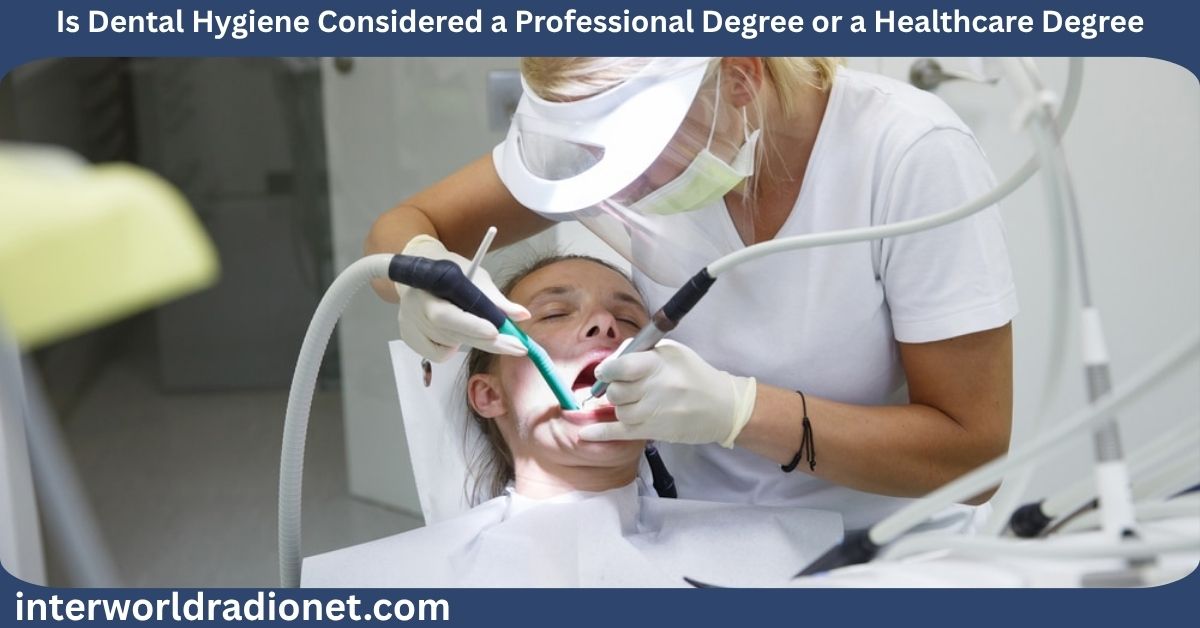
If you are researching dental hygiene as a career, you may be wondering, “Is dental hygiene considered a professional degree?” The short answer is: dental hygiene is a professional healthcare field, but whether a dental hygiene credential is formally classified as a “professional degree” depends on the degree level and the context in which the term is being used.
In the United States, students can enter the dental hygiene profession through accredited programs that commonly award an associate degree, while some schools offer bachelor’s degrees in dental hygiene. Graduates must also satisfy state licensing requirements before they can practice as dental hygienists. The education is career-focused, includes classroom and laboratory study, and requires supervised clinical training.
The important distinction is between being a professional and holding a degree that a school, employer, government agency, or education database officially calls a “professional degree.”
The American Dental Association (ADA) explains that most dental hygiene programs take at least two years for an associate degree, while some universities offer four-year bachelor’s programs. Dental hygiene students receive clinical instruction and study subjects such as anatomy, physiology, pharmacology, microbiology, radiology, dental materials, and dental hygiene practice.
This guide explains what a dental hygiene degree means, how it compares with other healthcare degrees, what education is required to become a registered dental hygienist, and why the terminology can be confusing.
Quick Answer: Is Dental Hygiene Considered a Professional Degree?
Yes, dental hygiene is a professional healthcare education pathway, but an associate or bachelor’s degree in dental hygiene is not the same type of professional degree as a DDS or DMD degree awarded to dentists.
A dental hygienist is a licensed oral healthcare professional. However, the entry-level dental hygiene credential is usually an associate degree rather than a doctoral professional degree.
Here is the basic distinction:
| Credential | Typical education | Career |
| Associate degree in dental hygiene | About 2 years | Dental hygienist |
| Bachelor’s degree in dental hygiene | About 4 years | Dental hygienist and expanded career options |
| Master’s degree | Graduate education | Education, administration, research, public health, and other advanced roles |
| DDS or DMD | Dental school after undergraduate education | Dentist |
The ADA states that there are more than 300 accredited dental hygiene education programs in the United States, including programs at community colleges, technical colleges, dental schools, and universities.
Therefore, if someone asks whether dental hygiene is a professional field, the answer is clearly yes. If they are asking whether an associate degree in dental hygiene is a “professional degree” in the same sense as a doctorate such as a DDS or DMD, the answer is no.

What Does “Professional Degree” Mean?
The term “professional degree” can have different meanings.
In everyday language, a professional degree is a credential designed to prepare someone for a specific profession. These programs usually focus heavily on practical knowledge and skills.
Examples can include education and training for fields such as:
- Dentistry
- Medicine
- Pharmacy
- Law
- Nursing
- Physical therapy
- Occupational therapy
- Veterinary medicine
However, the term can also have a more specific meaning in higher education.
For example, a DDS or DMD is a professional doctoral degree. It prepares graduates to practice dentistry after meeting applicable licensing requirements.
An associate degree in dental hygiene has a different academic level. It is an undergraduate degree designed to prepare students for entry into a licensed healthcare occupation.
This difference matters when you are filling out a college application, employment form, financial aid form, immigration document, or another official document.
If a form asks for your “professional degree,” you should not automatically assume that it means any career-focused degree. The form may have its own definition.
Is Dental Hygiene a Profession?
Yes. Dental hygiene is a recognized healthcare profession.
Dental hygienists provide preventive oral healthcare and work with patients to help maintain healthy teeth and gums. Depending on state law and their education, dental hygienists may perform tasks such as patient screening, oral hygiene education, dental cleanings, radiographs, and application of preventive materials.
Also Read: What Dentists Wish You Knew About Your Oral Health?
The ADA describes dental hygienists as members of the dental care team who provide preventive services and educate patients about oral health.
Dental hygienists are also licensed professionals. The exact licensing rules are determined by individual state dental boards.
This means dental hygiene is more than simply a short job-training course. It involves formal education, supervised clinical experience, examinations, and professional regulation.
Is an Associate Degree in Dental Hygiene a Professional Degree?
This is where the answer becomes more nuanced.
An Associate of Applied Science, Associate of Science, or similar associate degree in dental hygiene is an undergraduate degree that prepares students for professional practice.
It can be considered a professional or career-focused degree in a general sense because the curriculum is designed to prepare graduates for a specific occupation.
However, it is not normally classified as a professional doctoral degree.
This distinction is important because people sometimes use “professional degree” to mean a degree such as:
- Doctor of Dental Surgery (DDS)
- Doctor of Dental Medicine (DMD)
- Doctor of Medicine (MD)
- Doctor of Pharmacy (PharmD)
- Doctor of Physical Therapy (DPT)
A dental hygiene associate degree belongs to a different category of higher education.
Is a Bachelor’s Degree in Dental Hygiene a Professional Degree?
A bachelor’s degree in dental hygiene is also a professional and career-oriented undergraduate degree.
It can prepare students for clinical dental hygiene practice while also providing a broader academic foundation.
Bachelor’s programs may include:
- Dental hygiene theory
- Clinical dental hygiene
- Anatomy
- Physiology
- Microbiology
- Chemistry
- Pharmacology
- Radiology
- Dental materials
- Community oral health
- Research
- Communication
- Public health
Some programs are designed as four-year entry-level programs, while others are degree-completion programs for people who already hold an associate degree or certificate in dental hygiene.
The American Dental Education Association (ADEA) explains that degree-completion programs allow licensed dental hygienists who already have entry-level education to pursue a bachelor’s degree.
What Is the Difference Between Dental Hygiene and Dentistry?
One of the easiest ways to understand the terminology is to compare dental hygiene with dentistry.
A dental hygienist and a dentist are both oral healthcare professionals, but they have different education, licensing requirements, and scopes of practice.
Dental Hygienist
A dental hygienist generally focuses on preventive oral healthcare.
Depending on state law, duties may include:
- Cleaning teeth
- Evaluating oral health
- Taking dental X-rays
- Providing oral hygiene instruction
- Applying fluoride
- Applying sealants
- Recording patient information
- Supporting periodontal care
- Educating patients about prevention
The exact scope varies by state.
Dentist
Dentists have substantially longer and more advanced education.
The ADA explains that dentists generally complete three to four years of undergraduate education followed by four years of dental school. Dental schools award either a DDS or DMD degree, and these degrees meet equivalent educational standards for general dental practice.
Dentists diagnose and treat a much broader range of oral health conditions. Depending on their training and state authorization, they may perform procedures such as fillings, crowns, root canals, extractions, and other forms of restorative or surgical treatment.
Therefore, a dental hygiene degree should not be confused with a dental degree.
What Degree Do You Need to Become a Dental Hygienist?
In the United States, the education needed to become a dental hygienist depends on state requirements and the type of career pathway you choose.
The most common entry-level educational route is an accredited dental hygiene program that awards an associate degree.
Some students choose a bachelor’s degree instead.
The ADA reports that most associate dental hygiene programs take at least two years, while some universities offer four-year bachelor’s programs.
The educational process generally includes:
- Completing prerequisite courses
- Entering an accredited dental hygiene program
- Completing classroom instruction
- Completing laboratory instruction
- Completing supervised clinical training
- Passing required examinations
- Applying for state licensure
Because state rules can change, students should check the dental board in the state where they intend to practice.
Why CODA Accreditation Matters for Dental Hygiene
CODA stands for the Commission on Dental Accreditation.
CODA is the national programmatic accrediting agency for dental and dental-related education programs in the United States.
The ADA describes CODA as the national programmatic accrediting agency for dental and dental-related postsecondary education programs. Its accredited programs include dental hygiene programs.
Choosing an accredited program is important because accreditation demonstrates that a program has been evaluated against established educational standards.
For a prospective dental hygienist, accreditation can also be closely connected to eligibility for licensure.
The American Dental Hygienists’ Association stated in a 2025 policy update that individuals seeking to practice dental hygiene in the United States should complete a dental hygiene education program accredited by CODA and meet applicable clinical, examination, and practice requirements for licensure.
Students should therefore verify accreditation before enrolling.
Does a Dental Hygiene Degree Make You a Registered Dental Hygienist?
Not automatically.
Completing a dental hygiene program is an important step, but graduates generally must also complete the licensing process required by their state.
The ADA explains that graduates can pursue registered dental hygienist status by passing the National Board Dental Hygiene Examination and the authorized licensure examination required in their state.
This means there is an important difference between:
- Completing a dental hygiene degree
- Passing required examinations
- Receiving a state dental hygiene license
- Working as a licensed dental hygienist
A degree provides the educational foundation. Licensure gives the legal authority to practice within the state’s scope of practice.
What Is an RDH?
RDH commonly stands for Registered Dental Hygienist.
The title indicates that the individual has met applicable requirements to practice as a dental hygienist.
Requirements vary by state, but the process generally involves approved education and examinations.
The exact title and credentialing process can vary by jurisdiction, so students should always verify requirements with their state licensing authority.
What Do Dental Hygiene Students Study?
Dental hygiene is a science-based healthcare program.
Students should expect more than learning how to clean teeth.
A dental hygiene curriculum can include:
Anatomy and Physiology
Students learn how the human body is structured and how its systems work.
Microbiology
Students study microorganisms and their relationship to health and disease.
Pharmacology
Students learn about medications and how drugs can affect patients and dental care.
Radiology
Students learn how dental radiographs are produced and how to follow appropriate safety procedures.
Dental Materials
Students learn about materials used in dental care.
Periodontology
Students study the tissues surrounding and supporting the teeth and conditions affecting those tissues.
Clinical Dental Hygiene
Students apply their knowledge in supervised clinical settings.
Patient Education
Communication is an important part of dental hygiene. Patients need clear and practical guidance about brushing, flossing, diet, preventive care, and other oral health habits.
This combination of scientific knowledge, clinical training, and patient interaction is one reason dental hygiene is clearly a professional healthcare field.
Is Dental Hygiene Considered a Medical Degree?
No.
Dental hygiene is a healthcare profession, but a dental hygiene degree is not generally classified as a medical degree.
“Medical degree” usually refers to a degree such as an MD or DO in the United States.
Dental hygiene belongs to the dental and oral healthcare field.
This distinction does not make dental hygiene less important. Oral health is an important part of overall health, and dental hygienists play a major role in preventive oral care.
Is Dental Hygiene Considered a Healthcare Degree?
Yes.
Dental hygiene is a healthcare education pathway focused on oral health.
Students study health sciences and receive clinical training to work directly with patients.
The education is designed around a regulated healthcare occupation, which makes dental hygiene different from many general academic majors.
Is Dental Hygiene a STEM Degree?
The answer depends on how STEM is defined by the institution, government program, employer, or application being considered.
Dental hygiene uses substantial science, including biology, anatomy, physiology, chemistry, microbiology, pharmacology, and other scientific subjects.
However, simply taking science courses does not automatically mean that a degree is officially classified as STEM.
If you need STEM classification for immigration, employment, scholarship, or another formal purpose, check the specific program’s official classification and the applicable government or institutional rules.
How Long Does It Take to Become a Dental Hygienist?
For many students, an associate dental hygiene program takes about two years after prerequisites or admission requirements are completed.
The actual time can be longer because programs may have prerequisite courses, competitive admission, clinical requirements, or other institutional requirements.
A bachelor’s degree pathway generally takes about four years, although degree-completion programs for existing dental hygienists may take less time.
The ADA notes that most associate degree dental hygiene programs take at least two years, while some universities offer four-year bachelor’s programs.
Associate Degree vs. Bachelor’s Degree in Dental Hygiene
Both can lead toward a career in dental hygiene, but they can serve different goals.
Associate Degree in Dental Hygiene
An associate degree is often the faster entry route.
Advantages can include:
- Shorter initial program length
- Lower total tuition at some schools
- Strong clinical focus
- Entry into the dental hygiene workforce
- Availability at community colleges
The main goal is often to prepare students for entry-level professional practice.
Bachelor’s Degree in Dental Hygiene
A bachelor’s degree requires more time but can provide additional academic and career opportunities.
Possible advantages include:
- Broader education
- Public health preparation
- Research experience
- Leadership development
- Teaching opportunities
- Administrative career options
- Preparation for graduate education
ADEA notes that dental hygienists with bachelor’s degrees may have broader opportunities in areas such as education, administration, public health, and corporate dental hygiene sales and education.
Does a Bachelor’s Degree Make a Dental Hygienist a Doctor?
No.
A bachelor’s degree in dental hygiene does not make someone a dentist or medical doctor.
A person with a bachelor’s degree in dental hygiene may be a licensed dental hygienist if they meet state licensing requirements.
The professional title remains based on the person’s actual education, license, and role.
This is an important distinction because dental hygienists and dentists have different scopes of practice.
Can Dental Hygienists Earn a Master’s Degree?
Yes.
Graduate education is available to dental hygienists, particularly those who already hold a bachelor’s degree.
Master’s-level education may support careers in areas such as:
- Dental hygiene education
- Public health
- Administration
- Research
- Health promotion
- Academic leadership
ADEA notes that graduate dental hygiene education programs are designed for dental hygienists who have earned a bachelor’s degree in dental hygiene or a related field and want to pursue a master’s degree.
Is a Master’s Degree in Dental Hygiene a Professional Degree?
A master’s degree in dental hygiene or a related field is an advanced graduate credential.
It may be professional in the broad sense because it can prepare someone for advanced professional responsibilities.
However, the phrase “professional degree” still depends on the context.
A master’s degree should not automatically be treated as equivalent to a professional doctorate such as a DDS, DMD, MD, or DPT.
Dental Hygiene Licensing Requirements in the United States
Licensure is one of the most important parts of the dental hygiene career path.
States regulate the practice of dental hygiene, and requirements are not identical nationwide.
Requirements can involve:
- Graduation from an approved dental hygiene program
- National examination
- Clinical or practical examination
- Background checks or other documentation
- Application fees
- State-specific requirements
- Continuing education
- License renewal
Because state rules can change, students should use their state dental board as the final authority.
This is especially important if you plan to move between states.
Can a Dental Hygienist Work in Another State?
Possibly, but a license in one state does not automatically guarantee unrestricted practice in another.
Each state establishes its own licensing laws.
Some states may offer pathways based on existing credentials, examinations, education, or work experience.
Before relocating, a dental hygienist should check the new state’s dental board.
The ADA provides state-specific dental licensing information and advises individuals to consult the relevant state board for current requirements.
What Is the Difference Between a Professional Degree and a Professional License?
This is a common source of confusion.
A degree is an educational credential.
A license is legal authorization from a government licensing authority to practice a regulated occupation.
For example, someone may graduate from a dental hygiene program but still need to complete the licensing process before legally practicing as a dental hygienist.
This distinction is important when answering questions such as “Is dental hygiene considered a professional degree?”
The degree provides education.
The license provides legal authority to practice.
Both can be important parts of becoming a professional dental hygienist.
Also Read: What Other Jobs Can Dentists Do Besides Practicing Dentistry?
Why Dental Hygiene Is Clearly a Professional Career
Even when the degree classification is debated, there is little question that dental hygiene is a professional healthcare career.
Dental hygienists:
- Complete specialized education
- Study health sciences
- Perform supervised clinical training
- Work directly with patients
- Follow professional standards
- Must satisfy licensing requirements
- Provide preventive healthcare
- Continue professional education
- Work within state-defined scopes of practice
These characteristics distinguish dental hygiene from many occupations that require only short-term job training.
Is Dental Hygiene a Good Career Choice?
Whether dental hygiene is a good career depends on your personal goals.
It may be a strong choice for people who enjoy:
- Healthcare
- Science
- Patient interaction
- Preventive care
- Hands-on work
- Education
- Structured clinical environments
The profession can also appeal to students who want a healthcare career without attending dental school or medical school.
However, dental hygiene is not an easy career simply because the entry-level degree may take fewer years than some healthcare degrees.
Clinical programs can be demanding. Students need to learn scientific concepts, develop technical skills, work with patients, and meet professional standards.
What Skills Do Dental Hygienists Need?
Academic knowledge is only part of becoming a successful dental hygienist.
Important skills include:
Communication
Patients may feel nervous about dental treatment. A hygienist needs to explain procedures and oral health recommendations clearly.
Attention to Detail
Dental hygiene involves careful assessment, documentation, infection-control practices, and clinical procedures.
Manual Dexterity
Many clinical procedures require precise hand movements.
Empathy
Patients have different concerns, experiences, and comfort levels.
Time Management
Dental offices often operate on scheduled appointments, so hygienists must work efficiently without sacrificing patient care.
Critical Thinking
A hygienist needs to recognize relevant findings and communicate appropriate information to the dental team within the legal scope of practice.
What Career Paths Are Available After Dental Hygiene School?
Clinical practice is only one potential direction.
A dental hygienist may eventually explore roles involving:
- Clinical dental hygiene
- Public health
- Dental hygiene education
- Administration
- Research
- Corporate education
- Sales and professional education
- Community health programs
A bachelor’s degree can be particularly useful for hygienists interested in education, administration, public health, and related nonclinical opportunities.
Does Dental Hygiene Have a Professional Career Ladder?
Yes.
A simplified pathway can look like this:
High school education
↓
Prerequisite college courses
↓
Accredited dental hygiene program
↓
Associate or bachelor’s degree
↓
Required examinations
↓
State dental hygiene license
↓
Registered dental hygienist practice
↓
Bachelor’s completion or graduate education
↓
Education, administration, public health, research, leadership, or other advanced opportunities
The exact route varies from person to person.
What Should You Look for in a Dental Hygiene Program?
If you are considering dental hygiene school, do not choose a program based only on tuition or location.
Consider these factors:
Accreditation
Verify that the program is accredited by the appropriate accrediting organization, particularly CODA where applicable.
State Eligibility
Make sure graduates are eligible to meet the licensing requirements of the state where you plan to practice.
Clinical Training
Look at how much supervised clinical experience students receive.
Program Completion Rates
Ask the school for relevant student outcome information.
Examination Performance
Where available, review graduate examination performance.
Total Cost
Consider tuition, fees, instruments, uniforms, books, transportation, and other costs.
Schedule
Some programs have full-time schedules that can make employment difficult while enrolled.
Location
Clinical education may require students to travel to assigned sites.
Career Support
Ask whether the school provides assistance with job searches, resumes, interviews, or professional networking.
Is an Online Dental Hygiene Degree Possible?
Some portions of dental hygiene education may be delivered online or through distance learning.
However, dental hygiene is a hands-on clinical profession.
Students need supervised practical education.
The ADA notes that dental hygiene education may include distance learning and institution-based didactic education combined with community experience, while also emphasizing supervised clinical patient-care experiences.
Therefore, be cautious about programs that suggest you can become a practicing dental hygienist entirely through online classes without required clinical education.
Always verify program accreditation and state licensing eligibility.
What Does CODA Accreditation Mean for Students?
CODA accreditation means that an educational program has been evaluated against established standards for dental and dental-related education.
For students, accreditation can provide an important quality signal.
It can also affect whether graduates meet educational requirements for professional licensure.
The ADA’s CODA information explains that the commission accredits dental hygiene and other allied dental education programs through a formal review process.
Before paying a deposit or enrolling, confirm the program’s current accreditation status.
Is Dental Hygiene a Professional Degree or an Associate Degree?
The simplest answer is:
Dental hygiene can be an associate degree or a bachelor’s degree, and both can be professional, career-focused educational pathways. However, neither should automatically be described as a professional doctorate.
This distinction solves much of the confusion around the question.
If someone asks:
“Is dental hygiene a professional career?”
Answer: Yes.
If someone asks:
“Is an associate degree in dental hygiene a professional doctoral degree?”
Answer: No.
If someone asks:
“Can a bachelor’s degree in dental hygiene prepare me for professional practice?”
Answer: Yes, subject to completing the applicable education, examination, and state licensing requirements.
How Dental Hygiene Compares With Nursing
Dental hygiene and nursing are both licensed healthcare professions, but their educational structures and scopes of practice differ.
Dental hygiene focuses primarily on oral health and preventive dental care.
Nursing covers a much broader range of patient health needs.
Both professions can offer associate and bachelor’s educational routes, depending on the program and jurisdiction.
The fact that both are professional healthcare careers does not mean their degrees have identical classifications.
How Dental Hygiene Compares With Dental School
Dental hygiene education is considerably different from dental school.
Dental school leads to a DDS or DMD.
The ADA states that DDS and DMD degrees represent equivalent educational pathways for general dentistry.
Dental hygiene education prepares students for hygienist practice instead.
A student should not enroll in a dental hygiene program expecting it to be a shortened version of dental school. The careers have different scopes, responsibilities, educational requirements, and licensing systems.
Also Read: What Is the Oldest Medical Profession in the World?
Common Misunderstandings About Dental Hygiene Degrees
“A dental hygienist is basically a dentist.”
False.
Dental hygienists and dentists are separate licensed professionals with different education and scopes of practice.
“An associate degree is not professional education.”
Not necessarily.
An associate degree in dental hygiene can provide specialized education and clinical preparation for a licensed healthcare career.
“A bachelor’s degree in dental hygiene makes you a dentist.”
False.
A bachelor’s degree in dental hygiene does not award a DDS or DMD.
“Graduating from dental hygiene school automatically gives you a license.”
Usually not.
Graduates must meet state licensing requirements, including applicable examinations.
“All states have exactly the same rules.”
False.
Dental hygiene licensing is regulated at the state level, and requirements can vary.
How to Answer “Is Dental Hygiene Considered a Professional Degree?” on a Form
If you are completing an official application, do not guess.
First determine what the form means by “professional degree.”
If it asks for your highest degree, list the exact credential you earned, such as an Associate of Science in Dental Hygiene or Bachelor of Science in Dental Hygiene.
If it asks whether you hold a professional license, that is a different question. You would provide your dental hygiene license information if applicable.
If the form uses a specific definition, follow that definition.
This approach is more accurate than simply labeling every career-focused healthcare degree a “professional degree.”
Dental Hygiene and Continuing Education
Education does not necessarily stop after graduation.
Licensed dental hygienists may need continuing education to maintain their licenses.
The exact requirements depend on the state.
Continuing education can help professionals stay current with:
- Clinical techniques
- Infection prevention
- Patient safety
- Professional standards
- New technologies
- Oral health research
- State regulatory changes
Because licensing rules vary, hygienists should check their state’s current requirements.
The Role of Professional Organizations
Professional organizations can be useful sources of education and career information.
The American Dental Hygienists’ Association is a major professional organization representing dental hygienists.
The American Dental Association also provides career and education information about dental hygiene.
The American Dental Education Association provides information about dental hygiene programs and education pathways.
Students should use recognized professional and regulatory sources when making important education decisions.
What Is the Best Degree for Dental Hygiene?
There is no single best degree for every student.
An associate degree may be appropriate if your main goal is to enter clinical dental hygiene practice efficiently.
A bachelor’s degree may be a better fit if you want broader academic preparation or are interested in education, public health, administration, research, or future graduate study.
Your choice should depend on:
- State licensing requirements
- Career goals
- Cost
- Time available
- Transfer opportunities
- Personal circumstances
- Long-term education plans
Does a Higher Degree Always Mean a Higher Dental Hygiene Salary?
Not necessarily.
Education can influence career opportunities, but compensation depends on many factors.
These may include:
- Geographic location
- Employer
- Experience
- Work setting
- Full-time or part-time status
- Clinical responsibilities
- Additional credentials
- Local demand
A bachelor’s degree may open additional career paths, but it does not automatically guarantee a specific salary.
What Makes Dental Hygiene Different From General College Majors?
A general academic major may provide broad knowledge without directly leading to a regulated occupation.
Dental hygiene is different because the educational program is connected to a specific healthcare profession.
Students learn specialized science and clinical skills.
They also complete supervised patient-care experiences and must satisfy applicable licensing requirements.
That professional connection is one of the strongest reasons dental hygiene is appropriately described as a professional healthcare field.
Frequently Asked Questions About Dental Hygiene Degrees
1. Can you become a dental hygienist without going to college?
In the United States, dental hygiene practice generally requires completion of an approved dental hygiene education program and fulfillment of state licensing requirements. Because requirements differ by state, you should check the dental board where you intend to practice.
2. Can I go from an associate degree in dental hygiene to a bachelor’s degree?
Yes. Many institutions offer degree-completion programs for dental hygienists who already have entry-level education and want to earn a bachelor’s degree. ADEA specifically describes these programs as pathways for licensed hygienists with a certificate or associate degree.
3. Can a dental hygienist become a dentist later?
Yes, but becoming a dentist requires completing the education and licensing pathway for dentistry. A dental hygiene degree does not substitute for dental school.
A person interested in dentistry would normally need to meet dental school admission requirements and complete a DDS or DMD program before pursuing dental licensure.
4. Is dental hygiene a licensed profession in every U.S. state?
Dental hygiene is regulated throughout the United States, but specific titles, scopes of practice, examinations, and licensing rules can vary by jurisdiction. For the most accurate information, consult the dental board in the state where you want to practice.
5. Is a dental hygiene degree worth it if I want to work outside a dental office?
It can be.
Dental hygienists may pursue opportunities in areas such as public health, education, administration, research, and corporate roles. A bachelor’s degree can be particularly useful for some of these career directions.
Conclusion: Is Dental Hygiene Considered a Professional Degree?
So, is dental hygiene considered a professional degree?
The most accurate answer is that dental hygiene is a professional healthcare field, but the degree itself should be classified according to its actual academic level.
Most entry-level dental hygiene programs award an associate degree, while bachelor’s programs are also available. These programs provide specialized scientific and clinical education designed to prepare students for dental hygiene practice. Graduates must then meet the examination and licensing requirements established by the state in which they want to work.
A dental hygiene associate or bachelor’s degree should not be confused with a professional doctoral degree such as a DDS or DMD. Dentists complete dental school and receive a doctoral-level dental degree, while dental hygienists follow a different educational and professional pathway.
The best way to think about dental hygiene is therefore simple: it is a specialized, regulated healthcare profession supported by formal higher education, clinical training, examinations, and state licensure.
If you are choosing a dental hygiene program, focus less on the label “professional degree” and more on the factors that actually affect your career: accreditation, curriculum, clinical training, state eligibility, licensing requirements, total cost, and your long-term professional goals.
That approach will give you a much clearer picture of what a dental hygiene degree can do for your future.