How Can I Fix My Teeth? A Complete Guide to Repairing, Straightening, Whitening, and Replacing Teeth
September 6, 2026
How Long Does It Take to Become a Dentist After College
September 7, 2026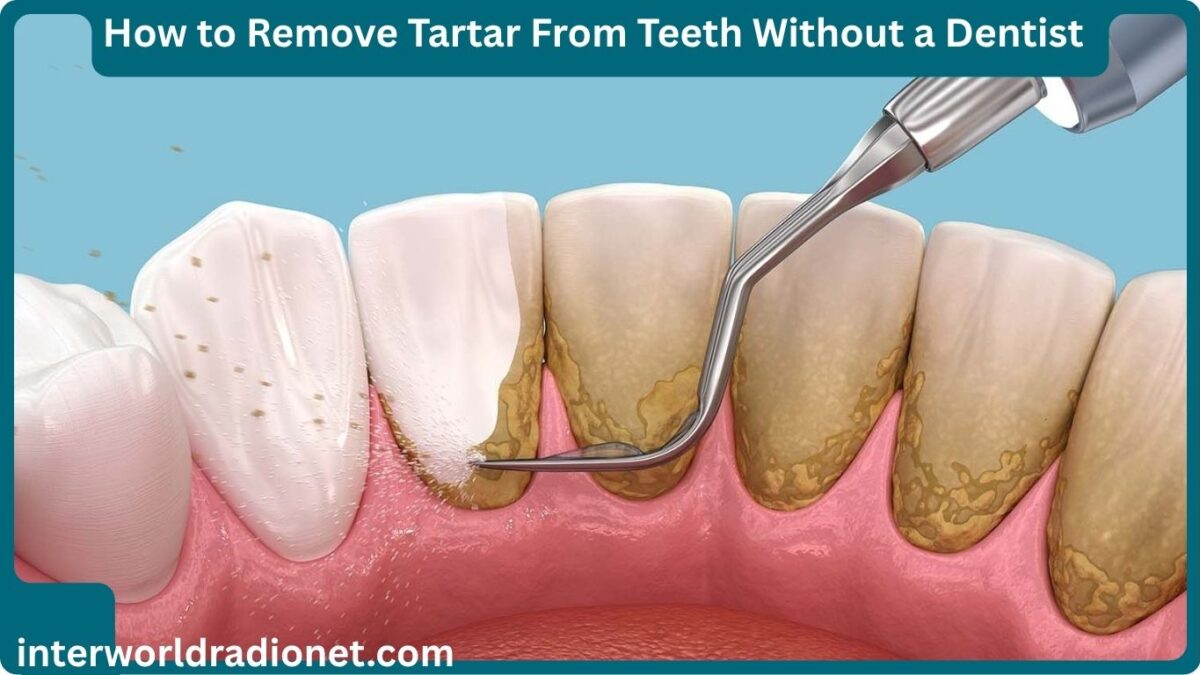
If you have noticed a hard, yellow, brown, or rough deposit around your teeth, you may be wondering how to remove tartar from teeth without dentist care. This is a common question, especially for people who want to improve their smile, freshen their breath, or avoid an expensive dental visit.
The most important fact to understand is that tartar is not the same as ordinary plaque.
Plaque is a soft, sticky film of bacteria that forms on teeth every day. With regular brushing and cleaning between the teeth, much of this plaque can be removed at home. However, when plaque remains on the teeth, minerals from saliva can cause it to harden into tartar, also called dental calculus. Once tartar has hardened, ordinary brushing and flossing cannot reliably remove it. The National Institute of Dental and Craniofacial Research (NIDCR) states that tartar requires professional removal by a dentist or dental hygienist.
That does not mean there is nothing you can do at home.
In fact, good home dental care is extremely important. You can remove fresh plaque, slow tartar buildup, improve gum health, reduce bad breath, and make it harder for new tartar to develop. The key is knowing what can safely be done at home and what requires professional treatment.
This guide explains how to remove tartar from teeth without dentist treatment as safely and realistically as possible. It also explains what home remedies can and cannot do, which habits help prevent tartar, when professional dental care becomes necessary, and how to recognize signs of gum disease.
Can You Remove Tartar From Teeth Without a Dentist?
The short answer is no if you mean completely removing hardened tartar.
You can remove plaque at home, but hardened tartar is strongly attached to the tooth surface and may also develop below the gumline. Brushing, flossing, water flossers, and ordinary mouthwash can help control plaque, but they do not replace professional tartar removal.
This distinction is important because many online articles and videos claim that people can scrape tartar away themselves using household objects or dental scraping tools.
That approach can be risky.
Trying to scrape your teeth aggressively can injure the gums, scratch tooth surfaces, damage dental restorations, or push bacteria deeper around the gums. It can also create a false sense that the problem has been solved when tartar remains below the gumline.
A safer goal is therefore:
- Remove plaque every day.
- Prevent plaque from hardening.
- Reduce the amount of new tartar.
- Improve gum health.
- Avoid damaging your teeth while attempting home care.
- Arrange professional cleaning when hardened tartar is already present.
This approach is more realistic than trying to physically remove established calculus at home.
What Is Tartar?
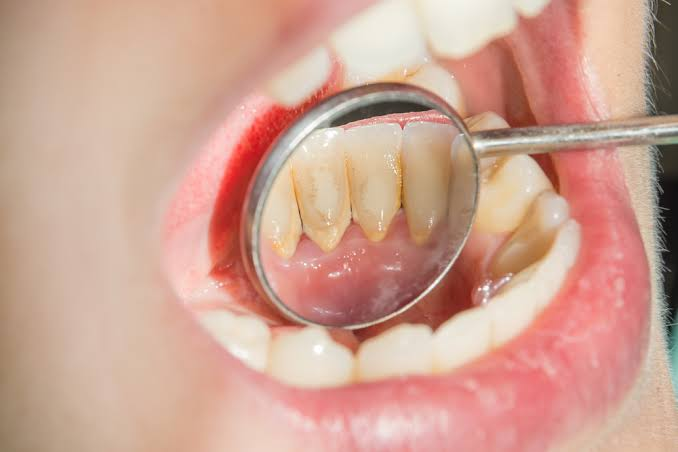
Tartar is hardened dental plaque.
Plaque is a thin biofilm containing bacteria, food particles, saliva components, and other substances. It continuously forms on teeth. If it is not removed regularly, it can absorb minerals from saliva and become hard.
That hardened material is called calculus or tartar.
Tartar commonly develops:
- Along the gumline
- Behind the lower front teeth
- Between teeth
- Around crowded teeth
- Around dental appliances
- Around crowns, bridges, or other dental work
- Below the gumline in people with gum disease
Tartar can have a yellow, cream, tan, brown, or darker appearance. Its color can be influenced by food, drinks, tobacco, and other substances.
Unlike plaque, tartar has a rough surface. That roughness can make it easier for additional plaque to stick to the teeth.
This creates a cycle:
Plaque forms → plaque remains → minerals harden the plaque → tartar develops → more plaque sticks → gum irritation increases.
Breaking that cycle early is one of the main purposes of good oral hygiene.
What Is the Difference Between Plaque and Tartar?
Understanding the difference between plaque and tartar makes the question of how to remove tartar from teeth without dentist care much easier to understand.
Plaque is soft and can usually be removed with proper brushing and cleaning between the teeth.
Tartar is hardened plaque and cannot be reliably removed with normal home dental care.
A simple comparison looks like this:
| Plaque | Tartar |
| Soft or sticky | Hard and mineralized |
| Forms every day | Develops when plaque hardens |
| Can usually be removed at home | Requires professional cleaning |
| Can contribute to cavities and gum disease | Can contribute to gum inflammation and periodontal disease |
| Controlled with brushing and interdental cleaning | Prevented by controlling plaque before it hardens |
The goal of home care is therefore not to “scrape away” existing tartar. It is to control plaque so that additional tartar does not develop.
Why Does Tartar Build Up So Quickly?
Some people seem to develop tartar much faster than others.
This can happen for several reasons.
Saliva Composition
Saliva contains minerals that help protect teeth. However, those same minerals can contribute to the hardening of plaque.
Some people naturally have saliva conditions that make calculus develop more easily.
Incomplete Brushing
Brushing quickly or missing areas near the gumline can leave plaque behind.
The back surfaces of teeth are particularly easy to miss.
Not Cleaning Between Teeth
A toothbrush cannot effectively clean every surface between tightly spaced teeth. Floss and other interdental cleaners are designed for these areas.
Smoking or Tobacco Use
Tobacco use is a major risk factor for gum disease and can contribute to oral health problems.
Dry Mouth
Reduced saliva can affect oral health in several ways, including increasing the risk of tooth decay. Certain medications and medical conditions can contribute to dry mouth.
Crowded Teeth
Crowded or overlapping teeth create areas where plaque can be harder to remove.
Irregular Dental Care
If tartar has already accumulated, home brushing becomes less effective at controlling the rough surface. Regular professional care can help restore a cleaner surface.
How to Remove Tartar From Teeth Without a Dentist: The Safe Approach
If you already have visible tartar, you should not expect home treatment to completely remove it.
However, you can take several steps to improve your oral hygiene and reduce future buildup.
Brush Twice a Day With Fluoride Toothpaste
Brushing twice daily is one of the most important steps in controlling plaque.
The American Dental Association recommends brushing with fluoride toothpaste twice a day for about two minutes.
Use a soft-bristled toothbrush and avoid aggressive scrubbing.
A good technique includes:
- Place the toothbrush at an angle toward the gumline.
- Use gentle, small movements.
- Clean the outer surfaces of the teeth.
- Clean the inner surfaces.
- Clean the chewing surfaces.
- Gently brush along the gumline.
- Brush the tongue.
- Spit out the toothpaste after brushing.
Harder brushing does not necessarily mean cleaner teeth.
In fact, excessive pressure can irritate the gums and contribute to problems such as gum recession.
Clean Between Your Teeth Every Day
Brushing alone cannot reach every area between teeth.
Daily interdental cleaning helps remove plaque and food particles from these spaces. Options include:
- Dental floss
- Floss holders
- Interdental brushes
- Water flossers
- Other interdental cleaners recommended by a dental professional
The ADA notes that interdental cleaners help remove plaque from areas that toothbrush bristles cannot effectively reach.
If traditional floss is difficult to use, an interdental brush or water flosser may be easier for some people.
The most useful method is the one you can perform correctly and consistently.
Use a Water Flosser Correctly
A water flosser uses a stream of water to clean around and between teeth.
It can be particularly useful for people who struggle with traditional flossing, have orthodontic appliances, or have certain dental work.
However, a water flosser should not be viewed as a tartar remover.
Its primary benefit is helping disrupt and remove plaque and debris before they become harder deposits.
Consider an Electric Toothbrush
Both manual and powered toothbrushes can effectively remove plaque when used properly. The ADA notes that powered toothbrushes can be useful for people who need improved plaque removal or have difficulty with manual brushing.
An electric toothbrush does not magically dissolve tartar.
Its value is consistent plaque control.
If you tend to brush too quickly or miss areas, a powered toothbrush with a built-in timer may make your routine easier to follow.
Use Fluoride Toothpaste
Fluoride toothpaste is important for preventing cavities.
Fluoride helps strengthen tooth enamel and can help repair early mineral loss caused by acids.
However, fluoride toothpaste should not be confused with a tartar-removing treatment.
It helps protect teeth and supports oral health, but it does not dissolve established calculus.
Drink Water
Water can help support a healthy mouth by washing away some food particles and supporting normal saliva function.
Fluoridated tap water can also contribute fluoride that helps protect against tooth decay.
Water should not be considered a way to dissolve tartar. Instead, think of it as part of an overall oral-health routine.
Limit Frequent Sugary Foods and Drinks
Sugar itself does not directly turn into tartar.
However, frequent consumption of sugary foods and drinks can increase the risk of tooth decay by providing fuel for acid-producing bacteria.
Also Read: How Can I Fix My Teeth? A Complete Guide to Repairing, Straightening, Whitening, and Replacing Teeth
Reducing frequent sugar exposure supports overall oral health.
The CDC recommends limiting foods and beverages high in added sugar as part of good oral health habits.
Avoid Tobacco
Smoking and tobacco use are strongly associated with gum disease.
Quitting tobacco can improve oral health and support gum healing.
Tobacco can also stain tartar, making existing deposits appear darker.
Can Baking Soda Remove Tartar?
Baking soda is frequently promoted online as a natural tartar remover.
It can help clean teeth when used appropriately as part of an oral hygiene routine, but it should not be considered a method for safely removing hardened tartar.
Baking soda cannot replace professional scaling.
Using abrasive powders aggressively or too frequently can also be counterproductive. Your goal should be gentle plaque removal, not physically grinding deposits off your teeth.
If you want to use a toothpaste containing baking soda, choose a professionally formulated dental product rather than creating increasingly abrasive mixtures at home.
Can Hydrogen Peroxide Remove Tartar?
Hydrogen peroxide is another popular home remedy.
It is sometimes used in oral-care products, but using concentrated hydrogen peroxide or repeatedly applying household hydrogen peroxide to the mouth is not a safe substitute for professional tartar removal.
It does not remove hardened calculus in the way professional scaling does.
Using improperly concentrated solutions can irritate oral tissues.
If you want a mouthwash, select an appropriate commercially prepared product and follow its instructions.
Can Salt Water Remove Tartar?
Salt water may be useful as a gentle rinse in certain circumstances, but it does not dissolve established tartar.
A salt-water rinse can temporarily soothe irritated tissues, but it should not be considered a calculus-removal treatment.
If your gums bleed regularly, look swollen, or remain painful, the underlying cause should be evaluated rather than repeatedly treating symptoms with home rinses.
Can Vinegar Remove Tartar?
You may see advice recommending vinegar or other acidic substances to dissolve tartar.
This is not a good approach.
Acids can damage tooth enamel if they are used improperly or repeatedly.
Trying to chemically dissolve tartar at home can create a new problem: enamel erosion.
The fact that an ingredient is “natural” does not automatically make it safe for teeth.
Can Oil Pulling Remove Tartar?
Oil pulling involves swishing edible oil around the mouth for a period of time.
Some people use it as part of their oral hygiene routine.
However, it should not be considered a proven method for removing established tartar.
It also should not replace brushing with fluoride toothpaste or cleaning between teeth.
If you enjoy oil pulling, it should be viewed as an optional habit rather than a treatment for calculus.
Should You Scrape Tartar Off Your Teeth at Home?
This is one of the most important safety questions.
It is generally a bad idea to use sharp objects or aggressive dental instruments to scrape tartar off your own teeth.
People sometimes use:
- Pins
- Needles
- Metal tools
- Knives
- Nail tools
- Household scrapers
- Unregulated dental scalers
These methods can cause injury.
The mouth contains delicate gum tissue, and the tooth surface is not something that should be aggressively scraped without proper training.
There is another problem: you cannot easily see what is happening below the gumline.
Tartar can develop in areas that are hidden from view. A person may remove a visible deposit while leaving deeper calculus behind.
Professional dental professionals are trained to identify and remove deposits while assessing the gums and surrounding tissues.
Why DIY Tartar Removal Can Backfire
The desire to remove tartar quickly is understandable.
But DIY scraping can create several problems.
Gum Injury
Sharp tools can cut or puncture gum tissue.
Enamel Damage
Improper scraping or abrasive techniques may damage tooth surfaces.
Damage to Dental Work
Crowns, fillings, veneers, bridges, implants, and orthodontic appliances can require special care.
Hidden Tartar
Removing visible tartar does not necessarily mean all calculus is gone.
Infection Risk
Using unclean tools in the mouth introduces unnecessary contamination.
Delayed Diagnosis
Perhaps the biggest concern is that someone may keep treating the visible deposit while ignoring periodontal disease underneath it.
What Happens if Tartar Is Left on the Teeth?
Tartar provides a rough surface where plaque can accumulate.
That plaque can irritate the gums.
Early gum inflammation is called gingivitis. Common symptoms include red, swollen, or bleeding gums. Gingivitis is often reversible with appropriate oral hygiene and professional care.
If gum disease progresses, it can develop into periodontitis.
Periodontitis is more serious because it can affect the tissues and bone supporting the teeth.
Possible symptoms include:
- Persistent bad breath
- Bleeding gums
- Gum swelling
- Gum recession
- Tender gums
- Pain when chewing
- Loose teeth
- Changes in how teeth fit together
- Tooth sensitivity
- Tooth loss in advanced cases
NIDCR explains that untreated gum disease can eventually damage the bone supporting the teeth.
How to Prevent Tartar From Coming Back
Once professional tartar removal has been completed, prevention becomes much easier.
The central strategy is simple:
Stop plaque from remaining on the teeth long enough to harden.
A practical routine includes:
- Brush twice a day.
- Use fluoride toothpaste.
- Clean between your teeth every day.
- Use a soft toothbrush.
- Replace worn toothbrushes.
- Avoid tobacco.
- Limit frequent sugary foods and drinks.
- Drink water.
- Attend recommended dental checkups.
- Follow individualized advice from your dentist or hygienist.
This routine is more important than searching for a powerful home remedy.
A Simple Daily Routine for Tartar Prevention
You do not need a complicated routine.
Morning
Brush for approximately two minutes using fluoride toothpaste.
Clean your tongue gently.
During the Day
Drink water regularly.
Limit frequent sugary snacks and drinks.
If you eat sticky foods, pay attention to cleaning your teeth later.
Evening
Clean between your teeth.
Then brush for approximately two minutes with fluoride toothpaste.
The evening routine is particularly important because plaque can remain on the teeth for many hours while you sleep.
Can Mouthwash Prevent Tartar?
Mouthwash can be useful in some oral-care routines, but it should not replace brushing and interdental cleaning.
Some antimicrobial mouthrinses can help reduce gingivitis in certain people, while fluoride mouthrinses can help reduce cavity risk in appropriate circumstances.
However, mouthwash cannot remove established tartar.
Think of mouthwash as an additional tool rather than the foundation of oral hygiene.
The foundation remains mechanical plaque removal.
Can Whitening Toothpaste Remove Tartar?
Whitening toothpaste is designed mainly to remove certain surface stains and help teeth appear cleaner.
It does not provide a reliable way to remove hardened calculus.
If the yellow appearance comes from tartar, whitening toothpaste may not produce the result you expect.
This is an important distinction because not every yellow area is simply tooth staining.
Sometimes the yellow or brown material is calculus.
Why Teeth May Still Look Yellow After Brushing
A person may brush carefully and still see yellow areas.
Possible explanations include:
- Natural tooth color
- Surface stains
- Tartar
- Enamel thinning
- Plaque
- Staining from coffee or tea
- Tobacco staining
- Certain medications
- Aging-related changes
If a hard, rough deposit remains despite brushing, tartar may be involved.
A dental professional can determine what the material actually is.
Can Tartar Be Removed Naturally?
There is no reliable natural ingredient that can dissolve established tartar without risking damage to teeth or gums.
The body naturally sheds some plaque through normal saliva flow and eating, but established calculus is different.
The safest “natural” strategy is prevention:
- Brush regularly.
- Clean between teeth.
- Drink water.
- Eat a balanced diet.
- Avoid tobacco.
- Limit excessive sugar.
- Keep regular dental appointments.
Natural does not mean that a substance can safely dissolve mineralized deposits.
How Dentists Remove Tartar
Professional cleaning is designed specifically to remove plaque and calculus.
During routine cleaning, a dental professional uses appropriate instruments to remove deposits from tooth surfaces.
If gum disease has caused deeper pockets and calculus is located below the gumline, a deeper cleaning may be necessary.
Scaling and root planing is one treatment used for periodontitis. Scaling removes plaque and tartar above and below the gumline, while root planing smooths affected root surfaces to support gum healing.
This is very different from simply scraping a visible deposit from the front of a tooth.
Do You Need a Dentist if Your Tartar Does Not Hurt?
Yes, potentially.
The absence of pain does not prove that your gums are healthy.
Gum disease can progress without dramatic symptoms, particularly in its earlier stages.
CDC guidance emphasizes routine dental care because some oral diseases may not produce obvious symptoms until they become more advanced.
Therefore, do not use “it doesn’t hurt” as the only reason to postpone an evaluation.
When Should You See a Dentist?
Make a dental appointment if you notice:
- Hard deposits that do not brush away
- Frequent gum bleeding
- Red or swollen gums
- Persistent bad breath
- Receding gums
- Loose teeth
- Pain while chewing
- Persistent tooth sensitivity
- Pus around the gums
- Changes in how your teeth fit together
- A tooth that suddenly becomes loose
You should seek urgent dental evaluation for significant facial swelling, severe dental pain, fever, difficulty swallowing, difficulty breathing, or other symptoms that could indicate a serious infection.
What if You Cannot Afford a Dentist?
Cost can be a major barrier to dental care in the United States.
If professional cleaning is difficult to afford, consider looking for:
- Dental schools
- Community dental clinics
- Federally supported health centers
- Local public health dental programs
- Dental hygiene schools
- Sliding-scale dental services
- Dental insurance benefits
- Discount dental programs
The exact availability varies by location.
Avoid replacing professional treatment with unsafe DIY procedures simply because they appear cheaper.
An injury caused by home scraping can ultimately become more expensive than preventive dental care.
Does Dental Insurance Cover Tartar Removal?
Coverage depends on your dental insurance plan.
Many dental plans cover some preventive services, but coverage levels, frequency limits, deductibles, waiting periods, and network requirements vary.
Before making an appointment, check your plan or contact your insurer.
If you do not have insurance, ask the dental office about the cash price for a routine cleaning and examination.
What About People With Braces?
People with braces may develop plaque and tartar more easily around brackets and wires because there are more surfaces where plaque can collect.
Special attention should be given to:
- Around brackets
- Along the gumline
- Between teeth
- Under orthodontic wires
Interdental brushes and other cleaning aids can make daily care easier.
If tartar develops around orthodontic appliances, do not attempt aggressive scraping.
Ask your orthodontist or dental professional how to clean safely.
What About Dental Implants, Crowns, and Veneers?
Dental restorations require careful cleaning.
A person with implants, crowns, bridges, veneers, or other dental work should not assume that every DIY tartar-removal method is safe.
Different materials and designs require different cleaning techniques.
If you have dental restorations, ask your dentist or hygienist which brush, floss, interdental brush, or water flosser is appropriate.
Does Tartar Cause Bad Breath?
Tartar can contribute to bad breath because it can be associated with plaque and gum inflammation.
However, bad breath can have many causes.
Other possibilities include:
- Poor oral hygiene
- Gum disease
- Tooth decay
- Dry mouth
- Certain foods
- Tobacco
- Some medical conditions
- Throat or sinus problems
Persistent bad breath should not automatically be blamed on tartar.
If it continues despite good oral hygiene, a dental evaluation can help identify the cause.
Is Bleeding While Flossing a Sign You Should Stop?
Not necessarily.
If your gums bleed easily, it may be a sign of inflammation caused by plaque and gum disease.
However, aggressive flossing can also injure the gums.
Also Read: How to Clean Teeth at Home? A Complete Guide to Proper Oral Hygiene
Use a gentle technique.
Guide floss carefully between the teeth instead of snapping it forcefully into the gum tissue. NIDCR specifically recommends gently moving floss between teeth and curving it around each tooth.
If bleeding continues regularly despite careful oral hygiene, arrange a dental evaluation.
Does Tartar Mean You Have Gum Disease?
Not automatically.
Having tartar does not necessarily mean you have advanced gum disease.
However, tartar can make plaque control more difficult and can contribute to gum inflammation.
The condition of your gums, the depth of the spaces around your teeth, bleeding, bone levels, and other factors are used to evaluate periodontal health.
A professional examination is the best way to determine whether tartar has contributed to gum disease.
How Long Does It Take for Plaque to Become Tartar?
There is no single timetable that applies to everyone.
Plaque begins forming continuously after cleaning the teeth. If it is not removed, mineralization can occur and eventually produce calculus.
The exact speed depends on factors such as saliva composition, oral hygiene, tooth position, diet, tobacco use, and individual biology.
Instead of trying to predict exactly when tartar will form, the more useful strategy is to remove plaque consistently.
Can You Prevent Tartar Completely?
No one can guarantee complete prevention.
Some people naturally accumulate calculus more quickly than others.
Even people with excellent home care may develop some tartar.
The realistic goal is to reduce accumulation and maintain healthy gums.
This is why professional cleaning may still be necessary even if you brush and floss every day.
The Biggest Mistake People Make With Tartar
The biggest mistake is confusing prevention with removal.
Brushing is excellent for removing plaque.
Flossing is excellent for removing plaque between teeth.
Fluoride is excellent for protecting teeth against cavities.
Water flossers can help clean difficult areas.
Healthy habits can reduce future buildup.
But none of these should be expected to scrape established calculus completely from teeth.
Once tartar has hardened, professional removal is the safer and more predictable option.
A Practical 7-Day Home Oral-Care Reset
If your teeth feel rough or your gums have recently been neglected, you can use the following simple routine to improve plaque control.
Day 1: Start Gently
Brush twice with fluoride toothpaste.
Do not scrub aggressively.
Clean between your teeth once.
Day 2: Improve Your Technique
Spend enough time brushing all tooth surfaces.
Pay special attention to the gumline.
Day 3: Focus on Between the Teeth
Use floss, interdental brushes, or a water flosser.
Choose a method that you can use consistently.
Day 4: Check Your Habits
Reduce frequent sugary snacks and drinks.
Drink more water.
Avoid tobacco.
Day 5: Look at Your Gums
Check whether your gums appear swollen, red, or frequently bleeding.
If symptoms persist, consider arranging a dental visit.
Day 6: Keep the Routine Simple
Do not add dozens of home remedies.
A consistent basic routine is more useful than an aggressive complicated routine.
Day 7: Plan Long-Term Care
Continue brushing twice daily and cleaning between teeth every day.
If you have visible hardened tartar, arrange professional cleaning rather than trying to scrape it yourself.
How to Know Whether You Are Looking at Plaque or Tartar
A useful visual clue is texture.
Plaque may feel soft, sticky, or slippery.
Tartar often feels hard and rough.
Plaque may become easier to remove after careful brushing and interdental cleaning.
A hard deposit that remains attached is more likely to be calculus.
Still, appearance alone cannot provide a diagnosis.
Brown or yellow areas can also be stains, decay, restorations, or other conditions.
Are Tartar Removal Kits Safe?
Home tartar-removal kits are widely marketed online.
Some include metal scalers, mirrors, picks, or electric scraping devices.
The existence of a product does not automatically mean that it is appropriate for unsupervised use.
A major concern is technique.
Professional dental cleaning is not simply about applying pressure to a hard spot. Dental professionals evaluate the tooth, gumline, pocket depth, restorations, and surrounding tissues while removing deposits.
If a tool slips, the gums or tooth surface can be injured.
For this reason, home dental instruments should not be treated like ordinary toothbrushes.
What Is the Best Way to Remove Tartar From Teeth Without a Dentist?
If the question is asking for a safe, realistic answer, the best approach is not to attempt to physically remove established tartar yourself.
Also Read: Why Is Dental School So Expensive? A Complete Guide for Future Dental Students
Instead:
- Brush twice daily with fluoride toothpaste.
- Clean between your teeth every day.
- Use a water flosser or interdental brush if appropriate.
- Avoid smoking and tobacco.
- Limit frequent sugary foods and drinks.
- Drink water.
- Avoid acidic or abrasive DIY remedies.
- Never scrape your teeth with sharp household objects.
- Arrange professional cleaning if hardened tartar is present.
This approach protects your teeth while reducing the conditions that allow additional tartar to form.
Frequently Asked Questions
1. Can tartar fall off by itself?
Occasionally, a small piece of calculus may loosen or break away, but this does not mean the underlying tartar is gone. Attempting to make tartar fall off by hitting, picking, or scraping teeth is not recommended. Persistent hard deposits should be evaluated by a dental professional.
2. Can tartar cause loose teeth?
Tartar itself is not simply a substance that mechanically loosens teeth. However, long-standing plaque and tartar can contribute to gum disease. Advanced periodontitis can damage the bone and tissues supporting teeth, which can eventually cause teeth to become loose.
3. Can a water flosser remove hard tartar?
A water flosser can help remove food debris and disrupt plaque, but it should not be expected to remove firmly attached tartar. Its greatest value is helping control plaque before it mineralizes.
4. Is yellow tartar worse than white tartar?
Color alone does not determine how severe tartar is. Tartar can be white, yellow, brown, or darker depending on its location and exposure to substances such as tobacco or foods and drinks. The condition of the gums and supporting tissues is more important than tartar color.
5. Can better brushing make old tartar disappear?
Better brushing can remove plaque and may make the mouth feel cleaner, but it generally will not make established calculus disappear. Once plaque has hardened into tartar, professional dental cleaning is the appropriate method for removal.
Conclusion
Learning how to remove tartar from teeth without dentist care starts with understanding the difference between plaque and tartar. Fresh plaque can usually be controlled at home with consistent brushing, fluoride toothpaste, and daily cleaning between the teeth. Hardened tartar, however, is a mineralized deposit that cannot be safely or reliably removed through ordinary home methods.
The safest strategy is therefore prevention rather than DIY scraping. Brush twice a day, clean between your teeth daily, use appropriate oral-care products, limit frequent sugar exposure, avoid tobacco, and maintain regular dental care. These habits help reduce plaque and slow the development of new tartar.
If you already have hard deposits that remain attached to your teeth, do not use needles, knives, metal objects, or aggressive scraping techniques. Professional cleaning is designed to remove calculus while protecting the teeth and gums. If you also have bleeding gums, swelling, persistent bad breath, gum recession, pain, or loose teeth, a dental examination becomes especially important.
In simple terms, you can control plaque at home, but established tartar is best handled by a dental professional. That distinction can help you protect your teeth without putting your gums or enamel at unnecessary risk.