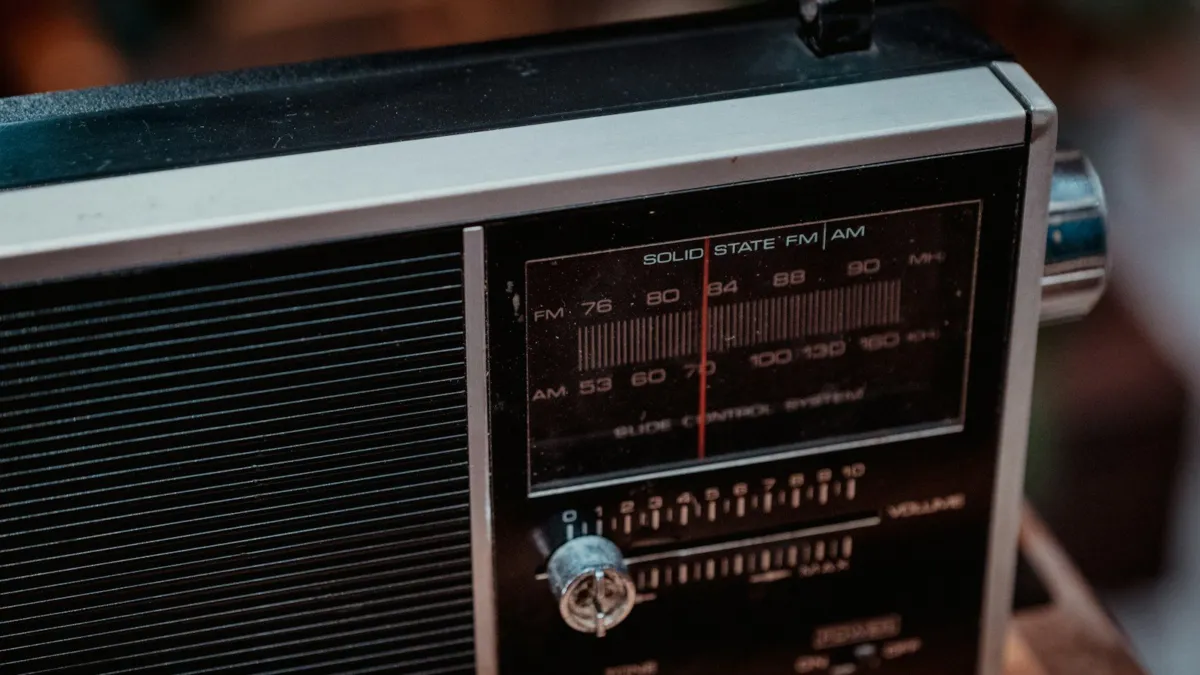
The key difference in internet radio vs FM is how the audio reaches you: FM is broadcast over the air from a local transmitter to any compatible receiver for free, while internet radio is streamed as data to apps, browsers and smart speakers from anywhere in the world. FM wins on simplicity, reliability and zero data cost; internet radio wins on choice, global reach and interactive features.
The team at interworldradio.net hears this question often, so this guide sets out the differences clearly to help you decide which suits your listening, or why you might want both.
Key Takeaways
- FM is a one-to-many broadcast: one transmitter serves unlimited listeners within range at no extra cost.
- Internet radio is a one-to-one stream: each listener receives a separate data connection.
- FM needs only a receiver; internet radio needs a device, a connection and often an app.
- Internet radio offers worldwide stations, on-demand features and personalisation.
- FM remains vital in emergencies, in cars and in areas with weak or costly mobile data.
How FM Radio Works
FM stands for frequency modulation. A station varies the frequency of a radio carrier wave to encode sound, and a transmitter sends that signal through the air to any FM receiver in its coverage area.
Because spectrum is shared and signals cross borders, FM frequencies are planned carefully. Each country’s regulator licenses stations, and the ITU’s Broadcasting Services Division maintains regional frequency assignment plans for FM and other terrestrial broadcasting so that neighbouring countries avoid interfering with one another.
The Strengths of Over-the-Air Broadcasting
FM’s greatest advantage is its broadcast model. Whether ten people or a million tune in, the station’s transmission costs stay the same, and listeners pay nothing beyond the radio itself.
FM also works without a mobile network, router or account. A battery-powered receiver keeps working during power cuts, which is why emergency planners value terrestrial radio so highly.
How Internet Radio Works
Internet radio converts audio into a compressed digital stream and sends it over the internet. Listeners connect through a website, an app, a smart speaker or a dedicated internet radio device, and each connection receives its own copy of the stream.
This model removes geographic limits. A listener in one country can hear a community station on the other side of the world as easily as a local one, provided they have a stable connection. That kind of cross-border discovery is exactly what interworldradio.net celebrates.
Beyond the Live Stream
Internet radio rarely stops at a live feed. Many services add features that broadcast FM cannot offer on its own:
- Pause, rewind and catch-up listening.
- Song titles, artwork and programme information on screen.
- Personalised recommendations and curated channels.
- Podcasts and on-demand archives from the same station.
- Direct listener interaction through chat and messaging.
Internet Radio vs FM: Side-by-Side Comparison
The table below summarises the main practical differences. Exact performance depends on your receiver, location, network and the service you choose.
| Factor | FM radio | Internet radio |
|---|---|---|
| Delivery method | Over-the-air broadcast | Data stream over the internet |
| Coverage | Local or regional, limited by transmitter range | Global wherever there is a connection |
| Cost to listener | Free after buying a receiver | Uses data; may involve subscriptions |
| Station choice | Limited to stations in range | A vast range of stations and channels worldwide |
| Reliability in emergencies | High, works on batteries without networks | Depends on power, networks and servers |
| Sound quality | Good, but affected by distance and interference | Varies with bitrate and connection stability |
| Extra features | Basic text data on some receivers | On-demand, metadata, personalisation, interaction |
| Privacy | Listening is anonymous | Apps may collect usage data |
| Delay | Near real time | Often a short buffering delay |
Sound Quality, Delay and Data Use
Sound quality is not a simple win for either side. A strong FM signal sounds clear and warm, but hiss and multipath distortion creep in at the edge of coverage or in built-up areas.
Internet radio quality depends on the stream’s bitrate and your connection. Higher-quality streams sound excellent but use more data, while lower bitrates save data at the cost of detail. Streams also usually run a little behind live, which matters for sports fans following the action in real time.
The Cost of Data
For listeners on metered mobile plans, streaming adds up over hours of daily listening. In regions where data is expensive or networks are patchy, FM remains the more affordable and inclusive option, an issue we explore in our article on the digital divide and media access.
Where Digital Broadcast Radio Fits In
FM and internet streaming are not the only choices. Digital terrestrial radio combines broadcast efficiency with digital features. WorldDAB, the global industry forum for DAB+ digital radio, promotes the DAB standard adopted by broadcasters in Europe, Asia Pacific and elsewhere.
DAB+ keeps the free, one-to-many model of FM while adding more stations, on-screen information and consistent digital sound. Our explainer on how digital radio DAB+ works covers the technology in detail, and our technology section follows other innovations in audio delivery.
Which Should You Choose?
Most listeners do not have to choose just one. A practical approach matches the platform to the situation:
- At home: internet radio or a smart speaker offers the widest choice.
- In the car: FM or DAB+ avoids data use and coverage gaps.
- Travelling abroad: streaming keeps you connected to stations from home.
- In an emergency: a battery-powered FM radio is the safest backup.
- Exploring the world: internet radio opens up stations and cultures you could never pick up over the air.
Whichever you prefer, the goal is the same: hearing voices and music that matter to you. Discover more listening guides in our digital audio section, and find stories from every continent through the interworldradio.net front page.
On-demand listening has grown alongside live streams, so if you are choosing how to publish rather than how to listen, our guide to podcasting for global audiences covers the next step.
Frequently Asked Questions
Is internet radio better quality than FM?
It can be, but not always. A high-bitrate stream on a stable connection often sounds cleaner than a weak FM signal. However, low-bitrate streams can sound thin, and buffering interrupts playback. A strong local FM signal sounds very good, so the better choice depends on your connection, receiver and location.
Does internet radio use a lot of data?
Data use depends on the stream’s bitrate and how long you listen. Higher-quality streams use more data per hour, while lower-quality settings use less. If you listen for hours each day on a mobile plan, it is worth checking your app’s quality settings or switching to FM or Wi-Fi when possible.
Will FM radio be switched off?
Plans differ by country. Some governments and broadcasters are expanding digital radio, and a few have reduced FM services, but many countries continue to rely on FM. Because FM is cheap, widely owned and resilient in emergencies, it is likely to remain important in many regions for years. Check your national regulator for local plans.
Can I listen to FM stations online?
Yes. Many FM stations simulcast their programmes as internet streams through their own websites, apps and radio aggregator services. This lets you hear a local station while travelling or from abroad. Some content, such as certain sports or music rights, may be restricted online, so streams occasionally differ from the broadcast.