
What Is the Oldest Medical Profession in the World?
September 12, 2026
What Dentists Wish You Knew About Your Oral Health?
September 13, 2026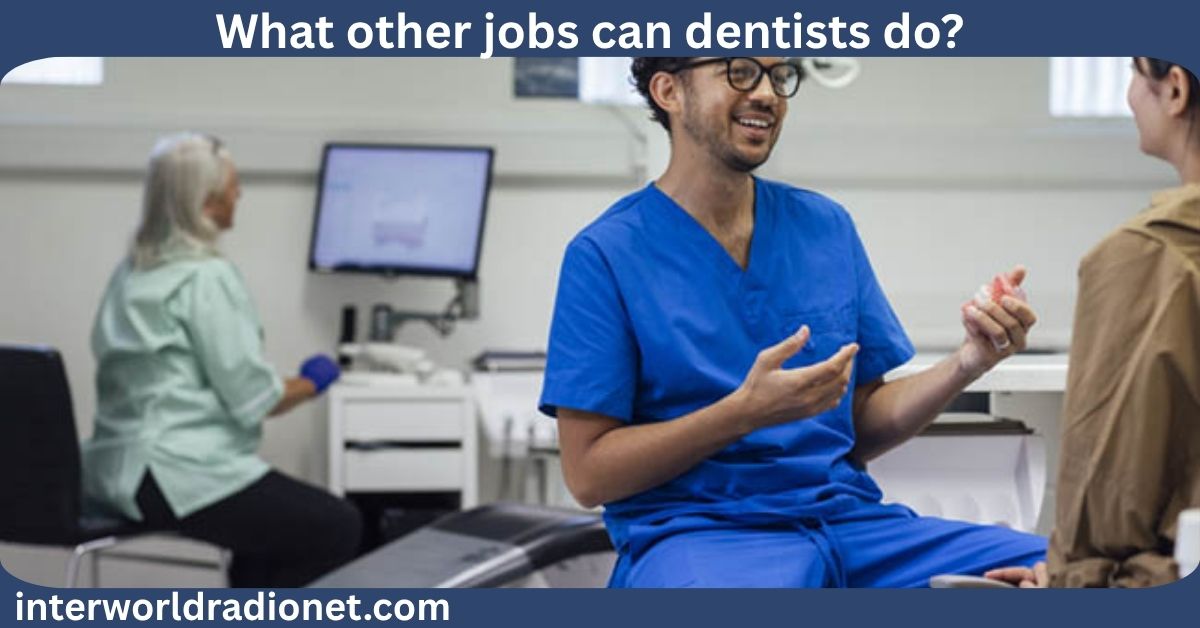
A dental degree can open more career doors than many people realize. When people hear the word dentist, they often picture someone working in a dental office, examining teeth, treating cavities, performing procedures, and helping patients maintain good oral health. But dentistry can lead to many other types of work.
So, what other jobs can dentists do?
Dentists can move into education, research, healthcare administration, public health, consulting, insurance, dental technology, writing, medical sales, government work, and business. Some dentists also work as advisors, researchers, professors, practice owners, clinical directors, or healthcare executives.
The skills learned in dental school can be useful far beyond the dental chair. Dentists understand healthcare, patient communication, diagnosis, treatment planning, medical terminology, science, ethics, and professional decision-making. These skills can transfer into many different careers.
Some alternative careers require additional education or training, while others may be possible with a dental degree and professional experience. Licensing requirements also depend on the type of work and the state where a dentist works.
This guide explains what other jobs dentists can do, why dentists choose alternative careers, which options may require additional training, and how dentists can use their existing skills in a different professional setting.
What Other Jobs Can Dentists Do?
Dentists can work in many careers outside traditional clinical dentistry.
Some of the most common alternatives include:
- Dental school professor
- Dental researcher
- Public health dentist
- Healthcare administrator
- Dental consultant
- Dental insurance professional
- Dental technology specialist
- Dental product advisor
- Medical or dental writer
- Healthcare entrepreneur
- Government healthcare professional
- Clinical director
- Dental practice manager
- Academic administrator
- Healthcare researcher
- Professional speaker
- Corporate dental advisor
The best option depends on a dentist’s interests, experience, financial goals, and willingness to continue working directly with patients.
A dentist who enjoys teaching may prefer academia. Someone who enjoys science may prefer research. A dentist interested in business may choose consulting or practice management.

The dental degree does not have to define one specific career path for an entire working life.
Also read:What Is the Oldest Medical Profession in the World?
Why Do Dentists Look for Other Careers?
There are many reasons a dentist may consider working outside traditional clinical practice.
Some dentists enjoy dentistry but become interested in another area after several years.
Others may experience professional burnout, administrative pressure, physical demands, or a desire for a different work schedule.
Running a dental practice can involve much more than treating patients. Dentists may have to manage employees, insurance claims, equipment, supplies, finances, compliance, and business decisions.
Some dentists eventually discover that they enjoy the business or educational side of healthcare more than clinical treatment.
Others may want a career that allows them to influence healthcare on a larger scale.
For example, a dentist treating patients one at a time may eventually become interested in public health because it allows them to work on oral-health programs serving thousands of people.
Can Dentists Work Outside Clinical Dentistry?
Yes. A dentist can pursue many careers outside direct patient care.
However, having a dental degree does not automatically qualify someone for every healthcare position.
Some jobs require a current dental license.
Others may require additional degrees, certifications, training, or professional experience.
For example, a dentist who wants to become a university professor may benefit from academic training or research experience. Someone interested in healthcare administration may pursue a master’s degree in healthcare administration or business.
The important point is that dentists already have a strong professional foundation that can make these career transitions easier.
Can Dentists Become Dental School Professors?
Yes.
Teaching is one of the most natural alternative careers for dentists.
Dental schools need experienced professionals to teach students about clinical dentistry, oral anatomy, diagnosis, treatment planning, patient communication, ethics, and other subjects.
A dentist working in dental education may spend less time treating patients and more time teaching future dentists.
Some dental faculty members continue clinical work while teaching part time. Others move into full-time academic positions.
A teaching career can be especially attractive to dentists who enjoy explaining complicated ideas in simple ways.
What Does a Dental Professor Do?
A dental professor can have many responsibilities.
They may teach classroom courses, supervise students in clinics, evaluate student performance, develop educational materials, conduct research, participate in faculty meetings, and mentor students.
Some professors also help develop dental school curriculum.
A faculty member may specialize in a specific area such as:
- Restorative dentistry
- Prosthodontics
- Periodontics
- Oral surgery
- Orthodontics
- Pediatric dentistry
- Oral pathology
- Dental materials
- Dental public health
The exact responsibilities depend on the school and position.
Can Dentists Work in Dental Research?
Yes.
Research is another important career option for dentists.
Dentists have a strong foundation in biology, anatomy, physiology, pharmacology, materials, and clinical science. These subjects can be useful in research involving oral health and broader healthcare.
Dental researchers may study new materials, dental treatments, oral diseases, patient outcomes, prevention methods, dental technology, or healthcare delivery.
Some researchers work in universities.
Others work for healthcare organizations, research institutions, government agencies, or private companies.
What Does a Dental Researcher Do?
A dental researcher may design studies, collect information, analyze results, review scientific literature, prepare research reports, and publish findings.
Some researchers work with patients in clinical studies.
Others conduct laboratory research.
Research can also involve dental materials, imaging technology, artificial intelligence, digital dentistry, genetics, microbiology, or population health.
A dentist who enjoys asking questions and investigating problems may find research more satisfying than routine clinical work.
Do Dentists Need Another Degree to Become Researchers?
Not always.
A dental degree can provide a strong foundation for some research positions.
However, advanced research careers often benefit from additional education.
Depending on the position, a dentist may pursue a master’s degree, PhD, research fellowship, or specialized training.
The amount of additional education depends on the type of research and the employer.
A dentist interested in research should look at specific job descriptions to determine what qualifications are expected.
Can Dentists Work in Public Health?
Yes.
Public health is an important alternative career for dentists.
Instead of focusing primarily on individual patients, public health professionals look at the health of communities and populations.
A public health dentist may work on programs designed to prevent oral disease, improve access to dental care, educate communities, or evaluate healthcare programs.
Public health work can involve schools, government agencies, nonprofit organizations, universities, community health organizations, and other healthcare institutions.
What Does a Public Health Dentist Do?
A public health dentist may work on programs involving:
- Oral health education
- Disease prevention
- Community dental programs
- School-based dental services
- Access to care
- Health policy
- Dental surveys
- Population research
- Preventive care programs
- Healthcare planning
The focus is usually broader than individual dental treatment.
A dentist interested in reducing oral-health problems across an entire community may find public health particularly rewarding.
Can Dentists Work for the Government?
Yes.
Dentists can find opportunities in government healthcare programs and public institutions.
Government roles may involve clinical care, public health, research, policy, administration, education, or healthcare planning.
Depending on the position, dentists may work for federal, state, county, or local agencies.
Government healthcare organizations may also employ dentists in administrative and advisory roles.
A dentist interested in government work should carefully review the requirements of each position because some roles require an active professional license while others may focus more on administration or policy.
Can Dentists Work in Healthcare Administration?
Yes.
Healthcare administration can be a good option for dentists who enjoy leadership and organization.
Healthcare administrators help manage healthcare organizations, departments, programs, staff, budgets, policies, and operations.
A dentist with management experience may already have some useful skills for this type of work.
Practice ownership can also provide experience with staffing, budgeting, compliance, scheduling, purchasing, and business operations.
For dentists who want less clinical work and more leadership responsibility, healthcare administration can be an attractive direction.
What Does a Healthcare Administrator Do?
A healthcare administrator may be responsible for managing daily operations.
Their work can include:
- Managing staff
- Developing policies
- Monitoring budgets
- Improving patient services
- Managing departments
- Reviewing performance
- Coordinating healthcare programs
- Working with healthcare professionals
- Improving operational efficiency
The exact role varies widely.
A small healthcare organization may have one administrator handling many responsibilities, while a large health system may divide responsibilities among several departments.
Can Dentists Become Healthcare Executives?
Experienced dentists can move into healthcare leadership and executive positions.
A dentist with strong leadership, business, communication, and management skills may eventually pursue positions such as clinical director, chief clinical officer, healthcare executive, or organizational advisor.
These jobs generally require more than clinical knowledge.
Leadership experience becomes very important.
Some dentists choose to earn an MBA, master’s degree in healthcare administration, or another advanced management qualification to strengthen their background.
Can Dentists Work for Dental Insurance Companies?
Yes.
Dental insurance companies employ professionals who understand dental treatment and healthcare.
Dentists may work in roles involving clinical review, utilization management, policy development, claims review, provider relations, quality improvement, or clinical leadership.
These positions can allow dentists to use their clinical knowledge without spending every day treating patients.
A dentist working in insurance may review treatment information and help determine whether services meet specific coverage or clinical criteria.
What Does a Dental Insurance Consultant Do?
The exact title varies by employer.
A dentist may review dental claims, advise on clinical policies, evaluate treatment patterns, or help develop benefit programs.
Because dental insurance involves both clinical and administrative considerations, dentists can provide valuable professional knowledge.
However, these roles can involve policies and business rules that are different from traditional patient care.
Dentists considering this career should understand that insurance work may involve less direct patient interaction.
Can Dentists Work for Dental Technology Companies?
Yes.
The dental technology industry offers another possible career path.
Modern dentistry uses digital imaging, CAD/CAM systems, intraoral scanners, dental software, digital treatment planning, 3D printing, and other technologies.
Companies that develop these products may need professionals who understand how dentists actually use them.
A dentist can work as a clinical advisor, product specialist, trainer, consultant, or clinical affairs professional.
What Does a Dental Technology Consultant Do?
A dental technology consultant may help a company understand clinical needs.
They may review products, provide feedback, train dental professionals, participate in product development, or explain clinical applications.
This type of career can be attractive to dentists who enjoy technology and innovation.
It can also provide opportunities to influence products used by many dental professionals.
Can Dentists Work in Dental Sales?
Yes.
Dental companies sell equipment, materials, software, instruments, and other products to dental practices.
A dentist’s clinical background can help them understand the needs of dental professionals.
However, sales is different from clinical dentistry.
A dentist moving into sales should be comfortable with communication, presentations, relationship building, business discussions, and performance goals.
Some dentists enjoy this environment because it combines healthcare knowledge with business.
Others may prefer consulting or research instead.
Can Dentists Become Medical or Dental Writers?
Yes.
Dentists can use their healthcare knowledge to create educational content.
They may write:
- Dental articles
- Patient education materials
- Textbooks
- Research papers
- Continuing education materials
- Website content
- Healthcare guides
- Product information
- Professional newsletters
A dentist who enjoys writing may find this career particularly flexible.
Good healthcare writing requires more than knowing dentistry. It also requires the ability to explain complex topics clearly and accurately.
Can Dentists Become Health Writers?
Yes.
A dentist can potentially write about subjects beyond dentistry if they have appropriate knowledge and research skills.
For example, a dentist may write about preventive health, healthcare systems, nutrition, medical technology, or patient education.
However, professional writers should avoid presenting themselves as experts in areas where they do not have appropriate qualifications.
A strong healthcare writer knows the difference between professional knowledge and general educational information.
Can Dentists Work in Medical Communications?
Medical and healthcare communications is another possible career.
Organizations need professionals who can explain scientific and healthcare information to different audiences.
Dentists may work on educational materials, scientific communications, training content, or professional information.
This type of work can combine healthcare knowledge with writing, communication, and research.
Can Dentists Work in Pharmaceutical Companies?
Dentists may find roles in pharmaceutical or healthcare companies, particularly in areas connected with oral health, clinical research, medical affairs, or professional education.
The exact job title and requirements vary by company.
Some positions may require additional research, business, regulatory, or industry experience.
A dentist’s clinical background can be valuable when a company needs someone who understands healthcare professionals and patient treatment.
Can Dentists Work in Medical Affairs?
Medical affairs is a field within the healthcare and pharmaceutical industries.
Professionals in medical affairs may work with scientific information, healthcare professionals, research, education, and product-related clinical questions.
Dentists with relevant experience may find opportunities in areas related to oral healthcare.
Additional training may be helpful, particularly for positions involving advanced research, regulatory requirements, or industry-specific responsibilities.
Can Dentists Become Healthcare Consultants?
Yes.
Consulting can be an attractive option for dentists who enjoy solving business and healthcare problems.
Dental consultants may advise practices, healthcare organizations, dental companies, or other businesses.
Their work can involve:
- Practice operations
- Workflow improvement
- Patient experience
- Staff management
- Technology adoption
- Business strategy
- Clinical processes
- Dental practice growth
A dentist with years of practice ownership may have valuable practical experience that can be useful to other dental practices.
What Does a Dental Practice Consultant Do?
A dental practice consultant may help a dental office improve how it operates.
They might review scheduling systems, staffing structures, patient communication, financial processes, or practice workflows.

The consultant may identify problems and recommend changes.
Some consultants specialize in a particular area, such as practice management, marketing, human resources, or technology.
Also read:Is Being a Dental Hygienist Hard? Complete Guide to the Career
A dentist who becomes a consultant should understand that recommendations should be based on reliable information rather than unsupported promises.
Can Dentists Become Dental Practice Owners?
Yes.
Practice ownership is technically still part of dentistry, but it is very different from simply working as an associate dentist.
A practice owner has responsibilities involving both healthcare and business.
These can include hiring employees, managing finances, purchasing equipment, handling compliance, developing policies, and planning long-term growth.
Some dentists enjoy the leadership side of ownership.
Others discover that the business responsibilities are more demanding than expected.
Practice ownership can therefore be rewarding, but it requires strong management skills.
Can Dentists Become Entrepreneurs?
Yes.
A dental background can provide a foundation for entrepreneurship.
Dentists may start businesses related to healthcare, education, technology, dental products, consulting, or professional services.
Some may create software or technology solutions for dental practices.
Others may develop educational programs or healthcare products.
Entrepreneurship involves financial risk, business planning, market research, legal compliance, and management.
A dental degree alone does not guarantee business success.
The dentist must develop business skills or work with people who have them.
Can Dentists Work in Health Policy?
Yes.
Health policy is another area where dental knowledge can be useful.
Policy professionals study how healthcare systems are designed, funded, regulated, and delivered.
A dentist interested in policy may work with government agencies, professional organizations, nonprofit groups, universities, or healthcare organizations.
Policy work can address topics such as:
- Access to dental care
- Oral-health programs
- Insurance
- Workforce planning
- Healthcare quality
- Public health
- Prevention
- Healthcare costs
Dentists who want to influence healthcare at a system level may find policy work meaningful.
Can Dentists Work for Professional Dental Organizations?
Yes.
Professional dental organizations need people with clinical knowledge to support education, policy, communications, research, member services, and professional programs.
A dentist may work as an advisor, program director, educator, policy professional, or clinical expert.
This type of work can allow dentists to remain connected to the profession without maintaining a full-time clinical schedule.
Can Dentists Work in Academia Without Treating Patients?
Potentially, yes.
Some academic roles focus heavily on teaching, research, administration, or curriculum development.
However, requirements vary among universities.
Some dental schools value faculty members who continue clinical practice because current clinical experience can improve teaching.
Other positions may be more research or administration focused.
A dentist interested in academia should review the expectations of individual institutions.
Can Dentists Work in Dental Public Health Research?
Yes.
This career combines dentistry, research, and public health.
A professional might study oral disease patterns, access to care, preventive programs, community dental services, or health disparities.
Instead of focusing on one patient’s treatment plan, the researcher may examine trends across thousands or millions of people.
This work can influence healthcare programs and public policy.
Can Dentists Work in Forensic Dentistry?
Yes.
Forensic dentistry, also called forensic odontology, involves the use of dental knowledge in legal and investigative settings.
Professionals may assist with identification, dental records, or other matters involving the teeth and oral structures.
This is a specialized field.
Dentists interested in forensic work generally need additional training and experience beyond ordinary dental practice.
The work can involve collaboration with forensic professionals, investigators, medical examiners, and legal authorities.
Can Dentists Work in Medical-Legal Consulting?
Dentists can also provide professional opinions in legal matters when appropriately qualified.
A dentist may serve as an expert consultant or expert witness in cases involving dental treatment, professional standards, injuries, or other dental issues.
This work requires careful documentation, objective analysis, and an understanding of legal procedures.
A dentist should only provide opinions within their professional knowledge and qualifications.
Can Dentists Work in Dental Administration?
Yes.
Dental administration can include managing a dental department, clinic, group practice, healthcare program, or academic dental facility.
A dentist with management experience may have an advantage because they understand both the clinical environment and administrative challenges.
Administrative roles can involve staffing, scheduling, budgeting, quality improvement, compliance, and strategic planning.
Can Dentists Work in Quality Improvement?
Yes.
Healthcare organizations continuously work to improve patient safety, efficiency, clinical quality, and patient experience.
Dentists can contribute to quality-improvement programs involving oral healthcare.
They may review clinical processes, analyze outcomes, develop improvement plans, and monitor results.
This work can be especially suitable for dentists who enjoy systems and problem-solving.
Can Dentists Work in Hospital Administration?
Some dentists move into hospital or health-system leadership.
Their dental background may provide clinical credibility, but additional management experience can be important.
Positions may involve overseeing departments, managing clinical programs, developing policies, or working with other healthcare professionals.
Dentists interested in these positions may benefit from education in healthcare management, business, public health, or leadership.
Can Dentists Work in Emergency Management or Disaster Response?
Dentists with appropriate training may contribute to public health or disaster-response activities.
Dental professionals can have roles in community health programs and emergency response systems depending on the organization and circumstances.
However, dentists should not assume that a dental license automatically qualifies them for every emergency medical role.
Specific training and credentials may be required.
Can Dentists Become Professors in Other Subjects?
Possibly, but the subject matters.
A dentist has strong expertise in oral health and related sciences.
They may be qualified to teach subjects connected to their education and experience.
Teaching unrelated subjects may require additional academic credentials.
For example, a dentist may have a natural path into dental anatomy or oral biology, while teaching an advanced unrelated discipline could require another degree.
Can Dentists Work in Healthcare Technology?
Healthcare technology is growing rapidly.
Dentists may contribute to companies developing dental software, artificial intelligence tools, imaging systems, patient communication platforms, practice-management systems, or digital treatment technologies.
A dentist can help technology companies understand real clinical workflows.
This combination of healthcare knowledge and technology can be valuable because software developers may understand technology but not always understand the daily realities of clinical dentistry.
Can Dentists Work With Artificial Intelligence in Healthcare?
Yes.
Artificial intelligence is becoming increasingly relevant to healthcare and dentistry.
Dentists may participate in AI-related work involving medical imaging, clinical decision-support tools, patient communication, research, workflow automation, or software development.
Dentists do not necessarily need to become computer scientists.
However, learning basic concepts about data, AI systems, privacy, clinical validation, and responsible technology use can be useful.
Professionals should also understand that AI tools require appropriate validation and human oversight in healthcare settings.
Can Dentists Work in Dental Product Development?
Yes.
Dental companies need people who understand what clinicians actually need.
A dentist may help evaluate new materials, instruments, software, equipment, or clinical workflows.
Their feedback can help companies identify practical problems before products reach the market.
This role may involve collaboration with engineers, researchers, designers, marketing teams, regulatory professionals, and other healthcare experts.
Can Dentists Become Professional Speakers?
Some dentists build careers around speaking and professional education.
They may give presentations at conferences, dental schools, professional meetings, or educational events.
Topics can include clinical dentistry, leadership, communication, practice management, technology, ethics, or other areas of professional expertise.
Successful professional speaking usually requires strong communication skills and a well-developed area of expertise.
Can Dentists Work in Continuing Dental Education?
Yes.
Continuing education helps practicing dental professionals maintain and develop their knowledge and skills.
Dentists can participate as instructors, course developers, reviewers, educators, or program leaders.
This can be a good option for dentists who enjoy teaching but do not necessarily want a traditional full-time university career.
Can Dentists Become Dental Coaches?
Some dentists move into professional coaching or advisory work.
They may coach dentists or dental teams on leadership, communication, practice management, career planning, or professional development.
However, coaching is not the same as providing clinical treatment.
A dentist should clearly define the services they provide and avoid presenting general coaching as medical or dental care.
Can Dentists Work in Marketing?
Yes, particularly in healthcare or dental marketing.
A dentist understands dental terminology and the questions patients commonly ask.
This can be valuable for companies creating educational campaigns, websites, advertisements, or professional marketing materials.
However, healthcare marketing requires accuracy.
Dentists working in this area should avoid misleading claims and should make sure that promotional information follows applicable laws and professional standards.
Can Dentists Work in Healthcare Compliance?
Healthcare organizations must follow many rules involving privacy, billing, documentation, quality, and professional standards.
Dentists with an interest in regulation may move into compliance-related positions.
Some compliance jobs may require additional legal, administrative, or compliance training.
A dental background can still be valuable because the professional understands the clinical environment.
Can Dentists Work in Healthcare Informatics?
Healthcare informatics combines healthcare, information, data, and technology.
Dental informatics focuses on using information systems to improve dental care.
A dentist working in this field may help develop electronic health records, clinical databases, digital workflows, analytics systems, or decision-support tools.
This career can be especially interesting for dentists who enjoy both healthcare and technology.
What Skills Do Dentists Have That Transfer to Other Jobs?
Dentists develop many transferable skills.
These include:
- Scientific reasoning
- Problem-solving
- Patient communication
- Decision-making
- Attention to detail
- Time management
- Teamwork
- Leadership
- Documentation
- Professional ethics
- Technical knowledge
- Risk assessment
These skills can be useful in many industries.
The ability to communicate with patients is especially valuable because healthcare professionals must explain complicated information in a way that people can understand.
Dentists also make decisions under pressure and work with people from different professional backgrounds.
Do Dentists Need Additional Education for Alternative Careers?
Sometimes.
The answer depends on the career.
A dentist may be able to move into some consulting, writing, education, advisory, or industry roles using existing qualifications and experience.
Other careers may require additional education.
For example, a dentist pursuing advanced research may benefit from a graduate research degree.
A dentist pursuing healthcare administration may benefit from an MBA or healthcare administration degree.
Someone interested in public health may consider a Master of Public Health.
The right choice depends on the specific job rather than the general idea of “working outside dentistry.”
Can Dentists Change Careers Without Going Back to School?
Yes, in some cases.
A dentist does not necessarily need another four-year degree to make a career change.
Existing experience can be enough for some positions.
For example, a dentist with years of practice-management experience may qualify for consulting or administrative opportunities without earning another major degree.
A dentist with strong writing skills may begin healthcare writing.
A dentist with teaching experience may pursue educational roles.
The best strategy is often to identify transferable skills before deciding that another degree is necessary.
How Can a Dentist Choose the Right Alternative Career?
Start by asking what part of dentistry you enjoy most.
Do you enjoy patients?
Teaching?
Science?
Technology?
Business?
Leadership?
Writing?
Research?
Public health?
Your answer can point toward a different career.
A dentist who enjoys people may prefer consulting or education.
A dentist who enjoys science may prefer research.
Someone who enjoys business may prefer management or entrepreneurship.
Someone who wants broader social impact may prefer public health or policy.
The goal is not simply to leave dentistry.
The goal is to find work that uses the parts of your professional experience that you value most.
Which Alternative Jobs Are Best for Dentists?
There is no single best alternative job for every dentist.
The best career depends on personal goals.
For a dentist who enjoys teaching, academia may be a strong choice.
For someone interested in science, research may be better.
For someone interested in business, consulting or healthcare management may be more attractive.
For someone interested in technology, dental software and digital health may offer exciting opportunities.
For someone interested in community impact, public health can provide a different kind of professional purpose.
A dentist should compare salary, work schedule, training requirements, job stability, responsibilities, and personal interests before making a decision.
What Is the Highest-Paying Alternative Career for a Dentist?
There is no universal highest-paying alternative career.
Also read:What Dental Schools Require CASPer? A Complete U.S. Dental School Guide
Income varies based on experience, location, employer, industry, leadership level, business ownership, and specialized skills.
A dentist may earn well in healthcare leadership, consulting, industry, business ownership, or specialized professional roles.
However, a high salary should not be the only factor.
Some alternative careers may provide more predictable hours, less physical strain, greater flexibility, or better work-life balance even if the income is lower than full-time clinical dentistry.
Can Dentists Work Part Time in Clinical Dentistry?
Yes, depending on their circumstances and professional requirements.
Some dentists combine clinical work with teaching, consulting, research, writing, or business.
This can be an attractive transition strategy.
Instead of leaving clinical dentistry immediately, a dentist can gradually build experience in another field.
For example, someone interested in education might teach one course while continuing to practice.
A dentist interested in consulting could begin with a small number of clients.
This approach can reduce financial risk while the new career develops.
Can Dentists Have Multiple Careers?
Yes.
A dental career does not have to fit into one category.
A dentist might practice clinically three days per week, teach one day, and work on a research project another day.
Another dentist might own a practice while consulting for a dental technology company.
Someone else might combine public health work with academic teaching.
Multiple professional roles are possible when licensing, contracts, time commitments, and other requirements are managed appropriately.
What Should Dentists Consider Before Leaving Clinical Practice?
Leaving clinical dentistry is a major professional decision.
Before making the change, consider:
- Income
- Benefits
- Retirement planning
- Licensing
- Professional identity
- Additional education
- Job availability
- Work schedule
- Family needs
- Long-term career goals
It can also help to speak with dentists who have already made similar transitions.
A career change does not have to happen suddenly.
Planning can make the transition easier.
Final Thoughts
Dentists have many career options beyond traditional clinical practice. A dental degree can support careers in education, research, public health, healthcare administration, consulting, insurance, technology, writing, policy, product development, and business.
The most suitable option depends on what the dentist enjoys and what they want from their professional life.
A dentist who enjoys teaching may find satisfaction in academia. Someone who enjoys science may prefer research. A business-minded dentist may move toward consulting, management, or entrepreneurship. A technology-focused dentist may explore digital health and dental software.
Additional education can be useful for some paths, but it is not always necessary. Many dentists already have transferable skills that can support a career change.
The biggest lesson is that a dental degree does not have to mean spending an entire career in the treatment room. Dentistry provides a strong foundation in science, healthcare, communication, leadership, and problem-solving. Those skills can be used in many different professional settings.
Frequently Asked Questions About What Other Jobs Can Dentists Do
Can a dentist become a lawyer?
A dentist can become a lawyer, but practicing law requires completing the required legal education and licensing process. A dental background can be useful in areas such as healthcare law, dental malpractice, professional regulation, intellectual property, or medical-legal work. However, a dental degree alone does not qualify someone to practice law.
Can a dentist become a psychologist?
A dentist can change careers and pursue psychology, but becoming a licensed psychologist generally requires additional education, supervised training, and state-specific licensing requirements. The dental degree can provide healthcare experience, but it does not replace the education required for professional psychology.
Can dentists work from home?
Some alternative dental careers may offer remote or hybrid work. Writing, consulting, healthcare administration, research, education, insurance review, technology, and certain advisory roles can sometimes be performed partly or fully remotely. Clinical dentistry, however, generally requires physical interaction with patients.
Can a dentist work in another country?
A dentist may be able to work in another country, but professional licensing rules are different from country to country. A dental degree from the United States does not automatically provide permission to practice dentistry elsewhere. Some countries require examinations, credential evaluation, additional education, language requirements, or local registration.
Can dentists work in non-healthcare industries?
Yes. Dentists can transfer skills such as leadership, communication, research, problem-solving, management, and business knowledge to some non-healthcare industries. However, the further a career moves from dentistry, the more important general professional skills and additional training may become.